


Applying DTF transfers to synthetic fibres like nylon is challenging because they are heat-sensitive and water-resistant. One wrong step can ruin your apparel. So, DTF printing on nylon requires a different technique than you do for cotton, polyester, blends, or other materials.
If you want to customize your performance wear, like gym wear, jackets, and outdoor apparel with DTF transfers on nylon, understanding the correct temperature, pressure, adhesive compatibility, and pressing technique is essential.
Using standard DTF settings can lead to poor adhesion, peeling, scorching, or fabric damage. In this guide, we'll explain how DTF transfers perform on nylon, common challenges to avoid, and the best practices for achieving durable, professional-quality results on nylon garments.
Why is Nylon Challenging for DTF Printing?
Nylon is one of the most difficult fabrics to decorate with DTF transfers because its surface behaves very differently from cotton and polyester. While DTF printing on nylon is possible, the fabric's heat sensitivity and low surface energy make proper adhesion more challenging.
Unlike absorbent fabrics, nylon naturally repels water and adhesives. Many nylon garments are also treated with waterproof or water-resistant coatings, which can prevent the adhesive powder from bonding properly. This is why DTF transfers on waterproof fabrics often require special attention during the pressing process.
Several factors make DTF transfers on nylon fabric more demanding:
-
Heat Sensitivity: Nylon can scorch, melt, or develop shine marks when exposed to excessive heat.
-
Water-Resistant Coatings: Many jackets and outerwear products contain coatings that reduce transfer adhesion.
-
Low Surface Energy: Adhesives struggle to grip nylon compared to cotton fabrics.
-
Stretch and Movement: Nylon garments often flex and stretch, increasing the risk of cracking or peeling if improperly applied.
-
Moisture and Outdoor Exposure: Performance apparel and outerwear frequently face sweat, rain, and environmental stress.
Because of these challenges, using high-quality custom DTF transfers and the correct heat press settings becomes critical for long-lasting results.
The good news is that modern DTF technology has significantly improved adhesion on synthetic materials. When paired with the right transfer film, adhesive powder, and pressing technique, DTF transfers on nylon can produce vibrant, durable designs on jackets, windbreakers, gym bags, and outdoor apparel. If you're evaluating fabric compatibility, this guide on the best materials for DTF transfers provides additional insights into how nylon compares with other garment materials.
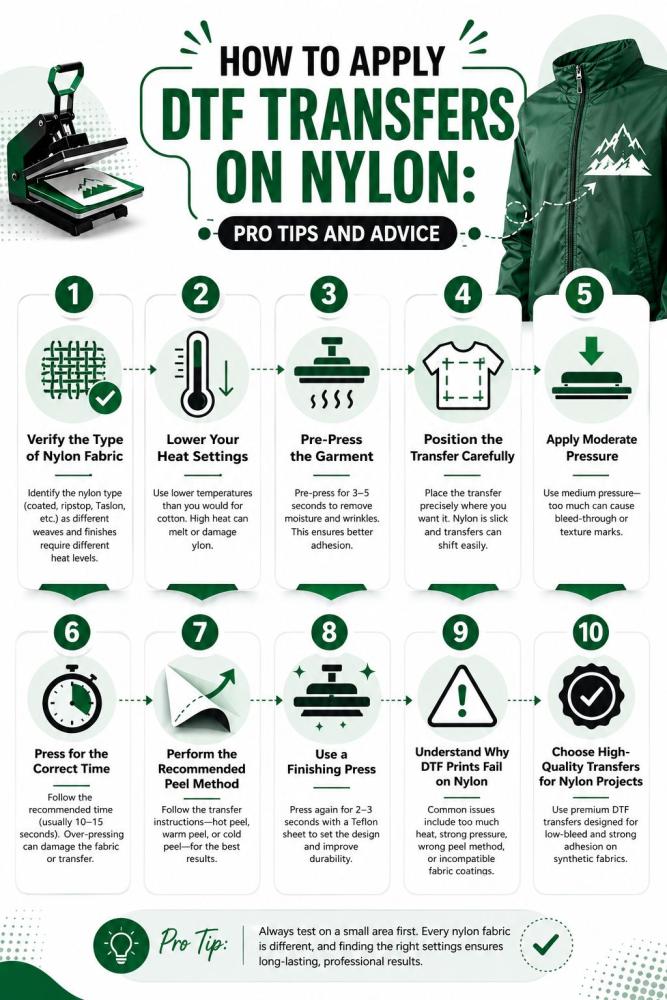
How to Apply DTF Transfers on Nylon: Pro Tips and Advice
Applying DTF transfers on nylon requires a different approach than cotton or polyester as nylon is heat-sensitive and often treated with water-resistant coatings. So, proper preparation and pressing techniques are critical for long-term durability. The following are the steps and professional recommendations for successful nylon garment printing.
1. Verify the Type of Nylon Fabric
Before pressing any transfer, identify whether the garment is standard nylon, coated nylon, ripstop nylon, or waterproof performance nylon. Different finishes react differently to heat and adhesives.
-
Check garment labels and manufacturer recommendations.
-
Water-resistant coatings may reduce transfer adhesion.
-
Test one sample garment before running production.
-
Be extra cautious when working with DTF on waterproof materials.
2. Lower Your Heat Settings
Nylon can melt, scorch, shrink, or develop shine marks if pressed using standard cotton settings. Lower temperatures help protect the fabric while still activating the adhesive.
-
Recommended range: 260°F–290°F (127°C–143°C)
-
Avoid temperatures above 300°F unless specifically recommended.
-
Use a heat gun or infrared thermometer to verify actual platen temperature.
-
Always test before production.
3. Pre-Press the Garment
A quick pre-press helps remove moisture, wrinkles, and contaminants that may interfere with adhesion.
-
Pre-press for 3–5 seconds.
-
Use light pressure.
-
Ensure the nylon surface is smooth and flat.
-
Remove any trapped moisture from storage or transportation.
Proper pre-pressing significantly improves DTF transfers on nylon fabric.
4. Position the Transfer Carefully
Correct placement becomes especially important on nylon jackets, windbreakers, and outdoor apparel.
-
Avoid seams, zippers, pockets, and folds.
-
Use heat-resistant tape if necessary.
-
Ensure the transfer lies completely flat.
-
Double-check placement before applying heat.
This step helps prevent uneven adhesion and lifting edges.
5. Apply Moderate Pressure
One of the most common mistakes when learning how to use DTF transfers on nylon is applying excessive pressure.
-
Use medium pressure rather than heavy pressure.
-
Excessive pressure can leave press marks.
-
Too little pressure may cause poor bonding.
-
Follow supplier recommendations for specific transfer films.
Balancing heat and pressure is often more important than increasing either setting.
6. Press for the Correct Time
Press time directly affects transfer durability and adhesion.
-
Typical press time: 8–12 seconds
-
Do not overpress nylon garments.
-
Follow transfer manufacturer guidelines whenever possible.
If you're unsure about timing, review this guide on how long to press a DTF transfer.
7. Perform the Recommended Peel Method
Most modern DTF transfers specify either a warm peel or cold peel process.
-
Follow the transfer manufacturer's instructions exactly.
-
Peeling too early may pull adhesive away.
-
Peeling too late can affect finish quality.
-
Consistency matters during production.
8. Use a Finishing Press
A finishing press helps improve wash durability and create a smoother finish.
-
Cover the design with parchment paper or a finishing sheet.
-
Press for 3–5 additional seconds.
-
Use slightly lighter pressure than the primary press.
-
Improves long-term performance on activewear and outerwear.
9. Understand Why DTF Prints Fail on Nylon
Most failed DTF transfers on nylon come from a few preventable mistakes.
Common causes include:
-
Press temperature too high
-
Incorrect pressure
-
Waterproof coatings blocking adhesion
-
Insufficient pre-pressing
-
Low-quality transfer film
-
Poor adhesive powder application
-
Peeling at the wrong temperature
If you're troubleshooting adhesion problems, review why a DTF transfer is not sticking.
10. Choose High-Quality Transfers for Nylon Projects
Not all transfers perform equally well on synthetic fabrics. Premium transfers often contain stronger adhesive systems designed for performance apparel.
-
Use transfers tested on synthetic materials.
-
Request sample transfers before large orders.
-
Work with reliable suppliers for consistent results.
-
Consider bulk wholesale DTF printing for larger nylon apparel projects.
For decorators working across multiple specialty materials, many of the same principles also apply when applying transfers to leather-like surfaces. See this guide on DTF transfers on leather and faux leather.
When done correctly, DTF transfers on nylon can produce vibrant, flexible, and highly durable graphics on jackets, windbreakers, gym bags, activewear, and outdoor apparel while maintaining the performance characteristics of the garment.
DTF Heat Press Settings for Performance & Synthetic Fabrics
Note: These are starting-point recommendations. Always perform a test press because coatings, fabric blends, and garment manufacturers can affect adhesion and heat tolerance.
| Fabric Type | Temperature | Press Time | Pressure | Peel Method | Difficulty Level | Special Notes |
|---|---|---|---|---|---|---|
| Standard Nylon | 260–280°F (127–138°C) | 8–12 sec | Medium | Cold Peel | High | Avoid overheating to prevent shine marks and melting. |
| Waterproof Nylon Jackets | 250–270°F (121–132°C) | 10–15 sec | Medium | Cold Peel | Very High | Water-resistant coatings can reduce adhesion. Test first. |
| Ripstop Nylon | 260–280°F (127–138°C) | 10–12 sec | Medium | Cold Peel | High | Use a finishing press for improved durability. |
| Polyester Performance Shirts | 280–300°F (138–149°C) | 10–15 sec | Medium | Cold/Warm Peel | Medium | Watch for dye migration on dark colors. |
| 100% Polyester Jerseys | 280–290°F (138–143°C) | 10–15 sec | Medium | Cold Peel | Medium | Use low-bleed transfers when possible. |
| Polyester-Spandex Blends | 270–285°F (132–140°C) | 10–12 sec | Light-Medium | Cold Peel | Medium | Reduced pressure helps preserve stretch. |
| Compression Wear | 265–280°F (129–138°C) | 8–12 sec | Light | Cold Peel | High | Avoid excessive pressure to prevent distortion. |
| Athletic Mesh Fabric | 270–285°F (132–140°C) | 8–10 sec | Light-Medium | Cold Peel | Medium | Use a pressing pillow if seams are nearby. |
| Softshell Jackets | 270–290°F (132–143°C) | 10–15 sec | Medium | Cold Peel | High | Test carefully due to specialty coatings. |
| Windbreakers | 260–280°F (127–138°C) | 8–12 sec | Medium | Cold Peel | High | Lower temperatures reduce shine and warping. |
| Polyester Track Jackets | 280–300°F (138–149°C) | 10–15 sec | Medium | Cold Peel | Medium | Secondary press improves wash durability. |
| Non-Woven Polypropylene Bags | 250–270°F (121–132°C) | 6–10 sec | Light | Cold Peel | High | Heat-sensitive material; test before production. |
Recommended Secondary Finishing Press
| Fabric Type | Recommended Temperature | Finishing Press Time | Pressure |
|---|---|---|---|
| Nylon & Waterproof Fabrics | Same as initial press or 5–10°F lower | 3–5 sec | Light |
| Polyester & Athletic Wear | Same as initial press | 3–5 sec | Light-Medium |
| Compression & Stretch Fabrics | Same as initial press | 2–4 sec | Light |
Understanding Synthetic Fabrics for Successful DTF Printing on Nylon
When working with DTF printing on nylon, understanding the fabric itself is just as important as choosing the right transfer. Synthetic materials such as nylon, polyester, spandex, and waterproof performance fabrics behave very differently from cotton because they are less absorbent, more heat-sensitive, and more prone to dye migration.
These characteristics directly affect how well DTF transfers on nylon adhere, how long they last, and whether the design survives repeated washing and outdoor use.
Key Challenges of Printing on Synthetic Fabrics
Synthetic fabrics present several unique challenges that decorators must account for:
-
Heat Sensitivity: Nylon can scorch, melt, or develop shine marks when exposed to excessive temperatures.
-
Dye Migration: Fabric dyes can bleed into the transfer, causing discoloration and reduced print quality.
-
Low Surface Energy: Synthetic fibers naturally resist adhesion, making transfer bonding more difficult.
-
Waterproof Coatings: Many jackets and outdoor garments contain coatings that interfere with transfer adhesion.
-
Stretch and Flexibility: Activewear and performance garments constantly move, requiring transfers that can flex without cracking.
These factors become even more important when applying DTF transfers for nylon jackets and other outdoor apparel.
Adjust Your Printing and Press Settings
Standard DTF settings often do not work well on synthetic materials. To improve adhesion and reduce dye migration:
-
Increase white ink coverage in the underbase layer.
-
Use multi-pass printing for stronger opacity.
-
Lower transfer temperatures compared to cotton garments.
-
Increase dwell time slightly to improve bonding.
-
Always perform test prints before production.
Finding the right balance between heat and time is critical for applying DTF on waterproof materials and performance fabrics.
Optimize Heat Transfer Temperature
One of the most common reasons transfers fail on nylon is incorrect temperature.
For most nylon garments:
-
Use lower temperatures than cotton.
-
Avoid overheating the fabric.
-
Increase press time rather than increasing heat.
-
Maintain consistent pressure throughout the transfer.
The exact settings vary by garment type and transfer manufacturer. For a detailed breakdown, see this guide on the best temperature for DTF printing.
Prevent Dye Migration Before It Starts
Dye migration is one of the biggest issues when applying DTF transfers on waterproof fabrics and dark synthetic garments.
To minimize problems:
-
Use high-opacity white underbases.
-
Select transfer films designed for synthetic fabrics.
-
Avoid excessive heat during pressing.
-
Test garments before large production runs.
-
Allow garments to cool completely before evaluating results.
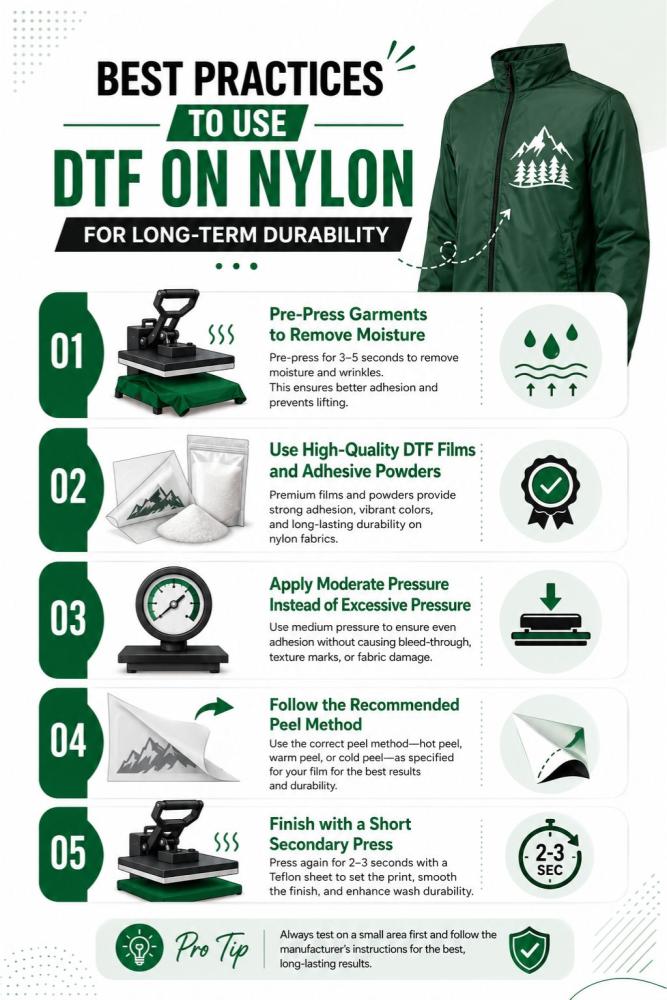
Best Practices to Use DTF on Nylon for Long-Term Durability
To achieve durable results with DTF printing for nylon, follow these recommendations:
1. Pre-Press Garments to Remove Moisture
Pre-pressing is one of the most overlooked steps when applying DTF transfers to nylon. Nylon garments often retain moisture from manufacturing, packaging, storage, or humidity in the environment. If that moisture remains trapped during pressing, it can create weak adhesion, bubbling, or premature peeling.
A quick pre-press of 3–5 seconds helps remove moisture and smooth out wrinkles before the transfer is applied. For example, if you're decorating nylon windbreakers for a sports team, skipping the pre-press may cause some logos to lift after the first wash. This simple step significantly improves transfer consistency and durability.
2. Use High-Quality DTF Films and Adhesive Powders
Not all DTF supplies are designed for synthetic fabrics. High-quality films and adhesive powders are specifically formulated to bond better with nylon and performance materials. Cheap transfers may initially look fine but often fail after washing, stretching, or exposure to outdoor conditions.
For instance, a company ordering branded nylon jackets for field employees needs transfers that can withstand daily wear and changing weather. Premium DTF materials provide stronger adhesion, better flexibility, improved wash resistance, and reduced risk of peeling. Investing in quality supplies often saves money by reducing product failures and reprints.
3. Apply Moderate Pressure Instead of Excessive Pressure
Many decorators assume more pressure creates better adhesion, but this is often not true with nylon. Excessive pressure can flatten fabric textures, create unwanted press marks, and even distort lightweight nylon garments. Moderate pressure allows the adhesive to bond effectively without damaging the material.
For example, when decorating lightweight running jackets, heavy pressure can leave visible rectangular press marks around the design. Moderate pressure helps maintain the garment's appearance while still achieving strong transfer adhesion. Balancing temperature, time, and pressure is often more important than simply increasing force.
4. Follow the Recommended Peel Method
Different DTF transfers require different peel methods, including cold peel, warm peel, or hot peel. Ignoring the manufacturer's recommendation can weaken adhesion and reduce print quality. For example, peeling a cold-peel transfer while it's still warm may cause portions of the design to lift with the film carrier.
This becomes especially problematic on nylon jackets and performance apparel where adhesion is already more challenging. Always follow the supplier's instructions regarding cooling time and peeling technique. Consistent peel practices help ensure cleaner edges, stronger bonding, and better overall durability.
5. Finish with a Short Secondary Press
A secondary finishing press helps lock the transfer into the fabric and improves long-term durability. After peeling the carrier film, place a finishing sheet or parchment paper over the design and press again for 3–5 seconds using light to medium pressure. This additional step helps smooth the transfer, improve wash resistance, and strengthen adhesion.
For example, businesses producing branded nylon jackets for outdoor workers often use a finishing press to maximize durability in demanding environments. While optional, this step can significantly improve the performance and lifespan of DTF transfers on nylon garments.
When these techniques are applied correctly, DTF transfers can deliver vibrant colors, excellent wash durability, and strong performance on jackets, activewear, windbreakers, bags, and other synthetic garments.
In a Nutshell
DTF transfers on nylon and waterproof fabrics can deliver excellent results when you understand the material's unique characteristics and adjust your application process accordingly. Unlike cotton, nylon requires lower temperatures, controlled pressure, proper adhesive bonding, and careful handling to prevent peeling, scorching, or adhesion failures.
By selecting high-quality transfers, testing your settings, pre-pressing garments, and following the correct peel and finishing techniques, you can create durable, vibrant designs on jackets, windbreakers, activewear, gym bags, and other performance apparel.
With the right approach, DTF printing on nylon becomes a reliable solution for producing professional-quality custom garments that maintain their appearance through repeated wear, washing, and outdoor exposure.