


DTF printing is rapidly expanding among print shops and apparel businesses across the U.S., especially for high-volume and custom orders. But as demand grows, so does a critical question—what can you put custom DTF transfers on, and more importantly, what’s the best material for DTF transfers?
Not every fabric performs the same. The wrong choice can lead to dull colors, weak adhesion, and prints that don’t last. For businesses, that means reprints, wasted inventory, and unhappy customers—especially when working with custom DTF transfers at scale.
Fabric isn’t just a base—it directly affects your final output. In this guide, you’ll learn the best material for DTF transfers, what fabrics to avoid, and how to choose the right material to get consistent, high-quality results every time with custom DTF transfers.
What Are DTF Transfers? (Quick Context)
DTF (Direct-to-Film) transfers are pre-printed designs created using a DTF printer for fabric, then applied to garments using heat and pressure. In simple terms, the design is printed onto a special film, coated with adhesive powder, cured, and later transferred onto fabric. If you’re wondering how does DTF transfer work, it’s all about this multi-step process that ensures strong and flexible prints.
The bonding process is what makes DTF so versatile. The adhesive layer melts during pressing and fuses with the fabric surface, allowing the design to sit on top rather than absorb into the fibers. This results in vibrant, detailed prints with strong adhesion.
Now, “how do you press DTF transfers?” The right temperature, time, and pressure are critical. That’s also why material choice matters—different fabrics react differently, directly impacting print quality, durability, and overall finish.
Why Fabric Choice Matters in DTF Printing
Fabric selection isn’t just a minor detail in DTF printing—it directly affects how your final product looks, feels, and performs over time. Even with perfect settings, the wrong material can ruin the outcome. Understanding what materials can DTF transfer be used on saves time, quality, and effort.
Adhesion and Durability
Different fabrics bond differently with adhesive powder. Materials like cotton allow strong adhesion, while some synthetics may resist bonding. Poor compatibility can lead to peeling, cracking, or reduced lifespan after multiple washes.
Color Vibrancy and Finish
The fabric surface impacts how colors appear. Smooth, well-absorbing materials help prints look bright and sharp. On the other hand, certain fabrics can dull colors or create uneven finishes, especially if the ink doesn’t sit properly on the surface.
Stretch, Feel, and Comfort
Fabric flexibility plays a big role in how the print behaves. Stretchable materials require prints that can flex without cracking. At the same time, the wrong fabric can make prints feel stiff or heavy, reducing overall comfort.
Long-Term Longevity
Some fabrics hold prints better over time, maintaining quality through repeated washing and wear. Others may break down faster, affecting both the look and durability of the design.
In short, the right fabric ensures consistency, quality, and customer satisfaction.
Best Materials for DTF Transfers
Choosing the best material for DTF transfers is critical if you want consistent, high-quality results. While a DTF printer for fabric can handle a wide range of materials, not every fabric performs the same. Understanding what materials can DTF transfers be used on helps you avoid poor adhesion, dull prints, and durability issues.
Cotton
Cotton is widely considered the best material for DTF transfers. It offers excellent adhesion, allowing the design to bond securely with the fabric surface. This results in long-lasting prints that hold up well after multiple washes. Cotton also delivers a soft, natural feel, making it ideal for everyday apparel like t-shirts. For most businesses using a DTF printer for fabric, cotton remains the most reliable and consistent option.
Polyester
Polyester is a strong choice for sportswear and performance apparel. It produces vibrant, high-contrast prints, especially for bold designs. When considering what materials can DTF transfers be used on, polyester stands out for its smooth surface, which helps transfers sit evenly. However, since polyester is heat-sensitive, proper press settings are essential to avoid damage during application.
Cotton-Poly Blends
Blended fabrics combine the best of both worlds. Cotton-poly blends offer a balance between comfort and performance, making them a go-to option for commercial apparel production. They provide reliable adhesion while maintaining flexibility and durability. These blends are commonly used for bulk orders because they deliver consistent results across different designs and use cases.
Tri-Blends
Tri-blends, made from cotton, polyester, and rayon, are known for their lightweight and premium feel. They’re popular in fashion apparel but can be slightly unpredictable. The mixed fiber composition may affect how the adhesive bonds, so testing is important. While they work, they may not always be the best material for DTF transfers when consistency is the top priority.
In summary, while DTF works on multiple fabrics, cotton and blends remain the most reliable choices for consistent quality.
Also read: Direct to Film Transfer Supplies: Paper, Sheets, and Materials Explained
Materials That Are Challenging for DTF
Not all fabrics are ideal for DTF printing, and some can create adhesion and durability issues if not handled correctly.
Nylon and Waterproof Fabrics: These materials resist adhesion due to their smooth, coated surfaces, making it difficult for the transfer to bond properly.
Treated or Coated Materials: Fabrics with chemical coatings or finishes can block the adhesive layer, leading to peeling or uneven prints.
Heat-Sensitive Fabrics: Some materials can scorch or warp under standard heat press settings, affecting both the fabric and the print.
Why Adhesion Issues Occur: DTF relies on heat-activated adhesive bonding to the fabric surface. When the material resists heat or absorption, the bond weakens, resulting in poor durability and performance.
Cotton vs Polyester: Which Is Better?
Choosing between cotton and polyester depends on your specific use case, design type, and customer expectations. Both materials perform well with DTF, but in different ways.
Side-by-Side Comparison
-
Cotton: Better adhesion, softer feel, more natural finish
-
Polyester: Brighter colors, smoother surface, more durable for active use
Use Cases
-
Cotton: Ideal for everyday wear like t-shirts, streetwear, and casual apparel where comfort matters most
-
Polyester: Best for sportswear, uniforms, and performance gear that require durability and moisture resistance
Best Option Based on Business Needs
If your focus is comfort and premium feel, cotton is the better choice. For high-performance or athletic apparel, polyester delivers better results. Many businesses use both depending on the product line to balance quality, durability, and customer demand.
How Fabric Affects DTF Transfer Durability
Fabric plays a major role in how long DTF transfers actually last. Even when using the same DTF printer for fabric, durability can vary based on how the material reacts to washing, stretching, and daily wear. Choosing the best material for DTF transfers is essential if you want prints that hold up over time.
Wash Resistance Differences: Fabrics like cotton tend to hold transfers well through repeated washing because of better adhesion. Polyester also performs well but may require precise heat settings to maintain long-term durability. On the other hand, low-quality or treated fabrics can lead to faster peeling or fading.
Stretch and Flexibility Impact: Stretchable materials affect how the print behaves over time. Fabrics with high elasticity need transfers that can flex without cracking. If the material stretches more than the print can handle, it can lead to damage.
Long-Term Performance Insights: High-quality fabrics combined with proper application result in prints that last for dozens of washes. Choosing the right material ensures consistent performance, better durability, and higher customer satisfaction over time.
Also read: How Long Do DTF Transfers Last? A Guide to Durability
Best Material Based on Use Case
Choosing the right fabric depends on how the final product will be used. Different applications demand different levels of comfort, durability, and performance.
T-Shirts (Everyday Wear)
Cotton is the best choice for everyday apparel. It offers a soft feel, strong adhesion, and consistent print quality, making it ideal for casual wear and retail clothing.
Sportswear and Activewear
Polyester works best for athletic use. It handles moisture well, supports vibrant prints, and performs better under frequent washing and movement.
Workwear and Uniforms
Cotton-poly blends are commonly used here. They provide a balance of durability, comfort, and flexibility—perfect for garments that need to withstand regular wear and tough conditions.
Fashion and Premium Apparel
Tri-blends are popular in premium clothing lines. They offer a lightweight, soft feel with a modern look, though they may require more precise settings for consistent results.
Matching the material to the use case ensures better performance and customer satisfaction.
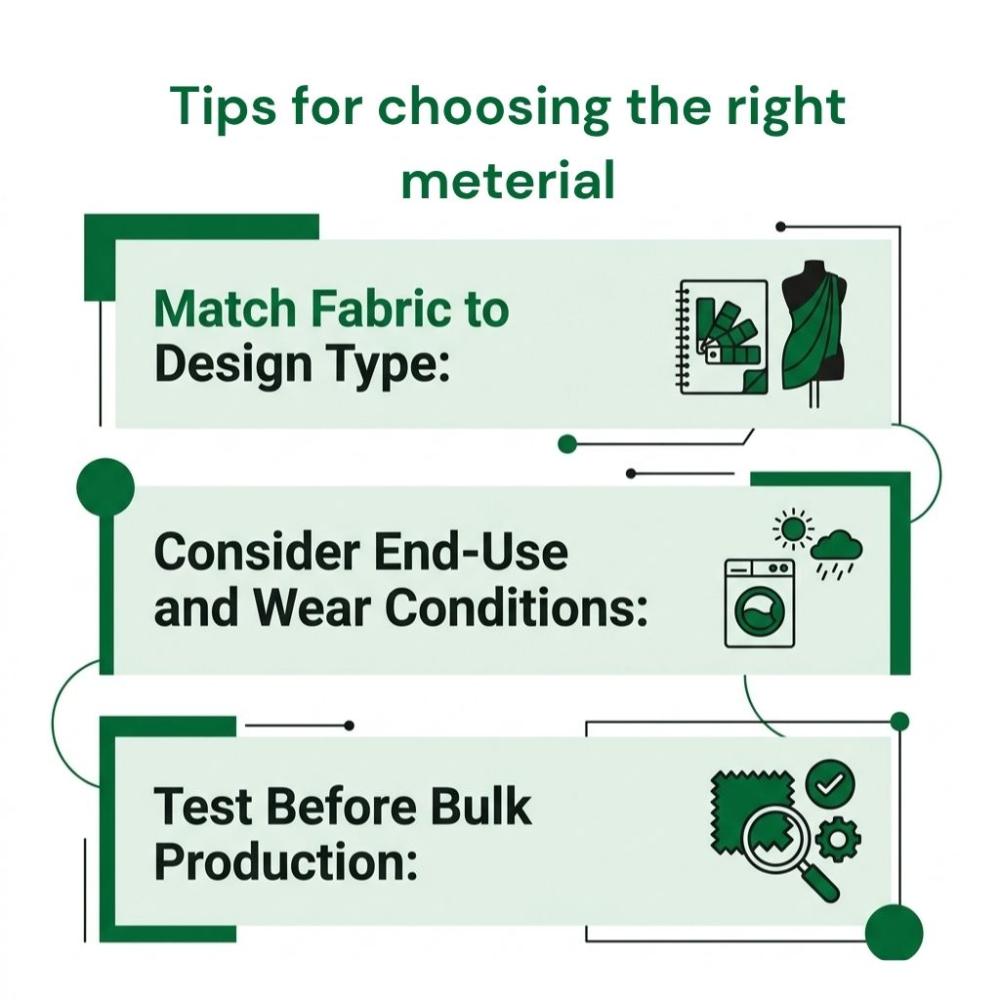
Tips for Choosing the Right Material
Selecting the right fabric for DTF printing isn’t just about preference—it’s about aligning your material with your design, use case, and production goals. Making the right choice upfront can save time, reduce errors, and improve overall print quality.
Match Fabric to Design Type: Consider how detailed and vibrant your design is. Bold, colorful graphics perform well on polyester due to its smooth surface, while cotton is better for designs that require a softer, more natural finish. Fine details and gradients may also behave differently depending on the fabric texture.
Consider End-Use and Wear Conditions: Think about how the garment will be used. For everyday wear, comfort and breathability matter—making cotton a strong option. For activewear or uniforms, durability and moisture resistance are key, where polyester or blends perform better. The environment and frequency of use directly impact how well the transfer holds up over time.
Test Before Bulk Production: Never rely only on presets. Always run test prints on your selected fabric before committing to large orders. This is especially important when working with layouts like gang sheet printing, where multiple designs are produced together. Testing helps ensure proper adhesion, color vibrancy, and a consistent finish across every print.
Common Mistakes to Avoid
Even with the right setup, small mistakes in fabric selection can lead to poor DTF results. Avoiding these common issues can significantly improve your print quality and consistency.
Using Incompatible Fabrics
Not all materials are suitable for DTF printing. Fabrics like nylon or heavily coated textiles can resist adhesive bonding, leading to peeling or weak transfers. Always choose materials known for good compatibility, such as cotton or blends.
Ignoring Fabric Treatments
Many garments come with chemical coatings, moisture-wicking finishes, or waterproof layers. These treatments can block the adhesive from bonding properly, resulting in uneven prints or reduced durability. Always check fabric specifications before printing.
Not Adjusting Press Settings
Different fabrics require different heat press settings. Using the same temperature and time for all materials can cause issues like scorching, under-curing, or poor adhesion. Adjust settings based on the fabric type to ensure optimal results.
Avoiding these mistakes helps maintain consistent, high-quality output and reduces costly reprints.
Conclusion
Choosing the best material for DTF transfers is one of the most important factors in achieving high-quality results. Cotton, polyester, and blends each offer unique advantages depending on your specific use case. However, no matter which fabric you choose, consistent testing and proper quality control are essential—especially when handling bulk DTF printing.
Small adjustments in fabric selection, heat settings, and application methods can significantly impact durability and overall finish. The key is to align your material with your production goals and end-use requirements.
The final takeaway is simple: choose the best material for DTF transfers based on your needs, test before scaling, and maintain consistency in your process. That’s how you ensure reliable, long-lasting prints across every order.
FAQs
What fabric works best for DTF transfers?
Cotton is generally the best fabric for DTF transfers due to its strong adhesion, soft feel, and consistent results. Cotton-poly blends are also a great option for balancing durability and comfort.
Can DTF be used on 100% polyester?
Yes, DTF works well on 100% polyester. It’s especially popular for sportswear because it produces vibrant colors and holds up well under frequent use, as long as proper heat settings are applied.
Do DTF transfers work on dark fabrics?
Yes, DTF transfers are ideal for dark fabrics. The white ink underbase allows colors to appear bright and vibrant, even on black or deep-colored garments.
Which material lasts the longest?
Cotton and cotton-poly blends typically offer the best durability when combined with proper application and care. They maintain adhesion and quality through multiple washes.
Can DTF be applied to nylon?
DTF can be applied to nylon, but it’s more challenging. Nylon often requires special adhesives or settings because its surface resists standard bonding, which can affect durability.