


A freshly pressed DTF transfer can look vibrant, sharp, and perfectly bonded to the garment—only to lose color, fade, or appear washed out after its very first laundry cycle. If you've experienced DTF transfer fading after wash, you're not alone.
This is one of the most common quality issues faced by apparel decorators, print shops, and clothing brands. The good news is that fading rarely happens without a reason. Factors such as low-quality inks, improper curing, poor adhesive application, incorrect washing methods, and substandard transfer production can all contribute to DTF transfer fading.
In this guide, we'll explain the most common causes behind why a DTF print fades after washing and how to prevent it for long-lasting, vibrant results.
Why is DTF Transfer Fading After Washing a Critical Challenge?
For apparel businesses, DTF transfer fading after wash is more than just a cosmetic issue—it directly impacts customer satisfaction, brand reputation, and profitability. A transfer that looks vibrant when applied but loses color after a few wash cycles can quickly turn a happy customer into a disappointed one.
The Impact of DTF Transfer Fading
When DTF transfer fading occurs, businesses often face:
-
Customer complaints and negative reviews
-
Product returns and refund requests
-
Costly reprints and replacement garments
-
Reduced repeat purchases
-
Damage to brand credibility
For print shops and clothing brands, even a small percentage of faded prints can create significant financial losses over time.
Why Customers Notice Fading Immediately
Consumers expect custom apparel to maintain its appearance through regular wear and washing. When a DTF print fades after washing, the design may:
-
Lose color vibrancy
-
Appear dull or washed out
-
Develop uneven color patches
-
Show premature signs of wear
-
Look lower quality than expected
Because the printed design is often the main reason a customer purchased the garment, fading becomes highly noticeable.
Why Fading Matters for Growing Brands
As businesses scale, consistency becomes increasingly important. A single faded shirt may seem minor, but repeated quality issues can lead to:
-
Lower customer trust
-
Higher support workload
-
Increased production costs
-
Difficulty building a premium brand image
This is especially important for ecommerce stores, merchandise brands, and print-on-demand businesses where product quality directly influences customer retention.
The Good News
Most cases of DTF transfer fading after wash can be prevented. Understanding the root causes, such as low-quality inks, improper curing, poor transfer production, or incorrect garment care, allows businesses to improve print durability and deliver long-lasting results that meet customer expectations.
Common Reasons Why DTF Transfer Fades After Washing
If you've ever applied a transfer that looked vibrant and professional straight off the heat press, only to notice significant color loss after the first wash, you're not alone. DTF transfer fading is one of the most common quality complaints in the apparel decoration industry.
The good news is that fading rarely occurs randomly. Most cases of DTF print fades after washing can be traced back to specific production, application, or maintenance issues. Understanding these causes is essential for improving DTF transfer wash durability and delivering long-lasting prints that satisfy customers.
Low-Quality Inks and Pigments
One of the most common causes of DTF transfer fading after wash is the use of low-grade inks.
Premium DTF inks contain high-quality pigments designed to resist UV exposure, washing, stretching, and everyday wear. Budget inks may initially appear vibrant but often lack the pigment density and chemical stability needed for long-term durability.
Signs that fading may be ink-related include:
-
Colors becoming dull after only a few washes
-
Uneven fading across the design
-
White ink losing brightness
-
Significant color shifts over time
Businesses that prioritize consistent quality often invest in professionally produced custom DTF transfers because material quality plays a major role in overall print longevity.
Improper Curing During Production
Among all DTF curing problems, under-curing is one of the biggest contributors to fading.
During production, DTF transfers require precise heat exposure to fully cure the ink and activate the adhesive. If the transfer is not cured correctly, the ink layer remains vulnerable to abrasion, washing, and chemical breakdown.
Common curing issues include:
-
Insufficient curing temperature
-
Incorrect curing time
-
Uneven heat distribution
-
Rushed production cycles
When curing is incomplete, the print may initially appear normal but begin deteriorating rapidly after laundering.
For a deeper understanding of this process, see this guide on DTF transfer curing and print durability.
Poor Adhesive Powder Application
Another major factor behind DTF transfer fading is inconsistent adhesive powder coverage.
The TPU adhesive powder acts as the bonding layer between the printed design and the garment. If adhesive distribution is uneven, parts of the design may not properly anchor to the fabric.
Common DTF adhesive powder issues include:
-
Too little powder applied
-
Uneven powder distribution
-
Contaminated adhesive
-
Inconsistent melting during curing
These problems can lead to both color loss and DTF transfer peeling and fading occurring simultaneously.
As the adhesive bond weakens, the ink layer becomes increasingly vulnerable to washing damage.
Incorrect Heat Press Application
Even a perfectly manufactured transfer can experience fading if it's not applied correctly.
Several application mistakes contribute to DTF printing problems, including:
Incorrect Temperature
Pressing below the recommended temperature can prevent complete adhesive activation.
Insufficient Press Time
If the transfer isn't pressed long enough, the adhesive may never fully bond with the garment fibers.
Uneven Pressure
Pressure inconsistencies can create weak bonding zones where fading begins first.
Skipping the Final Press
Many decorators overlook the finishing press, which helps lock the transfer into the fabric and improve durability.
If you're unsure whether your pressing process is correct, review this guide on how long to press a DTF transfer.
Low-Quality Transfer Film
The PET film used during production directly affects overall print performance.
Poor-quality films can cause:
-
Inconsistent ink release
-
Uneven curing
-
Weak adhesion
-
Reduced color stability
While film defects may not be immediately visible, they often contribute to long-term DTF transfer problems that emerge after washing.
This is one reason why professional decorators frequently source transfers through established wholesale suppliers that maintain tighter material controls for bulk wholesale printing.
Aggressive Washing Conditions
Not every fading issue originates during production. Sometimes the problem occurs after the garment reaches the customer.
Improper washing practices can dramatically reduce DTF transfer wash durability.
Common causes include:
-
Hot water washing
-
Harsh detergents
-
Bleach usage
-
High-speed wash cycles
-
High-heat drying
DTF transfers perform best when garments are:
-
Washed inside out
-
Cleaned in cold water
-
Dried on low heat or air-dried
-
Protected from bleach and aggressive chemicals
Even high-quality transfers can fade prematurely when repeatedly exposed to harsh laundering conditions.
Fabric Compatibility Issues
Not all garments behave the same way during application and washing. Certain fabrics present greater challenges for DTF adhesion and durability.
Examples include:
-
Performance polyester
-
Stretch fabrics
-
Water-resistant garments
-
Specialty blends
If application settings are not adjusted properly for the garment type, fading can occur much sooner than expected.
The transfer itself may be perfectly produced, but the bond between the adhesive and fabric may not be optimized for that particular material.
Early Peeling Leading to Fading
In many cases, fading and peeling occur together. When edge lifting begins, water and friction can penetrate beneath the transfer during laundering. This accelerates deterioration and causes sections of the print to fade unevenly.
Common warning signs include:
-
Corner lifting
-
Edge cracking
-
Partial separation
-
Small peeled sections
Once peeling starts, fading often follows quickly.
If you're experiencing both issues simultaneously, this guide on preventing DTF transfers from cracking or peeling off provides additional troubleshooting steps.
Understanding the Expected Lifespan
Many customers assume fading after a few washes is normal, but quality transfers should last much longer.
Properly manufactured and applied DTF transfers typically maintain strong color vibrancy through dozens of wash cycles.
For a more detailed breakdown, see how long DTF transfers last.
When DTF print fades after washing within the first few cycles, it usually indicates a preventable issue involving materials, curing, application, or garment care rather than normal wear and tear.
By identifying the specific cause, businesses can improve print performance, reduce complaints, and significantly extend transfer longevity.
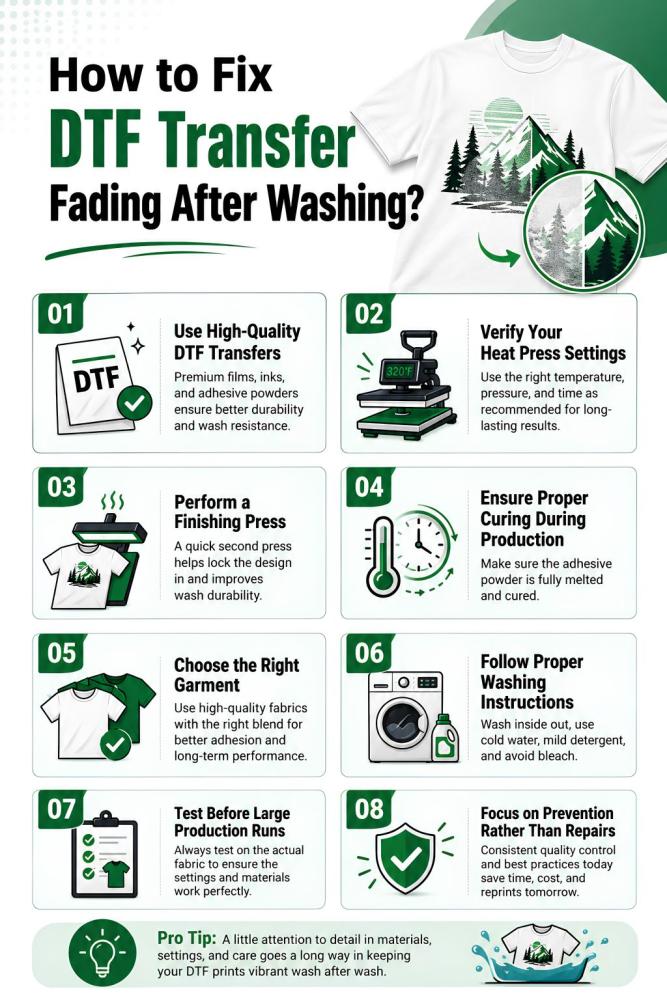
How to Fix DTF Transfer Fading After Washing?
If you're dealing with DTF transfer fading after washing, the solution isn't simply replacing the garment. In most cases, fading is caused by preventable production, application, or maintenance issues. By identifying the root cause and correcting it, you can dramatically improve print longevity and prevent situations where a DTF print fades after washing.
Use High-Quality DTF Transfers
The first and most effective solution is to start with quality materials.
Many cases of DTF transfer fading begin long before the transfer reaches the heat press. Low-grade films, poor-quality inks, and inconsistent adhesive application often create transfers that cannot withstand repeated washing.
High-quality transfers offer:
-
Better color retention
-
Stronger adhesive bonding
-
Improved wash durability
-
Greater resistance to cracking and peeling
-
More consistent production quality
Investing in professionally manufactured transfers may cost slightly more upfront, but it significantly reduces reprints, customer complaints, and product failures.
Verify Your Heat Press Settings
Even premium transfers can fail if they're not applied correctly.
One of the most common causes of DTF transfer fading after washing is incorrect pressing temperature, pressure, or dwell time. If the adhesive is not fully activated during application, the transfer may appear fine initially but begin fading after the first few wash cycles.
Before every production run:
-
Confirm recommended temperature settings
-
Verify press time requirements
-
Ensure even pressure distribution
-
Test settings on sample garments
If you're unsure about proper application settings, review this guide on how long to press a DTF transfer.
Perform a Finishing Press
Many decorators skip the final press step, but it can significantly improve durability.
A finishing press helps:
-
Fully integrate the transfer into the fabric
-
Improve edge adhesion
-
Enhance wash resistance
-
Reduce early fading
Using parchment paper or a protective sheet during the finishing press can further improve long-term performance.
Ensure Proper Curing During Production
Incomplete curing is one of the biggest reasons a DTF print fades after washing.
The ink and adhesive must be fully cured to withstand laundering. Under-cured transfers often experience:
-
Color fading
-
Surface wear
-
Reduced stretch performance
-
Premature cracking
Whether you're producing transfers in-house or sourcing them externally, curing consistency should always be a quality control priority.
Choose the Right Garment
Fabric selection plays a larger role than many decorators realize.
Different materials react differently to heat, pressure, and adhesive bonding. Using incorrect application settings for a specific garment can contribute to DTF transfer fading even when the transfer itself is high quality.
Always test transfers on:
-
Cotton
-
Polyester
-
Blends
-
Performance fabrics
before moving into full production.
Follow Proper Washing Instructions
Sometimes the transfer isn't the problem—the washing process is.
To maximize durability:
-
Wash garments inside out
-
Use cold water
-
Avoid bleach
-
Use mild detergents
-
Tumble dry on low heat or air dry
These simple care instructions help preserve color vibrancy and extend the life of the transfer.
Test Before Large Production Runs
One of the easiest ways to prevent fading issues is to test every design before full-scale production.
Using sample garments allows you to evaluate:
-
Color stability
-
Adhesion strength
-
Wash durability
-
Stretch resistance
Many decorators use test runs and production sheets generated through gang sheet printing to verify transfer performance before committing to larger orders.
Focus on Prevention Rather Than Repairs
Once significant fading occurs, restoring the original print quality is often difficult. The most effective strategy is preventing the issue from happening in the first place.
By combining quality DTF transfers, proper curing, correct heat press settings, suitable garments, and proper garment care, you can dramatically reduce DTF transfer fading after washing and deliver prints that maintain their appearance through dozens of wash cycles.
In a Nutshell
DTF transfer fading after washing is rarely caused by a single issue. In most cases, fading results from a combination of poor curing, incorrect pressing settings, low-quality materials, improper washing practices, or weak adhesive bonding. The good news is that most of these problems are preventable. By using quality DTF transfers, following recommended temperature and pressure guidelines, allowing proper curing, and educating customers on garment care, you can dramatically improve print longevity. Consistent production processes and premium materials are the foundation of strong DTF transfer wash durability, helping your designs remain vibrant, flexible, and professional-looking through dozens of wash cycles.