


Imagine delivering a customer’s favorite T-shirt with a custom design, only to have it returned with a complaint: the DTF print is cracking or falling apart after first wash. Naturally, the first question that comes to mind is—can this really happen? Do DTF transfers crack or peel off?
The short answer is no, the transfer doesn’t come off or crack after first wash or even many washes for the garment’s lifecycle. There is surely something wrong you might be doing that you need to fix now.
In most cases, cracking or peeling isn’t caused by a single mistake. It usually results from a combination of factors such as improper heat press settings, low-quality transfers, incorrect application techniques, or unsuitable fabric choices. Even small details like pressure consistency or curing quality can affect how well a transfer adheres to a garment.
For apparel brands, Etsy sellers, and print shops, these problems can lead to wasted materials, customer complaints, and damaged brand reputation. The good news is that most DTF transfer failures are preventable.
You can get durable and long-lasting prints that stays intact even after many wash cycles by following the right practices. In this guide, we’ll break down the most common reasons DTF prints crack or peel and share expert tips to help you achieve long-lasting, professional results every time.
Is DTF Transfers Cracking Over Time Normal?
When applied correctly, DTF prints are designed to be highly durable and flexible, so DTF print cracking is not considered normal under proper conditions. Professional custom DTF transfers can withstand dozens of wash cycles while maintaining vibrant colors and strong adhesion.
If DTF cracking appears early, it usually indicates issues with application, transfer quality, or curing rather than the printing method itself.
Compared to other decoration techniques, DTF generally performs better over time. Screen printing, for example, can start to fade or fracture after repeated washing, especially if the ink layer becomes brittle with age. Similarly, vinyl printing may crack, peel, or lift from the fabric as the material loses flexibility or the adhesive weakens.
A properly produced and applied DTF transfer, however, forms a flexible bond with the fabric. The adhesive powder melts into the fibers during heat pressing, creating a strong yet stretchable layer that moves with the garment rather than breaking apart. This flexibility is one of the reasons many apparel brands and print shops prefer DTF for custom designs.
So if you’re wondering “does DTF peel off?”—the answer is not when high-quality transfers are used and applied correctly. Professional DTF prints are specifically engineered to resist cracking, peeling, and fading, making them a reliable choice for long-lasting apparel decoration.
Read more: What Makes a Good DTF Transfer: A Guide for DTF Print Quality
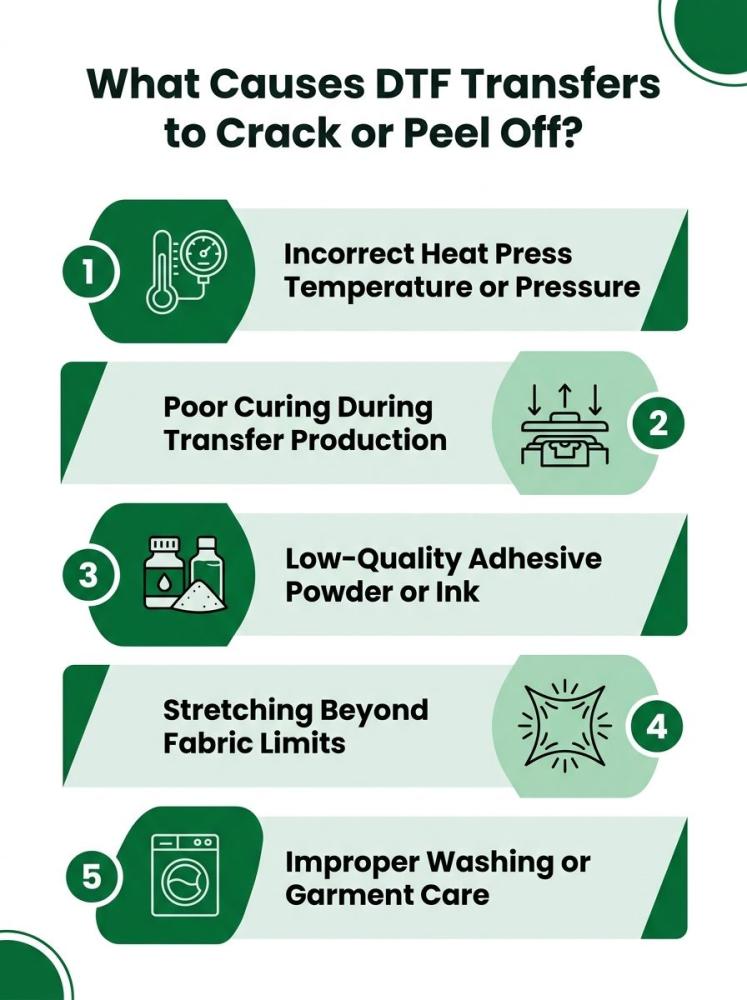
What Causes DTF Transfers to Crack or Peel Off?
If you’re wondering “do DTF transfers crack?” the answer is yes—but usually only when something goes wrong during printing, curing, or application. High-quality transfers applied correctly are designed to stay flexible and durable. However, several technical factors can lead to DTF print cracking after wash or peeling after pressing. Understanding what causes DTF prints to crack helps prevent costly mistakes and ensures long-lasting results.
Here are the most common reasons behind DTF cracking and peeling issues:
1. Incorrect Heat Press Temperature or Pressure
One of the biggest reasons people ask, “why is my DTF print cracking?” is improper heat press settings. If the temperature is too low, the adhesive powder won’t melt properly into the fabric. Too much heat or pressure can also damage the film layer. Both situations weaken adhesion and eventually lead to cracking or peeling.
2. Poor Curing During Transfer Production
DTF transfers must be properly cured before they reach the customer. If the adhesive powder isn’t fully melted during the curing process, the bond between the ink and adhesive layer becomes weak. This can cause DTF print cracking after wash, especially after the first few laundry cycles.
3. Low-Quality Adhesive Powder or Ink
The materials used during production play a major role in durability. Cheap adhesive powders or low-grade inks can make transfers brittle. Over time, this brittleness causes DTF cracking, fading, or even partial peeling from the fabric.
4. Stretching Beyond Fabric Limits
Garments that stretch heavily—such as athletic wear or tight-fit fabrics—can put stress on the transfer. If the design is printed too thick or lacks flexibility, the constant stretching may cause the ink layer to fracture.
5. Improper Washing or Garment Care
Incorrect washing practices are another common cause of DTF print cracking after wash. High heat, harsh detergents, or aggressive drying cycles can weaken the adhesive bond and damage the printed layer.
By identifying these issues early, print shops and apparel brands can reduce failures and produce transfers that remain vibrant, flexible, and durable for many wash cycles.
Best Practices for DTF Transfer Printing to Avoid Cracking or Peeling
Preventing DTF cracking starts with following the correct printing and application process. When proper techniques and settings are used, DTF transfer durability improves significantly, allowing prints to remain flexible, vibrant, and resistant to peeling even after repeated washes.
Here are some essential best practices to follow:
1. Use Correct Heat Press Temperature and Time
Most DTF transfers perform best when pressed at 300–320°F (150–160°C) for 10–15 seconds. This temperature range allows the adhesive powder to melt properly and bond with the fabric fibers. Pressing at lower temperatures can result in weak adhesion, which often leads to peeling or DTF cracking after washing.
2. Apply Consistent Medium-to-Firm Pressure
Proper pressure is just as important as temperature. Use medium to firm pressure (around 40–60 PSI depending on your heat press) to ensure the transfer fully contacts the garment surface. Uneven pressure can cause incomplete bonding.
3. Perform a Post-Press for Stronger Adhesion
After peeling the PET film, place parchment paper or a Teflon sheet over the design and press again for 5–10 seconds. This final press seals the transfer into the fabric and improves DTF transfer durability.
4. Allow Proper Cooling Before Peeling
Follow the peel method recommended by your supplier. Many transfers require cold or warm peeling, and removing the film too early can disturb the adhesive bond.
5. Choose Quality Transfers and Compatible Fabrics
High-quality transfers printed with premium inks, PET film, and adhesive powder perform better and resist DTF cracking. Cotton, cotton blends, and polyester fabrics typically produce the most reliable results.
By following these technical guidelines, print shops and apparel businesses can significantly reduce cracking or peeling and achieve long-lasting, professional-quality DTF prints.
Do DTF Transfers Crack After Many Washes?
High-quality DTF transfers are built for durability and flexibility. When produced with good materials and applied correctly, they can typically withstand 40–60 wash cycles or more without major damage. The adhesive layer bonds with the fabric fibers, allowing the design to stretch with the garment instead of breaking. Because of this flexibility, DTF cracking is uncommon in well-produced prints.
However, like any apparel decoration method, prints can gradually show signs of wear over time.
What Happens to DTF Prints Over Time?
Instead of sudden damage, DTF prints usually age gradually:
-
Slight softening of the print texture
-
Minor color fading after many washes
-
Reduced elasticity in the adhesive layer
In most cases, DTF print cracking appears only after long-term use or repeated exposure to harsh conditions.
When Do DTF Transfers Actually Crack or Peel?
DTF transfers may begin to crack or peel earlier if they are exposed to:
-
High dryer temperatures
-
Harsh detergents or bleach
-
Frequent heavy stretching of the fabric
-
Incorrect heat press application during printing
Tips to Extend the Life of DTF Prints
To maintain print quality longer:
-
Wash garments inside out
-
Use cold water and mild detergents
-
Air dry or tumble dry on low heat
With proper care and professional-quality transfers, DTF prints can stay vibrant and intact for a long time.
Also read: DTF Transfer Washing Instructions: How to Keep Your Prints Looking New
Ways to Fix DTF Transfers That Are Cracking
If you notice DTF print cracking, a few corrective steps can sometimes restore the design or prevent further damage.
Repress the Design
Place parchment paper over the print and heat press again at 300–320°F for 5–10 seconds. This can reactivate the adhesive and improve bonding.
Apply a Protective Post-Press
A second press with a Teflon sheet helps seal the design and improve DTF durability.
Avoid High Heat Washing
Wash garments in cold water and low dryer heat to slow further DTF cracking.
Check Future Application Settings
Adjust temperature, pressure, and curing methods to ensure stronger adhesion in future prints.
How DTFS DTF Transfers Provide High-Quality Prints and Prevent Cracking
DTFS focuses on producing high-quality custom DTF transfers that are engineered for durability and consistent print performance. By combining premium materials with advanced printing technology, DTFS ensures transfers bond properly with fabrics and maintain flexibility over time. This helps minimize common issues like DTF print cracking or peeling, allowing apparel businesses to deliver professional, long-lasting prints to their customers.
Key benefits of DTFS DTF transfers include:
-
Premium adhesive powder that creates strong bonding with fabric and reduces the risk of cracking
-
Advanced color management technology for vibrant, accurate, and consistent prints
-
High-resolution industrial printing systems that produce sharp details and smooth gradients
-
Precise curing and production standards to ensure reliable adhesion and durability
-
Strict quality control to maintain consistent results across every order
With these standards, DTFS transfers are designed to provide excellent flexibility, improved DTF durability, and reliable performance for print shops, apparel brands, and growing businesses. We also offer DTF gang sheet printing allowing you to place multiple designs on a single sheet.
In a Nutshell
DTF print cracking or peeling can be frustrating, especially for apparel businesses that depend on consistent print quality. However, in most cases, these issues are preventable. Problems like DTF cracking typically occur due to improper heat press settings, poor curing, low-quality materials, or incorrect washing practices.
By using high-quality transfers, maintaining the right temperature and pressure, and following proper garment care instructions, businesses can significantly improve durability of your direct to film transfers. Partnering with a reliable supplier and applying transfers correctly ensures prints remain vibrant, flexible, and long-lasting.
With the right techniques and materials, DTF printing can deliver professional-quality apparel that holds up through many washes and regular wear.
FAQs
1. Why is my DTF print cracking after the first wash?
DTF print cracking after wash usually occurs due to improper heat press temperature, insufficient pressure, or poorly cured transfers.
2. Does fabric type affect DTF print durability?
Yes, cotton and cotton-blend fabrics generally provide better adhesion and flexibility than extremely stretchy materials.
3. Can DTF prints be fixed if they start cracking?
In some cases, repressing the design with parchment paper for a few seconds can help strengthen the adhesive bond.
4. How many washes can a high-quality DTF print last?
Properly applied DTF prints can typically withstand 40–60 washes or more with correct garment care.
5. Do high-quality DTF transfers still crack over time?
High-quality transfers rarely crack early; most issues appear only after extended wear, harsh washing, or incorrect application.