


For print shops and custom apparel businesses, understanding the durability of their DTF transfers is vital to ensure the best final products. So, the question “how long do DTF transfers last” is pretty much obvious among them. It’s the question that we at DTFS.co often face when offering our custom DTF transfers.
While the best quality DTF transfers last for 2-3 years, the typical durability of transfers fall in the range of 50-100+ washes. In this blog we are going to spill the beans about real durability of DTF transfers, understanding different factors affecting it, and the best practices to ensure longer transfer durability.
What is DTF Transfer Durability and Why Does It Matter?
In apparel printing, durability is how long a transfer is able to maintain its shine, structure, and integrity. Over time DTF transfers face wear and tear due to repeated wash cycles and continuous use. The time before they start cracking, fading, or peeling is what is considered the durability of the print.
For anyone in the custom apparel space, DTF durability is more than just a feature—it’s what defines the real value of the final product. A common question that naturally comes up is: how long are DTF transfers good for? The answer isn’t one-size-fits-all, because it depends on both the DTF printing process and how the garment is handled after production.
DTF transfers are built to be flexible and long-lasting, but their performance over time comes down to print quality, proper application, and consistent care.
Why DTF Durability Matters
-
Keeps prints looking vibrant even after repeated washes
-
Reduces the chances of cracking, peeling, or fading
-
Helps maintain a professional finish across all products
-
Plays a big role in customer satisfaction and repeat orders
-
Minimizes returns and overall product issues
When you understand DTF durability, it becomes easier to make better production choices, maintain quality standards, and deliver apparel that actually holds up over time.
Understanding DTF Transfer Durability and Factors Affecting It
DTF transfers are widely recognized for their durability in custom printing. They are built to handle repeated washing, stretching, and everyday use while maintaining color vibrancy and detail. Compared to many traditional heat transfer methods, DTF prints offer better resistance to cracking, fading, and peeling over time. This makes them a dependable option for both casual wear and high-use garments, delivering consistent performance when produced and cared for properly.
What Impacts DTF Durability During Production
A big part of DTF durability is determined before the garment is even worn.
-
Quality of Transfers: Not all transfers are created equal. High-quality films, inks, and adhesive powders create stronger bonds and better flexibility.
-
Printing Process: The DTF printing process itself matters. Proper ink layering (especially the white underbase) ensures the design remains vibrant and doesn’t break down quickly.
-
Curing Accuracy: This step is often overlooked.
-
Under-curing → weak adhesion, early peeling
-
Over-curing → brittle prints that crack over time
Getting DTF curing right is what locks in durability.
Post-Production Factors That Affect Longevity
Even the best transfers can fail with poor care. That’s where most durability issues actually come from.
-
Washing Methods:
-
Hot water weakens adhesive over time
-
Harsh detergents break down ink layers
-
Aggressive cycles increase friction
-
Drying Habits: High heat is one of the fastest ways to damage DTF prints. Air drying or low heat is always safer.
-
Fabric Type & Usage: While DTF works well on cotton and DTF on polyester, frequent stretching or heavy use can impact longevity over time.
-
General Wear & Handling: Everyday factors like friction, ironing, or improper storage can slowly reduce print quality.
How DTF Durability Compares to Other Printing Methods?
DTF transfers are widely known for their strength and flexibility—but let’s be clear, they’re not indestructible. However, when it comes to DTF vs screen printing or other traditional printing methods, direct to film transfers stand out in terms of durability and quality.
Screen printing is known for long-lasting bulk prints, while DTF stands out for its ability to maintain durability across detailed, multi-color designs and different fabrics, including DTF on polyester and blends.
So, how long do DTF transfers last? In most cases, well-made transfers can easily handle 50–100+ washes. However, that lifespan depends on several factors—some during production, and others after the garment is in use.
How Long Do DTF Transfers Last?
DTF transfers are built for longevity—they’re designed to last years, not just a few washes. When produced and applied correctly, they maintain their color, flexibility, and overall look even with regular use.
Under standard washing and drying conditions, most DTF prints can last between 50 to 100+ washes without significant fading, cracking, or peeling. This makes them a reliable option for both everyday wear and commercial apparel.
However, durability can vary depending on usage and conditions. For example:
-
Athletic jerseys exposed to sweat, friction, and harsh weather may wear faster
-
Frequent high-heat washing or drying can weaken the adhesive over time
-
Heavy-duty use or rough handling can reduce lifespan
In short, while DTF is highly durable, real-world use plays a big role in how long it truly lasts.
Best Practices to Maximize DTF Transfer Durability
Maximizing DTF durability isn’t just about the print itself—it’s about combining a high-quality DTF printing process with proper care after application. The real answer to “how long are DTF transfers good for” depends on how well both production and maintenance are handled. With the right approach, you can significantly extend the lifespan of every print.
Key Practices to Follow
-
Use high-quality films, inks, and adhesive powder for better bonding
-
Ensure proper curing—avoid both under-curing and over-curing
-
Apply correct heat press settings (temperature, pressure, time)
-
Wash garments inside out to reduce friction on prints
-
Always use cold water and mild detergents
-
Avoid bleach and fabric softeners
-
Air dry whenever possible or use low heat settings
-
Do not iron directly on the design
Following these steps helps maintain color, flexibility, and long-term durability.
DTF Transfer Durability Checklist: Longer Life of Transfers Depend on These Factors
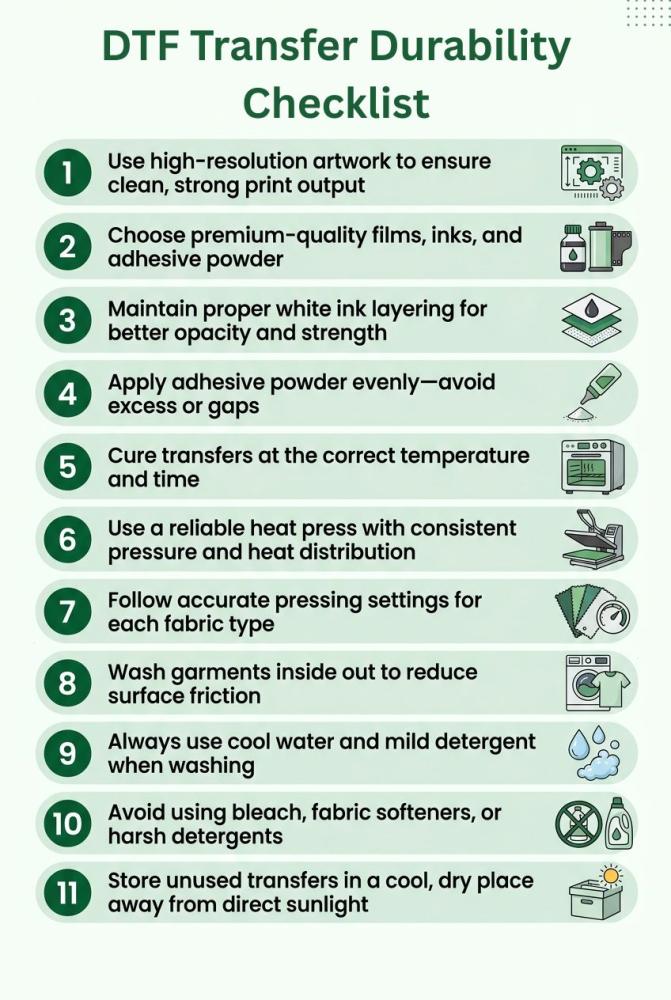
When it comes to DTF durability, consistency across production and care is what truly determines performance. Many people ask how long do DTF transfers last, but the answer depends on how well each step of the DTF printing process is handled. Use this checklist to ensure maximum lifespan and quality.
Durability Checklist
-
Use high-resolution artwork to ensure clean, strong print output
-
Choose premium-quality films, inks, and adhesive powder
-
Maintain proper white ink layering for better opacity and strength
-
Apply adhesive powder evenly—avoid excess or gaps
-
Cure transfers at the correct temperature and time
-
Use a reliable heat press with consistent pressure and heat distribution
-
Follow accurate pressing settings for each fabric type
-
Wash garments inside out to reduce surface friction
-
Always use cold water and mild detergents
-
Avoid bleach, fabric softeners, and harsh chemicals
-
Limit high-heat drying; air drying is for better longevity
-
Store garments properly away from heat and direct sunlight
Following this checklist helps ensure your transfers remain vibrant, flexible, and long-lasting.
Which Printing Method Has the Longest Durability?
When it comes to long-lasting prints, DTF durability and screen printing are often considered top performers. However, the right choice depends on fabric, usage, and production needs like bulk DTF printing.
Quick insights:
-
Screen printing offers excellent longevity for large runs
-
DTF provides flexibility with strong wash resistance
-
DTG works best for soft feel but may fade faster
-
Vinyl is durable but can crack over time
|
Printing Method |
Durability (Washes) |
Fabric Compatibility |
Feel |
Best Use Case |
|
Screen Printing |
100+ |
Limited |
Thick |
Bulk orders |
|
DTF Printing |
50–100+ |
High |
Flexible |
Versatile apparel |
|
DTG Printing |
30–50 |
Medium |
Soft |
Detailed prints |
|
Vinyl Printing |
40–60 |
Medium |
Heavy |
Simple designs |
Conclusion
Understanding DTF transfer durability is essential for delivering long-lasting, high-quality apparel that customers trust. From production quality to aftercare, every step influences performance. If you’re wondering how long do custom DTF transfers last, the answer lies in both proper application and usage conditions. With the right approach, they can easily withstand dozens of washes while maintaining color and flexibility. Techniques like gang sheet printing further improve efficiency without compromising durability. For growing apparel brands, mastering these factors ensures better product quality, fewer returns, and stronger customer satisfaction over time.
FAQs: DTF Transfer Durability & Performance
1. Do DTF transfers feel heavy on fabric?
No, DTF transfers are generally lightweight and flexible. When applied correctly, they feel smooth and move with the fabric rather than sitting stiff on top.
2. Can DTF transfers be layered or re-pressed?
Yes, DTF prints can be re-pressed for better adhesion. However, layering multiple transfers is not recommended as it may affect flexibility and finish.
3. Are DTF transfers eco-friendly?
DTF uses water-based inks, which are relatively safer than some traditional methods. Still, overall sustainability depends on materials and production practices.
4. Do DTF transfers work on stretchy fabrics?
Yes, DTF performs well on stretchable materials like blends and activewear, maintaining flexibility without cracking when applied properly.
5. Can DTF prints handle industrial washing?
They can handle regular washing, but industrial or high-heat washing may reduce lifespan faster compared to standard home care.
6. Is peeling possible after application?
Peeling can occur if the transfer is under-cured or incorrectly pressed. Proper temperature, pressure, and timing prevent this issue.
7. Do DTF transfers require special storage before use?
Yes, they should be stored in a cool, dry place away from humidity and direct sunlight to maintain adhesive quality over time.