


If you have ever wondered why one DTF print looks different from another, like in terms of look and feel, then the answer lies in the types of DTF transfer films. Not all DTF transfer films are equal. They differ due to their properties, structure, and chemical coating. So, even if you are using an identical artwork for different transfers, the film peels differently.
The choice of transfer film is often overlooked in direct-to-film printing, which shows up later in the final print and how it feels on the garment. In this guide, we are going to learn about the most common DTF transfer film types, how they behave in real production, and which one fits your requirements.
DTF Transfer Film Type: Why It Matters More Than You Expect
In direct to film printing technology, DTF transfer film, which is a specialized PET film, acts as a carrier of your design. This design is then transferred to the garment with a heat press. Now, if the transfer film is a matte type, the ink holds well, providing a clean, non-reflective finish.
Similarly, a luminous or glow-in-the-dark film can absorb light that make them glow in a dark environment. So, the choice of DTF transfer film type determines how your print looks and feels. Surface texture, release time, and edge clarity depend on the choice of the film type.
So, it matters a lot in printing. Understanding different film types helps you avoid waste and errors during the printing process. It helps you pick the right film that fits your workflow.
What are the Most Common Types of DTF Transfer Films?
Most print businesses focus primarily on ink quality, heat press settings, and image resolution. But the DTF film also matters because it’s the link between your design and the fabric. The correct film puts the transfer on the fabric accurately and as per your expectation. It ensures a proper bond with the fabric with clean edges and sharp output.
Let’s check out the different types of DTF transfer films that offer various kinds of prints.
Standard Matte and Glossy Films
Matte DTF transfer films are widely used across the industry. They create a soft, non-shiny surface that diffuses light. As a result, compared to shiny films, they offer a premium and subtle look. On the other hand, glossy films deliver a vibrant, reflective finish that enhances color pop and sharpness.
When comparing DTF film glossy vs matte, the choice depends on the final look you want. Matte is ideal for fashion and minimal designs, while glossy suits bold graphics and high-contrast prints. Choosing the best DTF transfer film ultimately comes down to application, fabric type, and desired visual impact.
Matte vs Glossy DTF Films: Strengths and Trade-offs
Matte DTF Film
Strengths:
-
Soft, non-reflective finish that looks premium
-
Better suited for fashion, streetwear, and minimal designs
-
Reduces glare under bright lighting
-
Feels more natural on fabric
Trade-offs:
-
Colors may appear slightly muted compared to glossy ones
-
Less “pop” for bold, high-contrast graphics
-
Not ideal if you want a shiny or standout effect
Glossy DTF Film
Strengths:
-
High-shine finish enhances vibrancy and sharpness
-
Colors look more saturated and eye-catching
-
Great for bold graphics, logos, and promotional designs
-
Adds a polished, high-impact look
Trade-offs:
-
Reflective surface can create glare under light
-
May feel slightly more “plastic-like” on fabric
-
Less preferred for subtle or premium fashion aesthetics
Hot Peel vs Cold Peel Transfer Films
When comparing different types of DTF transfer film, one of the most important distinctions is between hot peel and cold peel films. This difference directly affects your workflow, speed, and final print finish.
Hot peel films are designed to be peeled immediately after pressing, while the transfer is still hot. This makes them faster and more efficient for production environments where time matters. In high-volume setups, hot peel is often preferred because it reduces waiting time between prints. However, it requires precision—peeling too aggressively can affect the design if the adhesive hasn’t fully set. You could face DTF transfer cracking after washing.
Cold peel films, on the other hand, require the print to cool down completely before peeling. This extra step adds time, but it offers more stability. The design settles properly into the fabric, reducing the risk of lifting or distortion. Many users find cold peel films more forgiving, especially when aiming for consistent, high-quality results.
Strengths and Trade-offs
Hot Peel Film
Strengths: Faster workflow, ideal for bulk production, improves turnaround time
Trade-offs: Requires precise handling, slightly higher risk of errors during peeling
Cold Peel Film
Strengths: More stable results, cleaner finish, easier for beginners
Trade-offs: Slower process, adds waiting time between steps
Glitter and Metallic Films
When exploring advanced types of DTF transfer film, glitter and metallic films stand out for their visual impact. These specialty films are designed to add texture, shine, and a premium finish that goes beyond standard matte or glossy outputs.
If your goal is to create eye-catching designs, these can easily be considered among the best DTF transfer film options for decorative and fashion-forward printing.
Glitter DTF films contain fine reflective particles that create a sparkling effect on the print. They’re commonly used for fashion apparel, kidswear, and festive designs where a bold, playful look is needed. The shimmer effect enhances visibility and adds depth to otherwise simple graphics.
Metallic DTF films, on the other hand, deliver a smooth, reflective finish similar to foil. These are ideal for logos, branding elements, and premium merchandise where a polished, high-end appearance is required. Colors appear richer and more vibrant due to the reflective base.
Strengths and Trade-offs
Glitter Films
Strengths: Unique sparkle effect, high visual appeal, great for creative designs
Trade-offs: Slightly textured feel, may not suit minimal or professional looks
Metallic Films
Strengths: Premium finish, strong color reflection, excellent for branding
Trade-offs: Limited flexibility in subtle designs, can highlight imperfections
Related: What Material is Best for DTF Transfers?
Glow-in-the-Dark (Luminous) Films
Glow-in-the-dark, or luminous films, are one of the most unique types of DTF transfer films available today. These films absorb light and emit a glow in low-light or dark environments, creating a striking visual effect that stands out instantly. If you’re looking to create novelty, nightlife, or kidswear designs, these DTF film types are more suitable.
During the day, these prints look fairly standard—usually with a slightly tinted base. But once exposed to darkness, they activate and glow, adding an interactive element to your designs. This makes them popular for event merchandise, safety apparel, and creative branding.
Strengths and Trade-offs
Strengths:
-
Unique glow effect adds high visual impact
-
Great for night events, kidswear, and promotional designs
-
Enhances creativity and product differentiation
-
Considered among the best DTF films for printing for novelty use cases
Trade-offs:
-
Glow intensity depends on light exposure and material quality
-
Colors may appear less vibrant in daylight
-
Slightly higher cost compared to standard films
-
Not ideal for subtle or professional designs
Single-Sided vs. Double-Sided Coated Films
When comparing different types of DTF transfer film, coating plays a crucial role in print quality and handling. Single-sided and double-sided coated films may look similar, but they behave very differently during printing and transfer.
Single-sided coated films have a printable coating on only one side. This is where the ink and adhesive powder are applied. The other side remains smooth and untreated. These films are widely used and work well for most standard printing setups. However, they can sometimes be harder to handle, especially in humid conditions, as they may curl or shift during printing.
Double-sided coated films, on the other hand, have an additional anti-slip or anti-static coating on the back side. This improves grip and stability when feeding through the printer. It reduces movement, minimizes errors, and ensures more consistent print alignment—especially useful in high-volume or precision work.
Strengths and Trade-offs
Single-Sided Films
Strengths: Cost-effective, widely available, suitable for standard use
Trade-offs: Can slip or curl, slightly less stable during printing
Double-Sided Films
Strengths: Better grip, improved feeding, higher print consistency
Trade-offs: Slightly more expensive, may require minor setup adjustments
The table below provides a brief DTF transfer film comparison.
|
Film Type |
Finish / Behavior |
Best Use Case |
Strengths |
Trade-offs |
|
Matte Film |
Non-shiny, soft finish |
Fashion, streetwear, minimal designs |
Premium look, reduces glare, natural feel |
Slightly muted colors, less visual “pop” |
|
Glossy Film |
Shiny, reflective surface |
Bold graphics, logos, promotional prints |
Vibrant colors, sharp details, high impact |
Can create glare, slightly plastic feel |
|
Hot Peel Film |
Peeled immediately after pressing |
Bulk production, fast workflows |
Saves time, faster turnaround |
Requires precision, risk of peeling errors |
|
Cold Peel Film |
Peeled after cooling down |
High-quality, consistent output |
Stable results, cleaner finish, beginner-friendly |
Slower process, adds wait time |
|
Glitter Film |
Sparkling, textured effect |
Kidswear, fashion, festive designs |
Eye-catching, creative appeal |
Slight texture, not ideal for subtle designs |
|
Metallic Film |
Smooth, foil-like shine |
Branding, premium merchandise |
Rich color reflection, high-end look |
Highlights imperfections, less subtle |
|
Glow-in-the-Dark Film |
Glows in low light |
Nightwear, events, novelty prints |
Unique effect, high visibility, creative use |
Less vibrant in daylight, higher cost |
|
Single-Sided Film |
Coated on one side only |
Standard printing setups |
Cost-effective, widely available |
Can slip/curl, less stable feeding |
|
Double-Sided Film |
Coated on both sides (anti-slip back) |
High-volume, precision printing |
Better grip, consistent feeding, fewer errors |
Slightly expensive, setup adjustments needed |
What is the Effect of DTF Transfer Film Type on Print?
The type of film you choose plays a bigger role than most people expect. It directly affects how your design looks, how it feels on fabric, and how long it lasts after multiple washes. Different types of DTF transfer films behave differently during printing and pressing, which is why selecting the best DTF transfer film is critical for consistent results. Even with perfect settings, the wrong film can hold you back.
Here’s how film type impacts your print:
-
Finish and Appearance: Matte films give a soft, premium look, while glossy films boost shine and color vibrancy. The film defines the visual output.
-
Ink Absorption and Detail: High-quality DTF paper absorbs ink evenly, resulting in sharper edges and smoother gradients. Poor films can cause patchy or dull prints.
-
Adhesion and Durability: The coating affects how well adhesive powder bonds, which directly impacts wash durability and long-term performance.
-
Handling and Consistency: Films like double-sided coated options improve feeding and alignment, reducing printing errors.
-
Texture and Feel: Some films create a softer hand feel, while others may feel slightly heavier or more plastic-like.
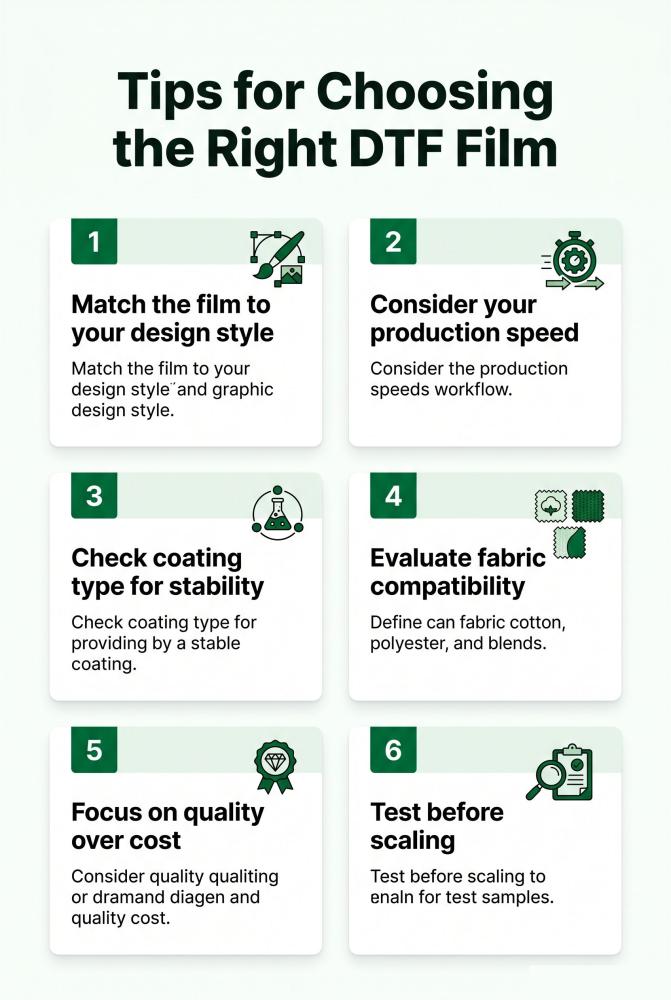
Tips for Choosing the Right DTF Film
Choosing the right DTF film isn’t just about price or availability—it’s about matching the film to your workflow, design style, and fabric type. With so many options available, picking the wrong one can lead to inconsistent prints, wasted material, and extra effort. The goal is to find a film that supports your process, not complicates it.
Here are some practical tips to help you choose wisely:
-
Match the film to your design style: Use matte films for subtle, premium looks and glossy films for bold, high-contrast graphics. Specialty films like glitter or metallic should be used selectively for impact.
-
Consider your production speed: If you handle bulk orders, hot peel films save time. For more controlled, high-quality output, cold peel films offer better consistency.
-
Check coating type for stability: Double-sided coated films provide better grip and smoother feeding, especially useful in high-volume or precision printing setups.
-
Evaluate fabric compatibility: Some films perform better on cotton, while others handle polyester and blends more effectively. Always test before large runs.
-
Focus on quality over cost: Cheap films may save money upfront, but often lead to print defects, poor adhesion, and rework.
-
Test before scaling: Always run small samples to check color, adhesion, and finish before committing to bulk production.
Which Film Type is Suitable for You?
Choosing the right option depends on your workflow and design goals. Among the many types of DTF transfer film, matte films suit fashion-focused, subtle prints, while glossy works best for bold, vibrant graphics.
If speed matters, hot peel is ideal; for consistency, cold peel is safer. Double-sided films are better for high-volume precision, while single-sided works for basic setups. Specialty options like glitter or metallic are great for standout designs, not everyday use.
If you have entered the business and are looking to order custom DTF transfers, going with Matte is the safest option. You can also order samples for different transfer types and check which one aligns with your business goals. Look for the right DTF transfer provider who can identify your needs and provide the right custom transfers.
The DTF film types explained in this guide will help you understand the varieties in transfers. However, sample transfers can help you check those transfers firsthand.
FAQs: DTF Transfer Film Guide
What is the best DTF transfer film for beginners?
For beginners, cold peel and matte films are the safest choice. They offer better control, fewer errors, and more consistent results compared to hot peel or specialty films.
Which DTF film type gives the best print quality?
High-quality double-sided coated matte films usually deliver the most consistent results. They improve ink stability, feeding accuracy, and overall print clarity.
Can I use the same DTF film for all fabrics?
Most standard films work on cotton, polyester, and blends. However, testing is important since different fabrics react differently to heat, pressure, and film type.
What is the difference between hot peel and cold peel films?
Hot peel films are removed immediately after pressing, saving time. Cold peel films require cooling but provide more stable and reliable results.
Do specialty films like glitter or metallic affect durability?
Yes, they can. While they add visual impact, durability depends on proper curing and application. High-quality specialty films can still perform well if used correctly.