


DTF transfers cracking or flaking after the first wash can be incredibly frustrating. You deliver a freshly printed shirt, the design looks perfect, and then a customer returns saying the print is already breaking apart.
Many print shops and apparel sellers in the United States face this issue and start wondering why DTF prints crack after washing or what causes DTF print cracking after washing so quickly. In most cases, custom DTF transfers cracking happens because of incorrect heat press settings, poor fabric preparation, or low-quality materials. The good news is that these problems are usually preventable.
This guide explains the real causes behind the issue and shares practical tips to help you produce durable, long-lasting DTF prints.
Are DTF Prints Supposed to Crack After Washing?
If you’re experiencing DTF print cracking after washing, you might wonder whether this is normal. The simple answer is no. High-quality DTF prints are designed to stay flexible and durable even after dozens of wash cycles. When applied correctly, they bond with the fabric and move with the garment rather than breaking or flaking.
However, when DTF transfers crack early—especially after the first few washes—it usually signals an issue in the process. Problems like incorrect heat press temperature, insufficient pressure, poor curing, or low-quality transfer materials are often responsible. Sometimes the fabric itself or improper washing methods can also contribute.
The good news is that understanding why DTF prints crack after washing makes the issue much easier to prevent. By identifying the real causes and applying the correct printing techniques, you can produce DTF prints that remain vibrant, flexible, and durable for a long time.
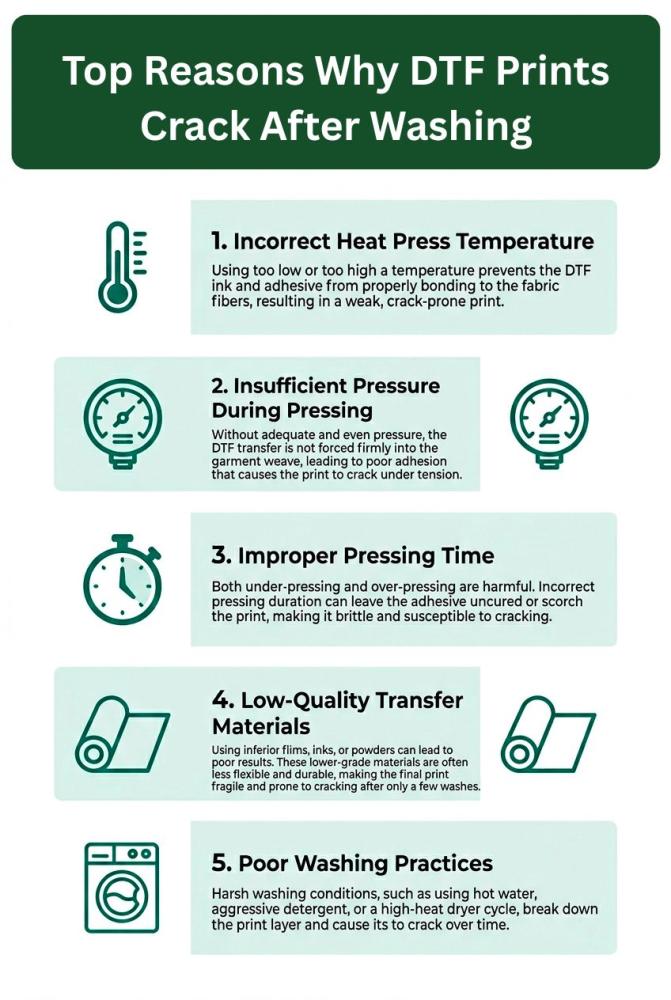
Top Reasons Why DTF Prints Crack After Washing
If you’re facing the issue of your DTF print cracking after washing, the problem usually comes from a few technical mistakes during printing or application. Understanding the reasons why DTF prints crack after washing helps you identify the exact issue and prevent it in future prints.
Here are the most common causes of DTF transfers cracking:
1. Incorrect Heat Press Temperature
Temperature plays a crucial role in activating the adhesive powder. If the press temperature is too low, the adhesive will not fully melt and bond with the fabric, causing the print to crack or flake after washing.
2. Insufficient Pressure During Pressing
DTF transfers require medium to firm pressure for proper adhesion. Uneven or low pressure can leave parts of the transfer weakly attached, which often results in DTF print cracking after washing.
3. Improper Pressing Time
Pressing for too little time prevents the adhesive from fully bonding, while excessive heat exposure can damage the transfer layer.
4. Low-Quality Transfer Materials
Cheap PET films, poor adhesive powder, or low-grade inks can reduce flexibility and durability, making DTF transfers cracking more likely.
5. Poor Washing Practices
Hot water washing, harsh detergents, and high dryer heat can weaken the adhesive bond and accelerate cracking.
How Washing Affects DTF Transfers
Understanding what actually happens to a garment during the washing process gives the key insights into why DTF transfers crack after washing. Washing machines expose prints to a combination of water, heat, detergents, and mechanical friction. If a transfer was not applied properly, these conditions can quickly lead to DTF print cracking after washing.
Besides this, fabrics expand and contract as they absorb water and move through the wash cycle. A well-applied transfer stretches with the fabric, but poorly bonded prints may start to split or flake under this stress. This is one of the main reasons behind DTF transfers cracking after only a few washes.
Several washing factors can accelerate damage:
-
Hot water washing that weakens adhesive bonding
-
Strong detergents or bleach that degrade the print layer
-
High dryer temperatures make the transfer brittle
-
Heavy friction in washing machines
When DTF prints are properly applied and cared for, they remain flexible and durable. However, incorrect washing conditions can expose weaknesses in the transfer and lead to early cracking.
Signs Your DTF Print Was Applied Incorrectly
Sometimes, cracking of DTF prints is not caused by the washing process itself but by mistakes during application. When a transfer is not pressed correctly, it may look fine at first but start to show problems after the first wash cycle. Recognizing these early warning signs can help you understand why DTF prints crack after washing.
Here are some common indicators that the transfer was applied incorrectly:
-
Cracks appearing after the first wash, especially along edges or stretched areas
-
Edges of the design lifting or peeling from the fabric
-
A stiff or brittle feel instead of a soft, flexible print
-
Uneven texture across the design, indicating inconsistent pressure
-
Powder residue or rough patches on the printed area
These signs often point to issues like incorrect heat press settings, uneven pressure, or poor curing during production. When transfers are applied properly, DTF transfers cracking becomes much less likely and prints remain smooth, flexible, and durable even after multiple washes.
How to Prevent DTF Prints from Cracking After Washing?
The best way to avoid cracking of your DTF transfers after washing is to follow the correct printing and application practices from the start. When transfers are applied with the right settings and materials, they form a flexible bond with the fabric that can withstand repeated washing.
Here are some key steps to prevent DTF transfers cracking:
1. Use Proper Heat Press Settings
Always press transfers at the temperature recommended by the supplier, typically around 300–320°F (150–160°C) for 10–15 seconds. This allows the adhesive powder to melt properly and bond with the fabric fibers.
2. Apply Consistent Pressure
Medium to firm pressure is essential for strong adhesion. Uneven or insufficient pressure can leave parts of the transfer weakly attached, which later causes DTF print cracking after washing.
3. Choose High-Quality Transfers
Low-grade films, inks, and adhesive powders reduce flexibility. Using premium transfers—such as custom DTF transfers, gang sheet printing, or wholesale DTF transfers from reliable suppliers—helps improve durability and long-term performance.
4. Pre-Press the Garment
Before applying the transfer, pre-press the garment for 3–5 seconds to remove moisture and wrinkles. This creates a smooth surface for better adhesion.
5. Perform a Post-Press
After peeling the film, press the design again for 5–10 seconds using parchment or a Teflon sheet. This final step strengthens the bond and improves durability.
By following these practices, you can significantly reduce DTF transfers cracking and produce prints that stay vibrant and intact even after many wash cycles.
Best Washing Practices to Protect DTF Prints
Even when transfers are applied correctly, improper garment care can still lead to cracks in DTF prints after washing. The exposure to conditions like heat, water, detergents, and friction can affect the durability of the printed design. This is when following the right washing practices can make a big difference in stopping DTF transfer cracking. Such practices will help you keep your transfers looking good for longer.
Here are the recommended care practices:
1. Wash Garments Inside Out
Turning garments inside out reduces direct friction between the print and other clothing during the wash cycle, which helps prevent early DTF print cracking after washing.
2. Use Cold or Warm Water
Hot water can weaken the adhesive bond over time. Washing garments in cold or mild warm water helps preserve the flexibility of the transfer.
3. Avoid Harsh Detergents and Bleach
Strong chemicals can degrade the ink and adhesive layers, which may contribute to DTF transfers cracking or fading.
4. Use Low Heat for Drying
High dryer temperatures can make the transfer brittle. Air drying or tumble drying on low heat is recommended.
5. Avoid Direct Ironing on the Print
If ironing is needed, place a cloth over the design or iron the garment inside out.
By following these care practices, apparel businesses and customers can significantly reduce the chances of DTF print cracking after washing and extend the life of their printed garments.
How to Fix DTF Prints That Are Already Cracking
If you notice DTF print cracking after washing, the damage may sometimes be reduced or stabilized with a few corrective steps. While severely damaged prints cannot always be fully restored, certain methods can help improve adhesion and prevent further cracking.
Repress the Transfer
One of the simplest fixes is to repress the design. Place the garment back in the heat press and apply heat at 300–320°F (150–160°C) for 5–10 seconds with medium pressure. This can help reactivate the adhesive and strengthen the bond between the transfer and the fabric.
Add a Post-Press
A post-press can reinforce the design. Cover the print with parchment paper or a Teflon sheet and press again for a few seconds. This step helps seal the transfer and can improve overall durability.
Apply Heat with Parchment Paper
If a full repress isn’t possible, gently heating the design through parchment paper with a heat press or iron may help smooth small cracks and improve flexibility.
Use Proper Washing Methods Moving Forward
Switch to cold water washing, mild detergents, and low dryer heat to prevent further damage.
When the Print Cannot Be Repaired
If the cracking is severe or the transfer is already peeling extensively, the print may not be repairable and the garment may need to be reprinted.
How to Prevent DTF Cracking in Future Prints
In order to prevent DTF print from cracking after washing, you need to control every stage of the printing and application process. When the right materials, settings, and procedures are used, DTF transfers cracking becomes very rare. The following checklist can help print shops and apparel businesses maintain consistent, durable results.
Use High-Quality Transfers
Always choose transfers produced with premium PET film, pigment inks, and strong TPU adhesive powder. High-quality materials provide better flexibility and reduce the chances of cracking of your DTF transfers after washing.
Verify Proper Curing
During production, adhesive powder must be fully melted and cured. Poor curing weakens the bond between the ink and adhesive layer, which can later cause your DTF transfers to crack after washing.
Maintain Correct Heat Press Settings
Ensure your heat press temperature, pressure, and time are accurate. Most transfers perform best around 300–320°F (150–160°C) for 10–15 seconds with medium to firm pressure.
Test New Garments Before Production
Different fabrics behave differently under heat. Always test transfers on new garment types to confirm proper adhesion and flexibility before running large orders.
Follow Proper Garment Care Instructions
Encourage customers to wash garments inside out, use cold water, and avoid high dryer heat to maintain print durability.
Choose Reliable Transfer Suppliers
Working with professional suppliers ensures consistent production quality and reduces the risk of DTF print cracking after washing in finished garments.
Why High-Quality DTF Transfers Matter
The durability of a print largely depends on the quality of the transfer itself. Many cases of cracking or peeling occur not because of the heat press process, but because the transfer was produced with low-grade materials or inconsistent production standards. High-quality transfers are engineered to remain flexible and strongly bonded to fabric, reducing the chances of DTF print cracking after washing.
Professional suppliers focus on several critical production factors:
-
Premium adhesive powder that melts evenly and bonds securely with fabric fibers
-
High-resolution printing systems that create smooth, flexible ink layers instead of thick, brittle prints
-
Accurate curing processes that properly fuse the adhesive and ink before the transfer is used
-
Consistent ink layering to maintain elasticity and prevent early cracking
We, at DTFS, apply strict production controls to ensure every transfer meets professional durability standards. By combining quality materials with industrial-grade printing and curing technology, we help print shops and apparel businesses reduce cracking issues and deliver long-lasting results.
Also read: What Makes a Good DTF Transfer: A Complete DTF Printing Quality Checklist
Conclusion
DTF prints are designed to be flexible, durable, and long-lasting, so DTF print cracking after washing is usually a sign that something went wrong during printing, application, or garment care. Issues like incorrect heat press settings, poor curing, low-quality materials, or improper washing practices are the most common causes behind DTF transfers cracking.
The good news is that these problems are largely preventable. By using high-quality transfers, maintaining accurate heat press temperature and pressure, testing fabrics before production, and following proper washing guidelines, businesses can significantly improve print durability.
Working with a reliable transfer supplier and following consistent printing practices ensures your designs remain vibrant and intact even after many wash cycles. When handled correctly, DTF printing can deliver professional-quality apparel that maintains both appearance and performance over time.
FAQs
1. Why do DTF prints crack after the first wash?
DTF prints usually crack after the first wash due to incorrect heat press temperature, insufficient pressure, or poorly cured transfers.
2. Can fabric type cause DTF transfers to crack?
Yes, extremely stretchy or low-quality fabrics can stress the transfer and increase the risk of cracking.
3. How long should a properly applied DTF print last?
High-quality DTF prints can typically last 40–60 washes or more when applied and cared for correctly.
4. Does high dryer heat damage DTF prints?
Yes, excessive dryer heat can weaken the adhesive bond and contribute to DTF print cracking after washing.
5. Can a cracked DTF print be repaired?
Minor cracks may be improved by repressing the design, but severely damaged transfers usually cannot be fully repaired.