
September 1, 2026 · Connor McDonnell
Is DTF Printing Eco-Friendly? What You Should Know
DTF printing has become a popular choice for custom apparel, small business merchandise, and on-demand production. Its ability to produce detailed, full-color designs without the setup requirements of some traditional printing methods makes it especially useful for short runs and customized orders.
But as businesses and consumers pay closer attention to sustainability, an important question comes up: is DTF printing eco friendly?
The short answer is: DTF printing can be more resource-efficient in certain situations, but it is not automatically or completely eco-friendly. Its environmental impact depends on the materials used, how efficiently the production process is managed, how much energy is consumed, and how waste is handled.
DTF can reduce water use and help businesses avoid overproduction, especially when printing small quantities or producing garments on demand. At the same time, the process relies on PET transfer film, adhesive powder, electricity, and other consumables that have their own environmental impact.
Understanding both sides is important. Here is a closer look at the sustainability of DTF printing and what businesses can do to make their production process more responsible.
Quick Answer
Is DTF printing eco friendly? DTF printing can be more resource-efficient than some traditional printing methods, especially for short runs and on-demand production. It can reduce water use, setup waste, and overproduction. However, PET film, adhesive powder, energy use, and consumable waste mean DTF is not completely eco-friendly. Sustainable practices can help reduce its overall environmental impact.
Is DTF Printing Eco Friendly? A Balanced Look at the Process
To answer whether DTF printing is eco-friendly, it helps to look at the entire process rather than focusing on one material or production step.
DTF, or Direct-to-Film printing, involves printing a design onto a transfer film, applying adhesive powder, curing the design, and then using heat and pressure to transfer it onto a garment or other compatible material.
Each stage uses materials and energy. This means the environmental impact of DTF can vary from one production workflow to another.
For example, a print shop producing only the quantities customers have ordered may generate less excess inventory than a business producing thousands of garments without knowing whether they will sell. Likewise, a shop that carefully prepares artwork and minimizes failed prints can use considerably fewer materials than one with frequent production errors.
Several factors influence DTF printing sustainability, including:
-
The type and formulation of inks used
-
The amount of PET film consumed
-
How much adhesive powder becomes waste
-
The number of failed prints and reprints
-
Energy used during curing and heat pressing
-
Production quantities and inventory planning
-
Packaging and shipping practices
-
Disposal methods for ink and other consumables
-
The materials used in the final garment
This is why there is no single sustainability rating that applies to every DTF operation.
DTF can be a resource-efficient solution in the right circumstances, particularly for smaller orders and on-demand production. However, calling every DTF workflow completely “green” would overlook important environmental considerations.
Environmental Benefits of Eco Friendly DTF Printing Practices
While DTF is not impact-free, certain aspects of the process can support more efficient production. The biggest benefits often come from reducing unnecessary water use, setup materials, and overproduction.
DTF Can Use Less Water During Production
One potential environmental advantage of DTF is that it uses a largely dry printing and transfer workflow.
Traditional screen printing may involve screens, emulsions, washing, and cleaning processes that can require water. Depending on the equipment and production setup, this can also create wastewater that needs to be managed responsibly.
DTF does not require the same screen-based preparation and reclamation process for every design. This can reduce water requirements associated with certain conventional workflows.
That does not mean DTF uses no water throughout its full supply chain. Water may still be involved in manufacturing inks, films, garments, and other materials. However, at the decoration stage, DTF can avoid some of the water-intensive steps associated with screen preparation and cleanup.
For businesses evaluating eco friendly DTF printing, lower water use during the actual decoration workflow can be one factor worth considering.
On-Demand Production Can Help Reduce Overproduction
One of the strongest potential sustainability advantages of DTF is its flexibility.
Businesses can print smaller quantities without needing the same level of setup required for some traditional methods.
This makes DTF useful for:
-
Custom orders
-
Small businesses
-
Limited-edition products
-
Test designs
-
Seasonal merchandise
-
Event apparel
-
Personalized garments
-
On-demand stores
Instead of producing a large inventory in advance, a business may be able to print closer to actual demand.
This matters because unsold products still require raw materials, manufacturing, transportation, storage, and eventually disposal. Reducing unnecessary inventory can therefore be an important part of a more sustainable production strategy.
For businesses managing multiple logos or smaller orders, DTF gang sheet printing can also help organize multiple designs efficiently on available transfer space when planned correctly.
Digital Printing Can Reduce Setup Waste for Short Runs
DTF uses a digital workflow, meaning designs can be prepared and printed without creating a separate physical screen for every artwork variation.
This is particularly useful when:
-
Every order uses a different design
-
Customers need small quantities
-
Artwork changes frequently
-
A business wants to test several designs
Less setup can mean fewer materials dedicated to preparing individual designs.
However, production volume matters. For very large and repetitive orders, other printing methods can also become highly efficient. The environmental comparison is not simply about which technology is newer. It depends on how many units are being produced and how efficiently the workflow is managed.
Precise Production Can Help Control Material Waste
Good planning can make a major difference in the DTF printing environmental impact.
Before production begins, businesses can reduce waste by checking:
-
Artwork dimensions
-
Colors and transparency
-
Design placement
-
Resolution
-
File quality
-
Transfer quantities
Learning how to properly prepare an image for DTF printing can help reduce avoidable errors that lead to wasted film, ink, powder, and garments.
The more mistakes caught before printing, the fewer materials are likely to be consumed on reprints.
The Environmental Downsides of DTF Printing
A balanced discussion of DTF sustainability must also consider the materials and resources the process consumes.
PET Transfer Film Creates Plastic Waste
DTF designs are typically printed onto PET transfer film. PET is a plastic material, and the environmental impact of the film does not disappear after the transfer is applied.
Depending on the specific product and local recycling infrastructure, used carrier film may not be accepted through standard household recycling systems. Contamination from inks and other materials can also affect recycling options.
This means businesses should avoid assuming that every DTF film can simply be placed into a regular recycling bin.
The amount of film waste generated can also increase when layouts are poorly planned or when large unused spaces are left around designs. Efficient design placement and gang sheet planning can help reduce unnecessary film consumption.
Adhesive Powder Adds Another Synthetic Material
DTF uses hot-melt adhesive powder to help the printed design bond to the garment.
This adhesive is an essential part of the transfer process, but it also adds another material that must be considered when evaluating sustainability.
Poor powder management can create unnecessary waste. Excess powder, spills, and poorly maintained equipment may increase material consumption beyond what is needed for production.
The adhesive layer can also make the final decorated garment a more complex product from a recycling perspective. A garment may already contain blended fibers, dyes, trims, and other materials, and the added print can further complicate end-of-life processing.
Curing and Heat Pressing Require Energy
DTF printing requires heat at several stages of the process.
Energy may be used for:
-
Curing adhesive powder
-
Curing or drying printed film
-
Heat pressing transfers
-
Operating supporting production equipment
The amount of energy consumed depends on the equipment, temperature settings, production volume, and how efficiently machines are operated.
Using appropriate settings is important for both quality and waste reduction. Understanding the best temperature for DTF Printing can help businesses avoid failed transfers caused by incorrect heat settings.
The goal should not be to use less heat at the expense of quality. Instead, businesses should use suitable and consistent settings that reduce unnecessary reprints and wasted materials.
Failed Prints Can Increase Waste Quickly
A single production mistake may seem small, but repeated errors can significantly increase material use over time.
Common causes of failed DTF prints include:
-
Poor-quality artwork
-
Incorrect sizing
-
Improper ink settings
-
Inadequate powder coverage
-
Incorrect curing
-
Poor heat press settings
-
Incorrect pressure
-
Improper peel timing
A properly prepared white layer is also important for print quality, especially when producing designs on darker garments. Learning how to create underbase for DTF printing can help improve consistency and reduce avoidable reprints.
From a sustainability perspective, preventing waste is usually more effective than trying to manage waste after it has already been created.
Is DTF Printing Sustainable Compared With Other Printing Methods?
The answer depends on the type of production being compared.
There is no single apparel decoration method that is automatically the most sustainable for every order.
DTF vs. Screen Printing
DTF can have advantages for short runs because it requires less design-specific setup and can support flexible production quantities.
Potential DTF advantages include:
-
Lower water requirements during the decoration workflow in many setups
-
No screen creation for every design
-
Easier short-run production
-
Flexible design changes
-
Better support for on-demand production
However, DTF also uses PET film and adhesive materials that must be considered.
Screen printing can require more setup for smaller orders, but large-volume production can become efficient when the same design is printed repeatedly.
The right choice often depends on order volume.
For a small custom order, DTF may reduce unnecessary setup and help a business avoid producing more garments than needed. For a very large order using the same artwork, a well-managed screen printing operation may offer a different level of production efficiency.
DTF vs. Other Digital Decoration Methods
Other digital printing technologies also have different environmental tradeoffs.
Depending on the method, factors may include:
-
Pretreatment requirements
-
Fabric compatibility
-
Ink formulation
-
Water consumption
-
Energy use
-
Production speed
-
Waste materials
-
Cleaning requirements
For this reason, businesses should evaluate the full workflow rather than choosing a printing method based solely on an “eco-friendly” label.
If you are exploring the broader advantages of DTF printing, it is also useful to consider how those production benefits apply to your order size, equipment, and inventory needs.
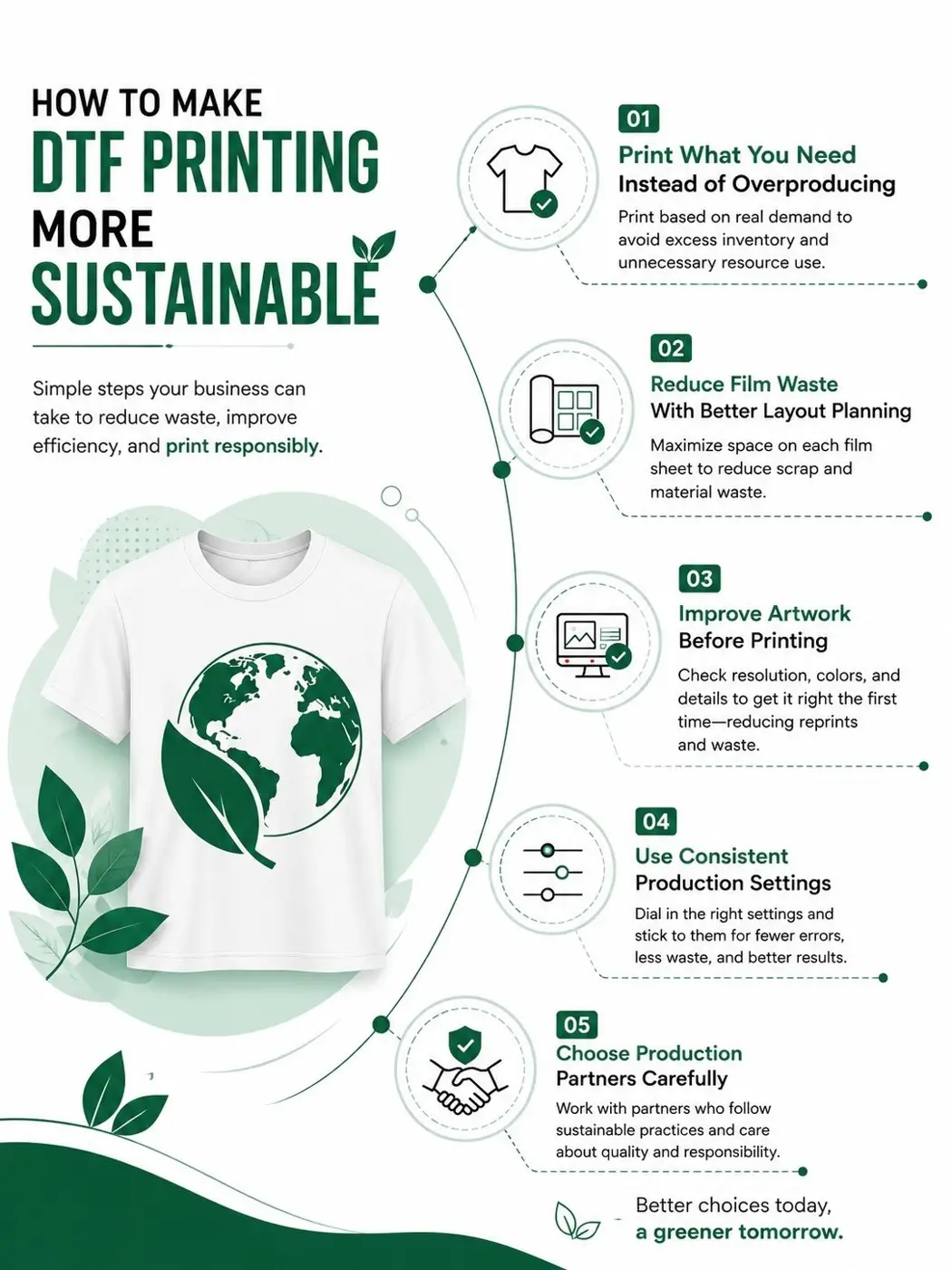
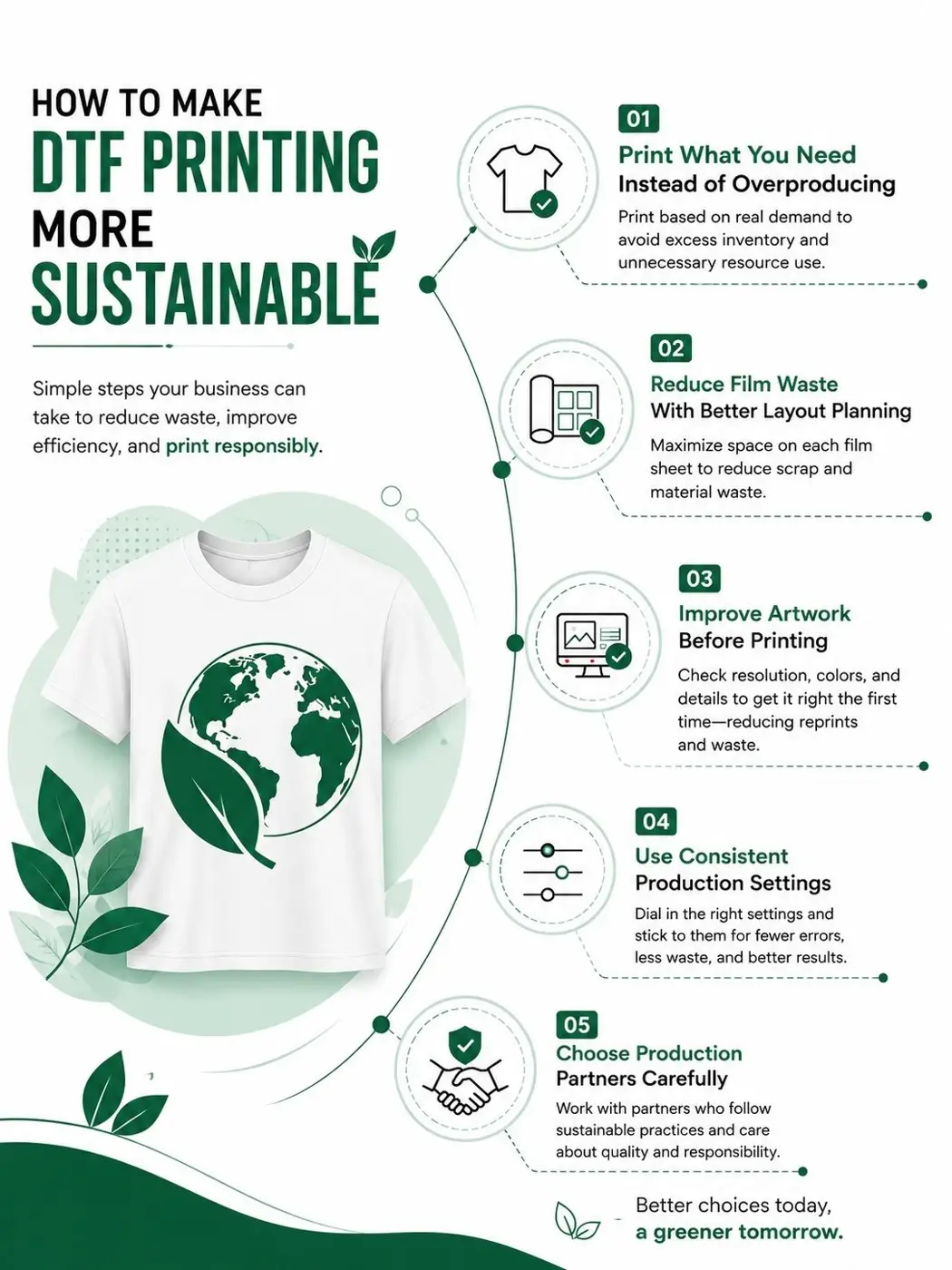
How to Make DTF Printing More Sustainable
DTF can become a more responsible production option when businesses focus on reducing unnecessary material use and improving workflow efficiency.
Print What You Need Instead of Overproducing
Producing closer to actual demand can reduce the risk of unused inventory.
Instead of ordering thousands of garments based only on estimates, businesses can use smaller production batches, test demand, and replenish successful products when needed.
This approach can be especially useful for online stores, promotional campaigns, seasonal merchandise, and businesses with frequently changing designs.
Companies with predictable higher-volume demand can also consider bulk and wholesale DTF printing while planning quantities carefully to avoid ordering significantly more transfers than they expect to use.
Reduce Film Waste With Better Layout Planning
Small improvements in layout can reduce wasted transfer material.
Consider:
-
Combining compatible designs
-
Reviewing quantities before production
-
Using transfer space efficiently
-
Avoiding unnecessarily large margins
-
Checking design sizes before printing
-
Planning gang sheets carefully
The objective is not simply to fill every available inch of film. It is to match the layout to actual production needs and avoid printing materials that will not be used.
Improve Artwork Before Printing
Artwork problems are one of the easiest sources of preventable waste.
Before sending a design into production, review:
-
Resolution
-
Transparency
-
Background removal
-
Color accuracy
-
Fine details
-
Print dimensions
-
Placement requirements
Taking time to prepare files correctly can reduce test prints and failed production runs.
Use Consistent Production Settings
Consistency helps reduce reprints.
Businesses should establish reliable processes for:
-
Underbase preparation
-
Ink application
-
Powder application
-
Curing
-
Heat press temperature
-
Pressure
-
Pressing time
-
Peel method
Documenting successful settings can make repeat production more consistent and reduce trial-and-error waste.
Choose Production Partners Carefully
Businesses outsourcing their printing should look beyond price when selecting a supplier.
Useful considerations include:
-
Print consistency
-
Clear artwork requirements
-
Accurate quantity options
-
Reliable production processes
-
Quality control
-
Material information
-
Packaging practices
For example, custom DTF transfers from a reliable production partner can help businesses order transfers based on their actual design and quantity requirements rather than maintaining unnecessary preprinted inventory.
Is DTF Printing Eco Friendly for Small Businesses and On-Demand Brands?
For small businesses, DTF's biggest potential environmental advantage may be its production flexibility.
A smaller business often cannot accurately predict demand for every design. Producing large quantities in advance can lead to deadstock, unused garments, and wasted materials.
DTF can make it easier to produce:
-
Smaller batches
-
Multiple designs
-
Customized orders
-
Limited releases
-
Replacement inventory
This does not make every DTF transfer automatically sustainable. However, producing closer to demand can reduce one important source of waste: making products that customers never purchase.
For businesses that do not operate their own printing equipment, outsourcing may also be a practical option. A white label DTF printing service can support brands and resellers that want to focus on sales and fulfillment without maintaining their own DTF production setup.
However, sustainability should still be evaluated across the broader supply chain, including shipping distances, packaging, supplier practices, and production efficiency.
For businesses evaluating flexible DTF production options, DTFS.co offers services for custom orders, gang sheets, wholesale production, and white-label workflows. The best choice depends on your order volume and how you manage production from design through final fulfillment.
Common Myths About DTF Printing Sustainability
Myth: DTF Is Completely Eco-Friendly
Reality: DTF can reduce certain types of waste and resource use, but it still relies on plastic-based film, adhesive materials, energy, and other consumables.
Myth: Water-Based Ink Makes the Entire Process Green
Reality: Ink is only one part of the production process. Film, powder, energy, garment materials, packaging, and disposal practices also affect the overall environmental footprint.
Myth: DTF Is Always More Sustainable Than Screen Printing
Reality: The answer depends on production volume and workflow. DTF may be particularly efficient for short runs and on-demand orders, while screen printing can be efficient for high-volume, repeat designs.
Myth: On-Demand Production Has No Environmental Impact
Reality: Producing on demand can reduce overproduction, but materials, energy, shipping, and garment manufacturing still have an environmental impact.
A Practical Checklist for More Sustainable DTF Printing
Businesses looking to improve DTF printing sustainability can start with practical changes:
-
Print closer to actual customer demand
-
Avoid unnecessary overproduction
-
Review artwork before printing
-
Optimize gang sheet and transfer layouts
-
Reduce failed prints through quality control
-
Use consistent curing and pressing settings
-
Avoid wasting adhesive powder
-
Maintain equipment properly
-
Follow appropriate guidance for disposing of ink and consumables
-
Consider energy-efficient production practices
-
Review packaging and shipping choices
-
Consider the full lifecycle of the decorated garment
Sustainability does not always come from one major change. In many cases, reducing small amounts of waste at multiple stages can create a more efficient overall workflow.
So, Is DTF Printing Eco Friendly?
Is DTF printing eco friendly? The most accurate answer is that it can be more resource-efficient in certain applications, but it is not inherently or completely eco-friendly.
DTF can offer environmental advantages by reducing certain water-intensive processes, limiting design-specific setup, supporting short production runs, and helping businesses print closer to actual demand.
These benefits can be particularly valuable for small businesses, customized orders, and on-demand apparel production.
However, DTF also has environmental considerations. PET transfer film, adhesive powder, energy consumption, failed prints, and consumable disposal all contribute to its footprint.
The most sustainable approach is to look at the entire workflow.
Print only what you need. Prepare artwork correctly. Reduce failed transfers. Plan film layouts efficiently. Use reliable production settings. Manage consumables responsibly. And choose production methods based on the actual needs of each order rather than assuming one printing technology is always the greenest choice.
For businesses, the goal should be more than simply finding an “eco-friendly” printing label. It should be building a production process that uses materials efficiently and avoids unnecessary waste.
Whether you need flexible DTF gang sheet printing, custom DTF transfers, larger-volume production, or white-label support, DTFS.co can help you choose a DTF production workflow that fits your business needs while supporting more efficient ordering and production practices.
Frequently Asked Questions About DTF Printing and Sustainability
Is DTF printing bad for the environment?
DTF printing has environmental impacts because it uses PET film, adhesive powder, energy, inks, and other consumables. However, its digital workflow and ability to support short-run and on-demand production can reduce certain forms of setup waste, water use, and overproduction. Its overall impact depends on how materials and production processes are managed.
Is DTF printing more eco-friendly than screen printing?
It depends on the order. DTF may be more resource-efficient for small, customized, and on-demand orders because it can reduce setup requirements and certain water-intensive processes. Screen printing can be highly efficient for large-volume production with the same design. The production workflow and order size should be considered when comparing environmental impact.
Is DTF printing sustainable?
DTF printing can support more sustainable production practices, but it is not automatically sustainable. The environmental impact depends on film and adhesive materials, ink formulation, energy use, production volume, waste reduction, and disposal practices.
Are DTF transfers eco-friendly?
DTF transfers are not automatically eco-friendly because they typically use plastic-based transfer film and polymer adhesive materials. However, using transfers efficiently, reducing production waste, and printing only the quantities needed can help make the overall workflow more resource-efficient.
How can I make my DTF printing process more sustainable?
Start by printing closer to demand, reducing unnecessary inventory, optimizing film layouts, preparing artwork correctly, preventing failed prints, using consistent production settings, minimizing excess powder, and following responsible disposal practices for inks and other consumables.