

Athletic apparel is one of the fastest-growing categories in custom printing, from team jerseys and gym wear to performance shirts and branded activewear. Unlike cotton, moisture-wicking fabrics are typically made from polyester, nylon, spandex, or blended fibers that require a different printing approach.
Custom DTF transfers bridge this gap perfectly by utilizing highly flexible, low-temperature polyurethane adhesives. DTF transfers on athletic fibres work with a specialized stretch powder (TPU). So, the cured transfer acts like a second skin, expanding and contracting alongside spandex and nylon fibers without cracking, peeling, or lifting at the edges.
Many decorators face challenges such as peeling, cracking, dye migration, poor adhesion, and reduced stretch when printing on performance garments. DTF (Direct-to-Film) printing has emerged as a reliable solution because it bonds well to synthetic fabrics while maintaining flexibility, durability, and vibrant colors.
In this guide, you'll learn how DTF transfers perform on athletic fabrics, common challenges, best heat press practices, durability expectations, and how to achieve professional-quality results on moisture-wicking apparel.
What Are Moisture-Wicking Fabrics?
Moisture-wicking fabrics are specially engineered textiles designed to pull sweat away from the skin and move it to the outer surface of the garment, where it can evaporate quickly. This process, known as capillary action, helps athletes stay cooler, drier, and more comfortable during physical activity.
Today, most performance fabric printing projects involve synthetic materials such as:
-
Polyester – the most common fabric used in athletic apparel
-
Performance polyester blends – lightweight and breathable
-
Spandex/Elastane blends – provides stretch and flexibility
-
Nylon performance fabrics – durable and moisture-resistant
-
Compression garments – designed for muscle support and recovery
-
Mesh athletic fabrics – improves airflow and ventilation
While these fabrics offer excellent performance benefits, they can be challenging for printing on athletic apparel. Their stretch properties, synthetic coatings, and heat sensitivity often cause adhesion problems with traditional decoration methods. Many performance garments are also prone to dye migration, where fabric dyes bleed into printed graphics during heat application.
This is why DTF on moisture-wicking fabrics has become increasingly popular. Compared to many traditional methods, DTF transfers for sportswear provide strong adhesion, flexibility, and vibrant colors across a wide range of athletic materials. When applied correctly, DTF printing on performance apparel can withstand stretching, repeated workouts, and frequent washing while maintaining a professional appearance.
Can DTF Transfers Be Applied to Athletic and Performance Fabrics?
Short Answer: Yes. DTF transfers work extremely well on athletic and moisture-wicking fabrics, including polyester, polyester blends, spandex blends, and performance jerseys. Unlike sublimation, DTF can produce vibrant prints on both light and dark garments.
Because DTF uses an adhesive-based bonding process, it adheres effectively to synthetic fabrics without relying on ink absorption. This makes DTF on moisture-wicking shirts and DTF on polyester performance shirts highly durable, flexible, and resistant to cracking or peeling.
So, can you use DTF on athletic wear? Absolutely. DTF delivers strong adhesion, stretchability, and long-lasting performance across most activewear fabrics.
DTF Compatibility Chart for Athletic Fabrics
| Fabric Type | DTF Compatible | Difficulty | Stretch Performance | Notes |
|---|---|---|---|---|
| 100% Polyester | Excellent | Easy | High | Most common sportswear fabric |
| Polyester-Spandex Blend | Excellent | Medium | Very High | Lower pressure recommended |
| Compression Wear | Good | Medium | Excellent | Requires stretch-friendly film |
| Nylon Sportswear | Good | Medium | High | Test before production |
| Mesh Jerseys | Good | Medium | High | Avoid excessive pressure |
| Sublimated Jerseys | Good | Medium | High | Watch for dye migration |
Advantages of DTF Printing on Athletic Apparel
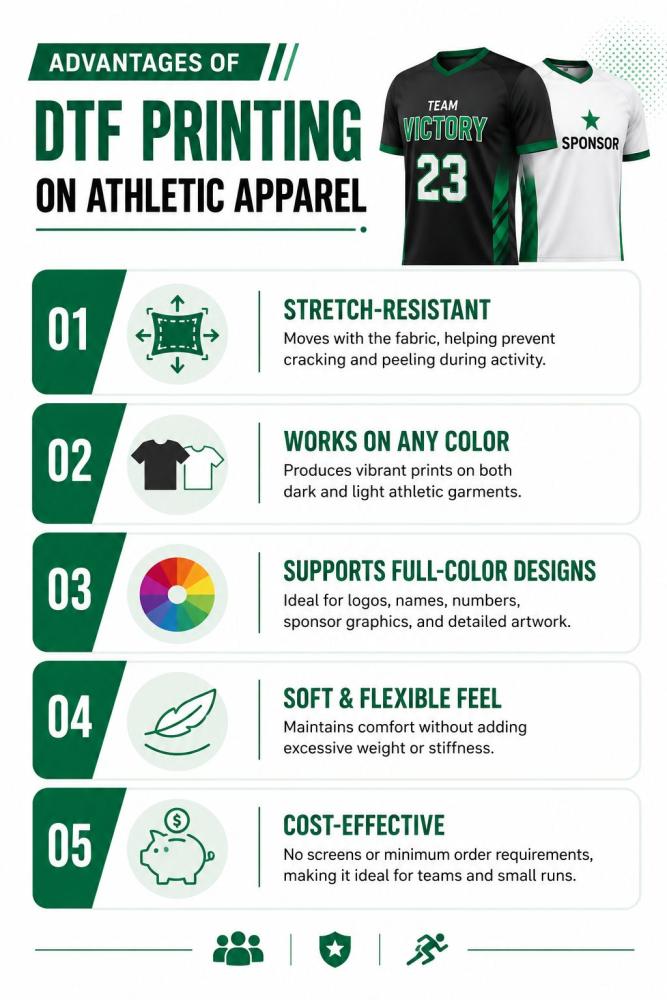
As performance wear continues to dominate the apparel market, DTF has emerged as one of the most reliable athletic apparel printing methods. Its ability to adhere to synthetic fabrics while maintaining flexibility makes it an excellent choice for sportswear and activewear decoration. Let’s see the advantages of DTF printing on athletic apparel.
Excellent Stretch Resistance
Athletic garments are constantly exposed to stretching, bending, and movement. DTF transfers are designed to flex with the fabric, helping prevent cracking or peeling during workouts, training sessions, and competitive sports. High-quality transfers also recover well after stretching, allowing graphics to maintain their appearance over time.
Works on Dark and Light Fabrics
Unlike sublimation, which is largely limited to light-colored polyester, DTF can produce vibrant designs on both dark and light athletic garments. This gives sports teams and apparel brands greater design flexibility without worrying about fabric color restrictions.
Full-Color Graphics Without Restrictions
DTF allows complex, full-color artwork without additional setup costs. To ensure intricate designs press perfectly, proper artwork setup and vectorization is crucial here.
This makes it ideal for:
-
Team logos
-
Sponsor graphics
-
Player names and numbers
-
Multi-color artwork
-
Detailed branding elements
Soft Hand Feel
Athletes prefer lightweight apparel that moves naturally with the body. DTF transfers create a relatively soft and flexible finish that does not add excessive weight or stiffness to performance garments.
Lower Setup Costs
When comparing DTF vs screen printing for sportswear, DTF offers a major advantage in setup costs. There are no screens, color separations, or minimum order requirements, making it one of the best printing methods for sports jerseys, team uniforms, and short-run athletic apparel projects.
Common Challenges When Applying DTF to Moisture-Wicking Fabrics
While DTF transfers on athletic fabrics deliver excellent results in most situations, performance garments can present unique challenges during application. Understanding these issues helps decorators improve durability, reduce waste, and achieve professional-quality results.
Dye Migration
One of the most common issues with DTF transfers on polyester shirts is dye migration. This occurs when polyester dyes become gaseous under high heat and move into the transfer layer. As a result, white graphics may appear pink, gray, or discolored after pressing.
Dark-colored performance shirts are particularly susceptible because they contain higher dye concentrations. Managing heat settings and using dye-blocking transfer films can help reduce dye migration DTF problems.
Adhesion Issues
Poor adhesion is another frequent concern when applying DTF on moisture-wicking fabrics. In many cases, the problem is not the fabric itself but low-quality transfers or incorrect press settings.
Common causes include:
-
Insufficient temperature
-
Inadequate pressure
-
Incorrect press time
-
Low-quality adhesive powder
-
Poorly manufactured transfers
These factors often lead to DTF transfer peeling on polyester after washing or repeated use.
Overheating Athletic Fabrics
Most moisture-wicking garments are made from heat-sensitive synthetic fibers. Excessive temperature can damage the fabric and affect its appearance.
Common signs of overheating include:
-
Fabric distortion or shrinking
-
Glossy shine marks
-
Press-box outlines
-
Loss of fabric texture
Because of this, performance apparel should always be pressed using manufacturer-recommended settings.
Stretch Failure
Athletic garments are designed to stretch during movement. If the transfer lacks flexibility or is applied incorrectly, stretching can cause cracking, splitting, or edge lifting.
In severe cases, the transfer may completely separate from the garment surface, a problem known as delamination. Choosing high-quality DTF materials designed for sportswear helps minimize these risks.
Moisture Trapped in Fabric
Moisture is often overlooked during moisture-wicking fabric printing. Performance garments naturally retain humidity from storage, transportation, and environmental conditions. When trapped moisture turns into steam during pressing, adhesion can suffer.
This is why pre-pressing is critical. A short 3–5 second pre-press removes excess moisture, smooths fabric wrinkles, and creates a more stable surface for transfer application. For many decorators, this simple step dramatically improves adhesion and reduces long-term DTF problems on athletic shirts.
Best Heat Press Settings for Athletic and Moisture-Wicking Fabrics
Athletic garments require more precise heat press settings than standard cotton apparel. Using too much heat or pressure can damage synthetic fibers, cause shine marks, or reduce stretch performance.
Standard Polyester Jerseys
Most polyester sports jerseys work well with:
-
Temperature: 280–300°F (138–149°C)
-
Time: 10–15 seconds
-
Pressure: Medium pressure
These settings provide strong adhesion while minimizing the risk of dye migration and fabric damage.
Performance Polyester
Many moisture-wicking shirts include performance coatings that are more heat-sensitive. Lower temperatures and shorter press times may be necessary to protect the fabric while maintaining proper transfer adhesion.
Polyester-Spandex Blends
Stretch fabrics require additional care. Excessive pressure can distort the garment and reduce elasticity.
Recommended approach:
-
Medium-light pressure
-
Lower heat settings
-
Shorter dwell times
This helps the transfer move naturally with the fabric during athletic activity.
Compression Garments
Compression wear contains higher spandex content and is especially sensitive to heat. Always test settings before production and avoid excessive pressure that could affect garment recovery and stretch performance.
Mesh Athletic Fabrics
Mesh jerseys and training shirts can develop texture marks if pressed directly. To avoid this:
-
Use a protective cover sheet
-
Reduce pressure slightly
-
Avoid pressing over thick seams or textured mesh areas
Proper heat press settings help maximize durability, flexibility, and appearance when applying DTF transfers to performance apparel.
| Fabric | Temperature | Time | Pressure | Peel |
|---|---|---|---|---|
| Polyester Jersey | 280–300°F | 10–12 sec | Medium | Cold |
| Performance Poly | 280°F | 10 sec | Medium | Cold |
| Poly-Spandex | 270–290°F | 8–10 sec | Light-Medium | Cold |
| Compression Wear | 270°F | 8 sec | Light | Cold |
Step-by-Step Guide to Applying DTF Transfers on Athletic Wear
Applying DTF transfers on athletic fabrics requires careful preparation and proper heat press technique to ensure long-lasting adhesion and flexibility. Follow these steps for professional results on sportswear, activewear, and performance garments.
Pre-Press the Garment
Start by placing the garment on the heat press and pre-pressing it for 3–5 seconds. This helps flatten the fabric and creates a smooth printing surface.
Remove Moisture and Wrinkles
Moisture is one of the biggest causes of adhesion problems when applying DTF on moisture-wicking fabrics. A quick pre-press removes trapped humidity and wrinkles that can interfere with transfer bonding.
Position the Transfer Correctly
Align the transfer carefully before pressing. Athletic garments often have seams, panels, mesh inserts, and curved construction that can affect placement. Double-check positioning for logos, names, and numbers before applying heat. Gang sheet printing can be useful here, which nests multiple designs on a single sheet, allowing to optimize print area.
Apply Proper Pressure
Use medium pressure and the recommended temperature for the specific fabric. Excessive pressure can leave press marks or reduce the stretch performance of the garment. Proper pressure ensures strong adhesion without damaging the material.
Perform a Cold Peel
Most DTF printing on performance apparel works best with a cold peel process. Allow the transfer to cool completely before removing the carrier film. Peeling too early may reduce adhesion and affect print quality.
Final Finishing Press
After peeling, perform a finishing press for 5–10 seconds using parchment paper or a protective sheet. This improves durability, enhances wash resistance, and creates a softer finish.
Pro Tips for Sports Jerseys
-
Apply names and numbers with consistent spacing and alignment.
-
Avoid pressing directly over thick shoulder seams whenever possible.
-
Position sleeve logos carefully to prevent distortion on curved fabric areas.
-
For DTF on activewear, always test settings on a sample garment before full production.
Following these steps helps maximize durability, flexibility, and appearance on modern athletic apparel.
DTF vs Other Printing Methods for Athletic Apparel
When choosing a decoration method for sportswear, it's important to understand how DTF compares with other popular printing technologies.
DTF vs Sublimation
Both DTF and sublimation work well on athletic apparel, but they serve different needs. Sublimation permanently dyes polyester fibers, creating excellent durability and a completely soft feel. However, it only works effectively on light-colored polyester garments.
DTF offers much greater fabric flexibility. It can be applied to light and dark garments, polyester blends, spandex blends, and many other performance fabrics. While sublimation remains the preferred choice for all-over polyester designs, DTF provides stronger versatility for custom sportswear and team apparel.
DTF vs Screen Printing
When comparing DTF and screen printing for athletic wear, setup costs are often the deciding factor. Screen printing requires screens, color separations, and production setup, making it more cost-effective for large team uniform orders.
DTF requires little setup and is ideal for short runs, personalized jerseys, and on-demand production. It also delivers better stretch performance than many traditional screen prints, making it a strong option for modern athletic garments.
DTF vs Heat Transfer Vinyl (HTV)
DTF vs heat transfer is also different. DTF generally provides a softer feel and better comfort than HTV because the transfer layer is thinner and more flexible. HTV can feel heavier, especially on large designs.
DTF also offers faster production for full-color graphics since there is no cutting or weeding involved. In terms of durability, both methods perform well when applied correctly, but DTF typically maintains better flexibility and appearance on activewear after repeated stretching and washing.
| Feature | DTF | Sublimation | Screen Printing | HTV |
|---|---|---|---|---|
| Dark Fabrics | Yes | No | Yes | Yes |
| Stretchability | High | Excellent | Medium | Medium |
| Full Color Printing | Yes | Yes | Limited | Limited |
| Small Orders | Excellent | Good | Poor | Good |
How Durable Are DTF Transfers on Athletic Apparel?
One of the biggest advantages of DTF athletic apparel durability is its ability to withstand the demands of sports, training, and repeated washing. High-quality DTF transfers create a strong bond with performance fabrics, making them a reliable option for activewear and team uniforms.
Wash Durability
When applied correctly, DTF transfer durability on sportswear is excellent. Most professional-grade transfers can withstand 50–80+ wash cycles while maintaining strong color vibrancy and adhesion.
Sweat Resistance
DTF transfers perform well in high-sweat environments. The adhesive layer remains stable during workouts, making them ideal for gym apparel, sports jerseys, and moisture-wicking garments.
UV Exposure Performance
DTF prints offer good resistance to sunlight and outdoor use. While prolonged UV exposure may gradually reduce color intensity, quality transfers maintain their appearance for extended periods.
Performance During Stretching
Athletic garments constantly stretch and move. DTF transfers are designed to flex with the fabric, reducing the risk of cracking or peeling during activity.
Expected Lifespan
For businesses wondering how long do DTF transfers last on jerseys, most transfers remain durable for several years with proper care.
Longevity depends on:
-
Transfer quality
-
Heat press application
-
Washing habits
-
Fabric type
-
Exposure to heat and sunlight
Following recommended care instructions significantly extends the life of DTF-decorated sportswear.
Common Mistakes to Avoid
Even high-quality DTF transfers for sportswear can fail if they are applied incorrectly. Avoiding these common mistakes helps improve durability, appearance, and long-term performance.
-
Applying Too Much Pressure: Excessive pressure can flatten fabric texture, create press marks, and reduce the stretchability of athletic garments.
-
Using Standard Cotton Settings: Many decorators use cotton heat press settings for performance fabrics. This often leads to overheating, poor adhesion, or garment damage during DTF printing on performance apparel.
-
Skipping Pre-Press: Athletic fabrics often retain moisture. Failing to pre-press can trap moisture beneath the transfer and weaken adhesion.
-
Ignoring Dye Migration: Polyester garments are prone to dye migration, where fabric dyes bleed into the transfer. This is especially common with dark-colored DTF transfers on polyester shirts.
-
Overheating Spandex Fabrics: High heat can distort spandex fibers, reduce elasticity, and damage compression garments.
-
Using Low-Quality Transfer Film: Poor-quality film and adhesive powders often lead to peeling, cracking, and reduced wash durability.
When DTF Is the Best Choice for Athletic Apparel
DTF is often the best solution for modern sportswear because it combines flexibility, durability, and full-color printing across a wide range of performance fabrics.
Choose DTF if:
-
You need vibrant designs on dark athletic garments
-
You print team uniforms, jerseys, and activewear
-
You require full-color logos, gradients, and detailed artwork
-
You handle small runs, custom orders, or personalized apparel
-
You want lower setup costs and faster production
Consider alternatives if:
-
You need all-over prints or seamless edge-to-edge graphics, where sublimation performs better
-
You produce thousands of identical garments, where screen printing offers lower per-unit costs
For most custom sportswear businesses, DTF provides the best balance of versatility, print quality, and cost efficiency.
Conclusion
DTF has proven to be one of the most versatile decoration methods for modern sportswear. From jerseys and training gear to compression wear, DTF transfers on athletic fabrics deliver strong adhesion, vibrant colors, excellent stretch resistance, and long-term durability.
Because DTF on moisture-wicking fabrics works across both light and dark garments, it offers greater flexibility than many traditional printing methods.
For the best results, focus on proper heat press settings, quality transfers, and fabric-specific application techniques. If your goal is custom sportswear, team uniforms, or short-run performance apparel production, DTF remains one of the most reliable and cost-effective solutions available today.