

Sports apparel isn’t just about design—it’s about durability, performance, and fast turnaround. That’s why more teams, print shops, and apparel brands are turning to sports DTF transfers for reliable customization.
Whether it’s jerseys, training kits, or fan merchandise, DTF makes it easy to apply full-color designs, player names, numbers, and logos on fabrics like polyester without the limitations of traditional methods.
For businesses handling team orders or bulk production, speed and consistency matter. With high-quality transfers from DTFS, you can produce professional sportswear without added complexity.
In this blog, we’ll break down how sports DTF transfers work, where they’re used, and how to get the best results for uniforms, fan gear, and more.
How Sports DTF Transfers Are Used in Real Applications
Sports DTF transfers are widely used across the custom apparel space because they solve real production challenges for teams, print shops, and merchandise brands.
-
Team Uniforms & Jerseys: Easily apply player names, numbers, and logos on polyester jerseys, training kits, and performance wear with strong adhesion and stretch durability.
-
Fan Merchandise: Create T-shirts, hoodies, and caps with full-color graphics for sports events, leagues, and local teams.
-
Tournaments & Events: Ideal for fast-turnaround orders where bulk production and consistency are critical.
-
Print Shops & Bulk Orders: Enable efficient gang sheet printing and scalable production for multiple designs in one run.
For businesses in the United States, sports DTF transfers offer a reliable way to handle customization, bulk orders, and quick delivery without compromising print quality.
Why Sports DTF Transfers Are Ideal for Performance Apparel
When it comes to athletic wear, durability and flexibility are non-negotiable—and this is where sports DTF transfers stand out. Designed to handle the demands of active use, these transfers offer strong resistance to repeated washing, sweat, and daily wear without fading or peeling.
One of the biggest advantages is stretchability. Sports fabrics like polyester and performance blends move constantly, and custom DTF transfers are built to flex with the material instead of cracking. This makes them ideal for jerseys, training gear, and compression wear.
Fabric compatibility is another key benefit. Unlike some traditional methods, sports DTF transfers work seamlessly on polyester, cotton blends, and moisture-wicking fabrics, which are widely used in sports apparel.
Additionally, DTF prints provide a soft hand feel, ensuring comfort without adding stiffness to the garment—an important factor for athletes.
For teams, print shops, and brands, sports DTF transfers deliver the durability, flexibility, and performance needed for high-quality sportswear.
Also read: DTF vs Vinyl Printing: Which Is Right for Your Apparel Business?
How to Choose the Right Sports DTF Transfers Supplier
When it comes to sports apparel, the margin for error is extremely small. Teams expect uniforms to last through intense gameplay, repeated washes, and constant movement. A poor-quality transfer doesn’t just fail—it reflects directly on your brand or business.
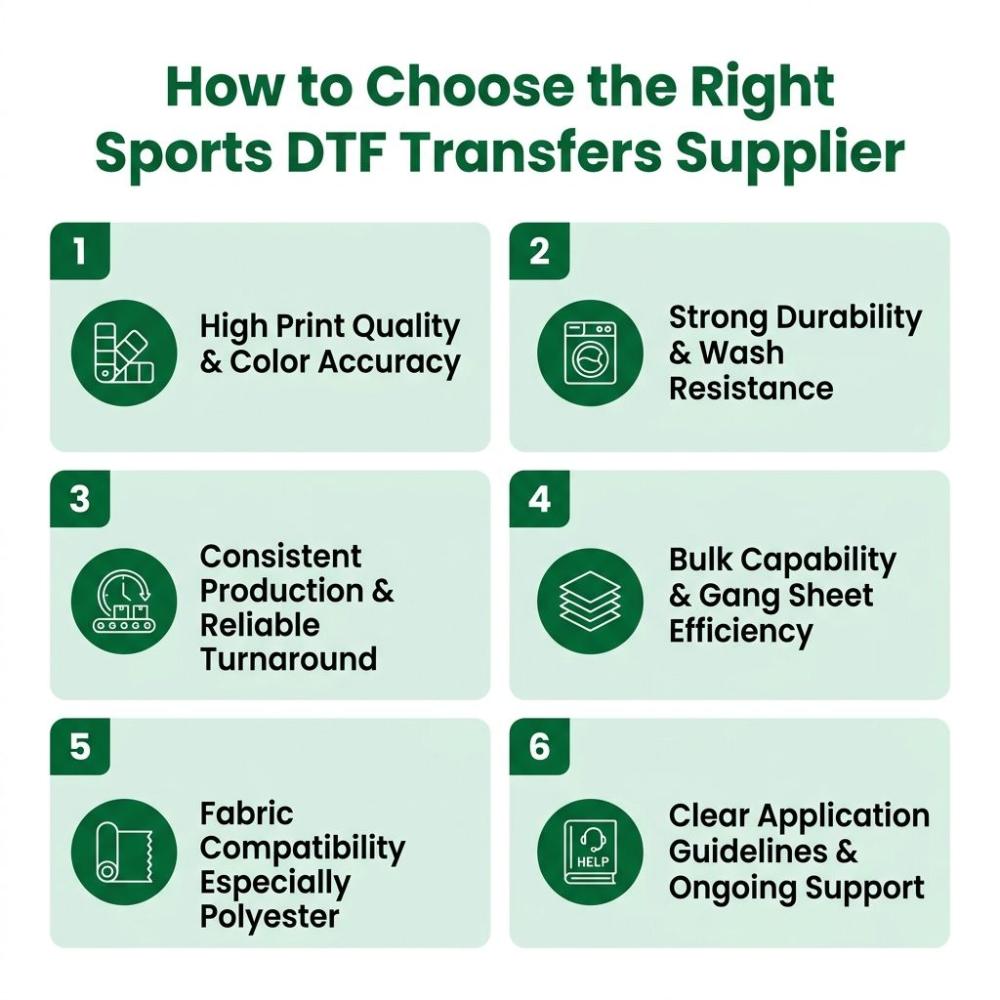
That’s why choosing the right supplier for sports DTF transfers isn’t just about price—it’s about long-term performance, consistency, and reliability. Here’s how to evaluate a supplier the right way:
High Print Quality & Color Accuracy
In sports apparel, clarity and color vibrancy are critical. Numbers, logos, and sponsor graphics must be sharp and easy to read—even from a distance. A good supplier uses high-resolution printing technology and proper color management systems to ensure consistency across batches.
Poor suppliers often produce dull, muddy, or inconsistent prints, especially in bulk orders. Always look for samples or proof of work that demonstrate clean edges, smooth gradients, and true-to-design color output.
Strong Durability & Wash Resistance
Sportswear goes through more stress than regular apparel—sweat, friction, stretching, and frequent washing. Your supplier must ensure proper adhesive application and curing so the transfer bonds deeply with the fabric.
If curing is rushed or uneven, the result is cracking, peeling, or fading after just a few washes. High-quality sports DTF transfers should remain flexible and intact even after repeated use, making durability a non-negotiable factor.
Consistent Production & Reliable Turnaround
Whether you're fulfilling team orders or event merchandise, timing matters. Delays can disrupt entire schedules. More importantly, inconsistency across batches can ruin uniformity in team apparel.
A reliable supplier maintains strict quality control and delivers the same output every time—regardless of order size. Established providers like DTFS.co are structured to handle both small runs and high-volume production while maintaining consistency and meeting tight deadlines.
Bulk Capability & Gang Sheet Efficiency
For sports teams, you’re rarely printing just one design—you’re handling multiple names, numbers, and variations. Suppliers that offer efficient gang sheet printing help you maximize sheet space and reduce cost per transfer.
This becomes especially important when managing bulk team orders or league-wide apparel production. A good supplier will also help optimize layouts to minimize waste and improve overall efficiency.
Fabric Compatibility (Especially Polyester)
Most sports apparel is made from polyester or performance blends, which can be tricky for some printing methods. Your supplier should specialize in transfers that adhere well to these materials without compromising flexibility or comfort. Poor compatibility can lead to stiff prints, weak adhesion, or early failure during use.
Clear Application Guidelines & Ongoing Support
Even the best transfers can fail if applied incorrectly. A professional supplier provides clear, tested heat press instructions—temperature, pressure, and time—specific to their transfers. Some also offer troubleshooting support, which can be invaluable for print shops scaling production. This ensures you get consistent, high-quality results every time you press.
Also read: How to Choose the Best Direct to Film Transfer Provider in the USA
How to Maximize Results with Sports DTF Transfers (Best Practices for Teams & Print Shops)
Getting the most out of sports DTF transfers isn’t just about buying quality transfers—it’s about applying them correctly and optimizing your workflow. Small improvements in your process can significantly boost durability, consistency, and overall print quality.
-
Use the Right Heat Press Settings: Always follow recommended settings—typically 300–320°F (150–160°C) for 10–15 seconds with medium to firm pressure. Incorrect temperature or pressure is one of the main causes of DTF print cracking or peeling, especially on sports jerseys and performance wear.
-
Pre-Press the Garment: Before applying the transfer, pre-press the fabric for 3–5 seconds. This removes moisture and wrinkles, creating a smooth surface for better adhesion—especially important for polyester sports apparel.
-
Follow Proper Peel Instructions: Whether it’s a cold peel or warm peel depends on the transfer type. Peeling too early can weaken adhesion, which affects the durability of your DTF transfers on sports uniforms.
-
Always Do a Post-Press: A second press using parchment paper or a Teflon sheet for 5–10 seconds helps seal the design. This step improves wash resistance, flexibility, and long-term durability.
-
Optimize Gang Sheet Layouts for Team Orders: When handling bulk orders, organize names, numbers, and logos efficiently using gang sheets. This reduces waste and improves production speed for print shops and team apparel businesses.
-
Test Before Full Production: Always test transfers on the actual fabric you’re using. Different materials react differently, and testing ensures your DTF printing results meet quality expectations before scaling.
By following these best practices, print shops and apparel businesses can ensure their sports DTF transfers deliver consistent, professional, and long-lasting results.
Common Mistakes to Avoid When Using Sports DTF Transfers
Even with the right supplier, poor execution can impact final results. When working with sports DTF transfers, small mistakes can lead to wasted materials, inconsistent prints, or unhappy teams. Here are the most common issues to avoid:
Using Incorrect Heat Press Settings
Temperature, pressure, and timing must be precise. Too much heat can damage the transfer, while too little prevents proper adhesion. Always follow supplier-recommended settings for consistent results.
Ignoring Fabric Compatibility
Sportswear often uses polyester and performance blends. Using transfers not optimized for these fabrics can lead to peeling or stiffness. Make sure your transfers are designed specifically for athletic materials.
Poor Artwork Preparation
Low-resolution files or incorrect color formats can ruin print quality. Always use 300 DPI artwork with transparent backgrounds to ensure sharp logos, numbers, and graphics.
Overcrowded Gang Sheets
While maximizing space is important, cramming designs too tightly can make cutting difficult and increase error rates during application.
Skipping Test Pressing
Before running full production, always test one transfer. This helps verify color, adhesion, and overall quality—especially for bulk team orders.
Why Sports Teams & Brands Prefer DTF Over Other Methods
When speed, durability, and flexibility matter, traditional printing methods often create limitations. That’s why many teams and brands are turning to sports DTF transfers as a more efficient solution.
Here’s what makes DTF stand out:
-
No Setup Limitations: Unlike screen printing, there’s no need for complex setup. You can print full-color designs, player names, and numbers instantly—perfect for small batches or last-minute changes.
-
Works on Multiple Fabrics: Sports apparel is often made from polyester and blends. DTF transfers adhere smoothly to these materials, unlike methods that struggle with synthetic fabrics.
-
Consistent Quality at Any Scale: Whether you’re producing 10 jerseys or 1,000, DTF delivers sharp details, vibrant colors, and uniform results across every piece.
-
Faster Production Workflow: No weeding, layering, or multiple steps. This simplifies production and helps businesses meet tight deadlines.
-
Durability for Performance Wear: High-quality sports DTF transfers are built to withstand frequent washing, stretching, and intense use without cracking or fading.
Where to Buy High-Quality Sports DTF Transfers (What to Look For)
Finding the right source for sports DTF transfers can directly impact your print quality, durability, and customer satisfaction. Not all suppliers deliver the same results, so it’s important to evaluate a few key factors before placing bulk orders.
Here’s what to look for:
-
Consistent Print Quality
Look for suppliers that offer sharp details, vibrant colors, and clean edges. This is critical for jerseys with names, numbers, and logos. -
Durability & Wash Resistance
High-quality transfers should withstand repeated washing, stretching, and sweat without cracking or peeling—especially for sportswear. -
Experience with Performance Fabrics
Since most sports apparel uses polyester or blends, choose a supplier that specializes in transfers designed for these materials. -
Reliable Turnaround Times
Sports orders are often time-sensitive. A dependable supplier should consistently meet deadlines without compromising quality. -
Bulk & Gang Sheet Options
Efficient gang sheet printing helps reduce costs when handling multiple player names and numbers in one order. -
Clear Application Instructions
Good suppliers provide tested heat press guidelines to ensure consistent results across every print.
Choosing the right supplier ensures your sports DTF transfers deliver professional, long-lasting results—every single time.
Final Take: Winning with Sports DTF Transfers
In today’s fast-moving apparel space, sports DTF transfers give teams and brands the edge they need—speed, flexibility, and consistent quality. From handling custom player details to meeting tight deadlines, DTF simplifies production without compromising performance. When paired with the right supplier and best practices, it becomes a reliable solution for scaling sports apparel efficiently. Whether you're fulfilling team orders or growing a print business, DTF helps you stay competitive while delivering results your customers can trust.
FAQs
1. What are sports DTF transfers used for?
They are used for customizing jerseys, uniforms, and fan merchandise with names, numbers, and logos.
2. Are sports DTF transfers suitable for polyester fabrics?
Yes, they work very well on polyester and other performance fabrics.
3. How durable are sports DTF transfers?
They are designed to handle frequent washing, stretching, and regular athletic use.
4. Can I order sports DTF transfers in bulk?
Yes, bulk orders and gang sheets are commonly used for team and league requirements.
5. Do sports DTF transfers support full-color designs?
Yes, they allow detailed, full-color prints including gradients and complex graphics.
6. How fast can sports DTF transfers be produced?
Turnaround times are typically fast, especially with experienced suppliers offering bulk production.