
September 15, 2026 · Connor McDonnell
DTF Transfers for Team Uniforms and Sports Leagues
Sports teams need uniforms that do more than identify the team. Player names, numbers, logos, sponsor graphics, and league branding all need to look consistent while standing up to regular use. For teams with changing rosters or players who need different personalization, DTF transfers for team uniforms offer a flexible way to customize jerseys and other athletic apparel.
Direct-to-film (DTF) transfers can reproduce detailed, full-color artwork on many commonly used sports garments. They can also be useful for smaller orders, replacement pieces, and team apparel beyond jerseys. The right choice, however, depends on the fabric, design, quantity, and type of customization required.
Why DTF Transfers for Team Uniforms Work Well for Sports Teams
One of the biggest advantages of DTF is the ability to personalize individual garments without changing the overall team design. This makes the process practical when every player needs a different name or number.
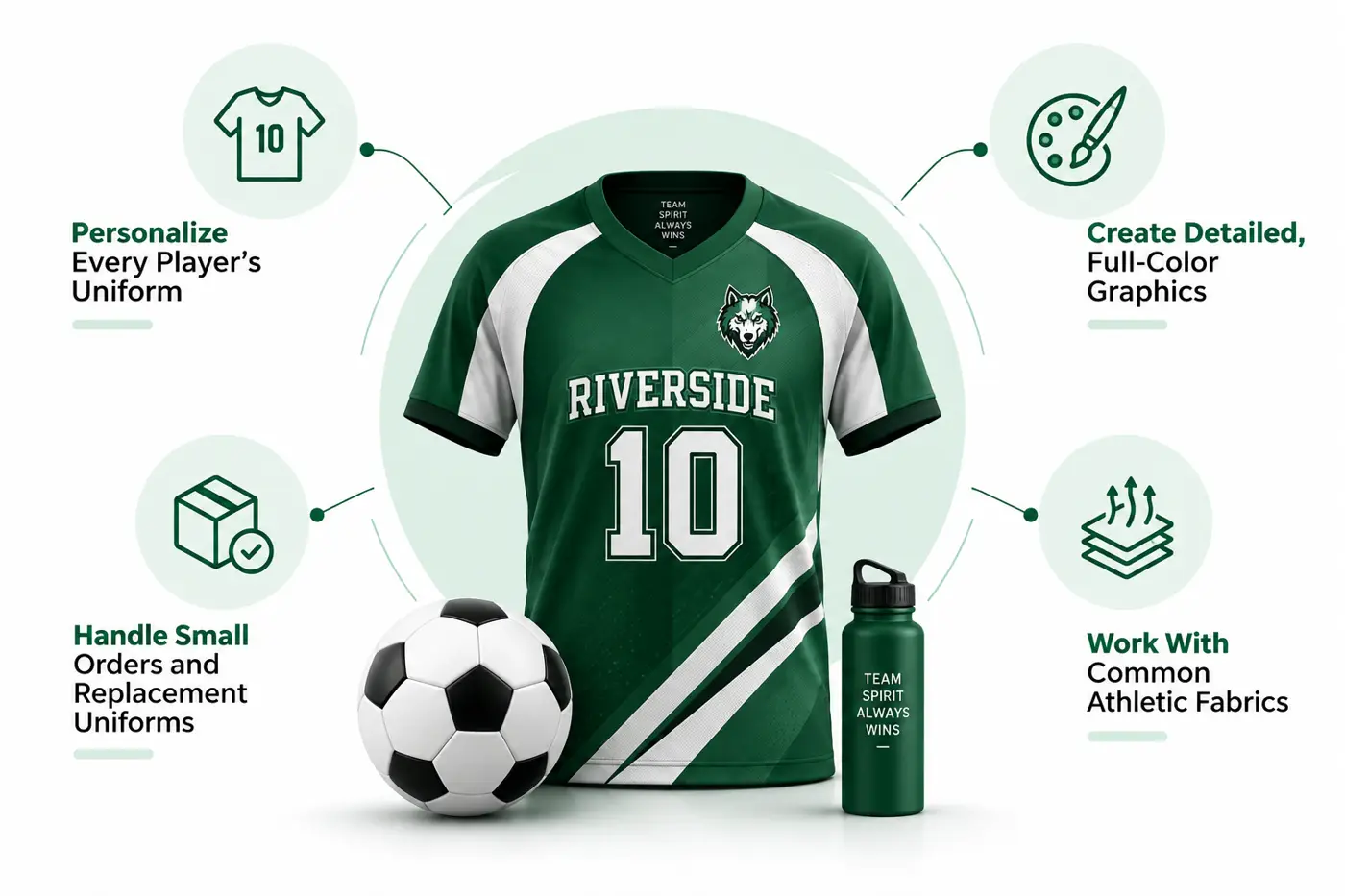
Personalize Every Player's Uniform
A typical team uniform may include a chest logo, back number, player name, sleeve logo, and sponsor graphic. DTF allows these elements to be produced as separate transfers or arranged together for efficient production.
For example, a basketball team may use the same logo on every jersey but require a different player name and number for each athlete. Custom DTF transfers for teams make it possible to maintain a consistent appearance while handling these individual differences.
Create Detailed, Full-Color Graphics
DTF printing is well suited to artwork that includes multiple colors, gradients, fine details, and complex logos. This is useful for team mascots, illustrated logos, sponsor artwork, and other graphics that may be difficult to reproduce using simpler decoration methods.
Teams can also use the same artwork across jerseys, practice shirts, hoodies, and fan apparel to create a consistent visual identity.
Handle Small Orders and Replacement Uniforms
Sports teams do not always have a fixed roster. A new player may join halfway through a season, a jersey may be damaged, or an athlete may need a replacement number.
Instead of treating every change as a completely new uniform project, teams can keep their original artwork and order the specific transfers they need. This can make mid-season updates easier to manage.
Work With Common Athletic Fabrics
DTF can be used on many fabrics found in sports apparel, including polyester, performance blends, and some stretch materials. However, compatibility should always be confirmed before production.
Different garments can require different pressing conditions, so teams should follow the transfer supplier's recommended temperature, pressure, and application time.
DTF Transfers for Team Uniforms: Which Sports and Apparel Are a Good Fit?
DTF is not limited to one type of sport. Its ability to handle names, numbers, logos, and detailed artwork makes it useful for many types of team apparel.
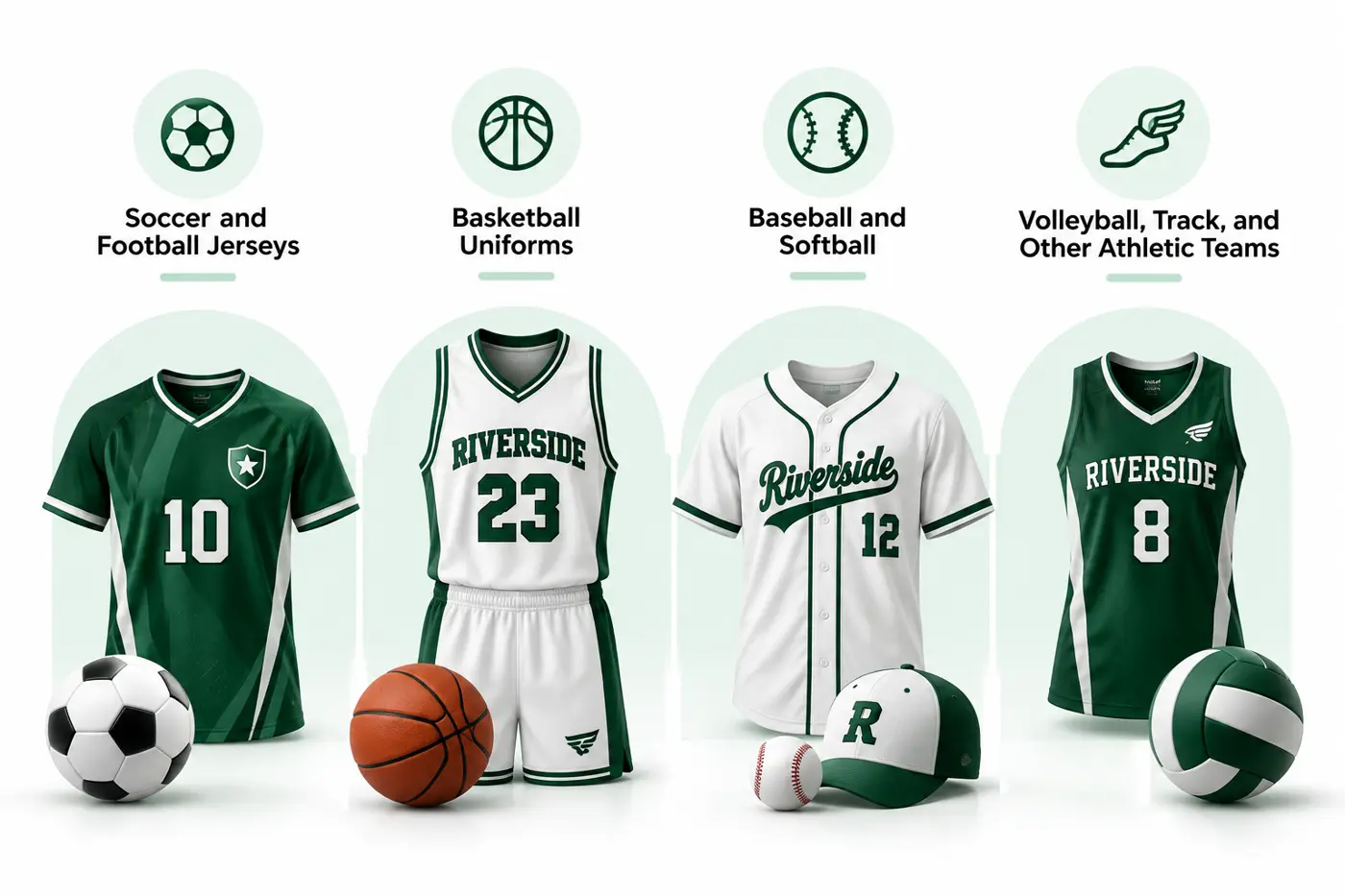
Soccer and Football Jerseys
Soccer and football uniforms commonly require player names, numbers, team logos, and sponsor graphics. DTF can be used for these elements when the garment and transfer specifications are compatible.
It can also be useful when a team needs a replacement number or name without replacing an entire set of uniforms.
Basketball Uniforms
Basketball jerseys often feature large back numbers and player names along with front team branding. DTF transfers can accommodate these personalized elements while also supporting detailed team logos.
Teams can use similar transfers on practice apparel, warm-up shirts, and fan merchandise.
Baseball and Softball
Baseball and softball teams may use DTF for team logos, player numbers, names, tournament graphics, and sponsor branding.
The method can also support smaller runs, which can be helpful for recreational teams or organizations that need uniforms in stages.
Volleyball, Track, and Other Athletic Teams
Other sports that may benefit from DTF customization include:
-
Volleyball
-
Track and field
-
Lacrosse
-
Youth recreational leagues
-
School sports
-
Tournament teams
-
Training and practice programs
DTF can also be used beyond the actual uniform. Coaches, parents, boosters, and fans can use the same team artwork on T-shirts, hoodies, and other apparel.
Are DTF Transfers for Team Uniforms Durable Enough for Sports?
Durability is one of the first concerns when selecting a decoration method for athletic apparel. Sports uniforms can experience frequent washing, stretching, sweat, friction, and repeated use.
When properly produced and applied to a compatible garment, quality DTF transfers can provide a durable decoration option. However, the final result depends on several factors.
What Determines DTF Durability?
Important factors include:
-
Transfer and film quality
-
Ink quality
-
Garment compatibility
-
Artwork preparation
-
Heat-press temperature
-
Pressure
-
Pressing time
-
Proper peeling
-
Washing and care
A strong transfer cannot compensate for incorrect application. Teams should therefore treat pressing instructions as part of the production process rather than an afterthought.
DTF Transfers for Sports Jerseys and Performance Fabrics
Many sports jerseys are made from polyester or performance fabrics designed to manage moisture and movement. These materials can require specific application settings.
Before pressing DTF transfers for sports uniforms, confirm that the transfer is appropriate for the garment. Always use the supplier's recommended settings instead of assuming one temperature or pressing time will work for every fabric.
Recommended Application Practices
A simple application process can help maintain consistency:
-
Confirm that the transfer is compatible with the garment.
-
Prepare and size the artwork correctly.
-
Position the transfer accurately.
-
Follow the recommended temperature, pressure, and dwell time.
-
Peel the film according to the transfer instructions.
-
Inspect the finished print before distributing the uniform.
For more information about artwork preparation, teams and decorators can review guidance on image for DTF printing.
Heat-press settings also matter. Instead of relying on a generic number, use the specific recommendations for the transfer and fabric being used. Additional guidance is available in this resource on best temperature for DTF Printing.
Washing and Care Tips
Proper care can help extend the life of decorated sports apparel.
Teams should generally:
-
Wash jerseys inside out.
-
Use cold or cool water when recommended.
-
Avoid harsh washing conditions.
-
Avoid direct ironing over the printed area.
-
Follow the garment and transfer manufacturer's care instructions.
DTF Transfers for Team Uniforms vs. Sublimation: Which Is Better?
The question is DTF vs sublimation. DTF and sublimation can both be effective for sports apparel, but they solve different problems. The better option depends on how the jersey is produced and how much personalization is required.
DTF vs. Sublimation at a Glance
DTF is particularly useful for:
-
Individual names and numbers
-
Detailed logos
-
Existing blank jerseys
-
Small or changing quantities
-
Replacement transfers
-
Full-color graphics
Sublimation is often better suited to:
-
Fully customized polyester jerseys
-
All-over designs
-
Custom jersey manufacturing
-
Graphics intended to become part of the fabric
For a team purchasing blank jerseys and adding names, numbers, and logos, DTF can be a convenient choice. For a team designing the entire polyester jersey from scratch, sublimation may offer a better fit.
When DTF Makes More Sense
Consider DTF when every player needs a different name or number, especially when the team expects roster changes.
It is also useful when an organization already has blank jerseys and only needs customized graphics applied to them.
When Sublimation May Be the Better Choice
Sublimation can be preferable when the entire garment needs an edge-to-edge design. Because the graphic becomes integrated into the polyester fabric, it can be particularly suitable for fully customized performance jerseys.
What About Screen Printing, Embroidery, and Tackle Twill?
Other decoration methods still have important applications.
Screen printing can be economical for large quantities with relatively simple designs.
Embroidery works well for caps, jackets, polos, and other garments where a stitched appearance is preferred.
Tackle twill is often selected for traditional varsity-style uniforms with a classic raised or layered appearance.
DTF printing is especially useful when teams need detailed, full-color personalization with different names and numbers.
How to Order DTF Transfers for Team Uniforms Efficiently
A good ordering process can prevent mistakes and make team production easier to manage.
Step 1 — Finalize the Team Artwork
Collect the team's:
-
Logo
-
Mascot
-
Colors
-
Player number design
-
Sponsor artwork
-
League branding
-
Sleeve graphics
Make sure the artwork is high quality and correctly prepared before production. For teams working with their own files, reviewing create underbase for DTF printing can help with understanding an important part of DTF artwork preparation.
Step 2 — Build a Complete Player Roster
Create a spreadsheet containing:
-
Player name
-
Jersey number
-
Size
-
Team or division
-
Required graphics
-
Quantity
This simple step can prevent common errors such as misspelled names, duplicate numbers, and incorrect sizes.
Step 3 — Choose Individual Transfers or Gang Sheets
Teams should consider how many graphics they need before deciding how to arrange their transfers.
If a team needs dozens of names, numbers, logos, and sponsor graphics, combining them efficiently on a sheet can make better use of printable space.
DTF gang sheet printing can be particularly useful when multiple team graphics need to be arranged together.
Step 4 — Order the Right Quantity
Do not calculate quantities only from the current roster. Consider whether the team may need:
-
Replacement numbers
-
Replacement names
-
Spare graphics
-
New-player additions
-
Coach apparel
-
Tournament extras
Planning ahead can make future replacements easier.
Step 5 — Press and Inspect the Uniforms
Before pressing an entire order, confirm the application settings and placement on the specific garment.
After pressing, inspect the graphics for proper adhesion, positioning, edges, and overall appearance.
Step 6 — Organize Uniforms for Distribution
For leagues with multiple teams, organize finished uniforms by team and player.
A simple system such as team → player → number → size can make distribution much easier and reduce mix-ups.
How Much Do DTF Transfers for Custom Team Jerseys Cost?
There is no single price for every team uniform project. The final cost depends on the size, quantity, artwork, personalization requirements, and production method.
Factors That Affect DTF Transfer Costs
Common pricing factors include:
-
Transfer dimensions
-
Number of transfers
-
Number of unique names and numbers
-
Total quantity
-
Artwork complexity
-
Gang-sheet efficiency
-
Replacement requirements
-
Order size
A team ordering one design in a large quantity has different production requirements from a league ordering hundreds of individual names and numbers.
Why Gang Sheets Can Improve Material Efficiency
A gang sheet allows multiple graphics to be arranged within the available printable area. A team might place its crest, player names, numbers, sleeve logos, and sponsor graphics together rather than treating every element as a separate print job.
The actual savings depend on the artwork layout, sheet size, and supplier pricing, but efficient nesting can help reduce wasted printable space.
When Bulk and Wholesale Ordering Makes Sense
Larger organizations may benefit from a bulk production approach.
This can apply to:
-
School athletic programs
-
Recreational leagues
-
Multi-team organizations
-
Tournament organizers
-
Sportswear businesses
-
Team apparel suppliers
For larger requirements, bulk and wholesale DTF printing can provide an option for managing higher-volume transfer needs.
A Simple DTF Team Uniform Workflow for Coaches and League Organizers
The process becomes easier when every stage is planned before production begins.
Collect artwork → Finalize roster → Prepare graphics → Arrange transfers → Order → Press → Inspect → Distribute → Save files for reorders
Keep Artwork and Roster Files for Reorders
Save the original logo files, name and number lists, artwork dimensions, and previous layouts.
If a player joins the team later or needs a replacement jersey, these files can make it much easier to reproduce the required graphic accurately.
Plan for Mid-Season Changes
Roster changes are common in sports. Teams should consider how they will handle new players, number changes, damaged uniforms, and additional apparel requirements.
Keeping production records makes these changes more manageable and helps maintain consistency throughout the season.
Common Mistakes to Avoid When Using DTF Transfers for Team Uniforms
Even a good transfer can produce poor results when the preparation or application process is incorrect.
Using the Wrong Transfer for the Fabric
Not every transfer is suitable for every garment. Always confirm fabric compatibility before starting production.
Incorrect Artwork Preparation
Low-resolution graphics, unwanted backgrounds, incorrect sizing, or poorly prepared transparent areas can affect the finished result.
Artwork should be reviewed before it is sent for printing.
Guessing Heat-Press Settings
Avoid assuming that one temperature works for every transfer and garment. Follow the supplier's recommended temperature, pressure, and dwell time for the specific application.
Poor Placement
Inconsistent placement can make otherwise professional uniforms look uneven.
Establish clear placement guidelines for:
-
Chest logos
-
Back names
-
Jersey numbers
-
Sleeve graphics
Then apply those measurements consistently across the roster.
Forgetting Replacement Transfers
Teams should think beyond opening day. A small number of replacement graphics can be useful when uniforms are damaged or roster changes occur during the season.
Are DTF Transfers Right for Your Team or Sports League?
DTF transfers can be a practical choice for teams that need detailed, full-color personalization without requiring every garment to have the same name and number.
They are particularly useful for custom team DTF transfers involving:
-
Player names
-
Numbers
-
Team logos
-
Sponsor graphics
-
Replacement pieces
-
Practice apparel
-
Fan merchandise
The main advantage is flexibility. Teams can decorate existing garments, personalize individual players, and manage replacements without redesigning the entire uniform system.
However, DTF is not automatically the best decoration method for every project. Teams creating fully customized, all-over polyester jerseys may find sublimation more appropriate, while large runs with simple graphics may favor screen printing.
For teams that have chosen DTF, custom DTF transfers provide a practical starting point for turning finalized team artwork and player information into production-ready transfers.
Frequently Asked Questions
What are the benefits of using DTF transfers for sports team uniforms?
DTF transfers offer full-color personalization for player names, numbers, logos, and sponsor graphics. They can also be useful for small orders, replacement pieces, and teams with changing rosters.
Are DTF transfers durable enough for sports jerseys and athletic wear?
Quality DTF transfers can be durable when they are applied correctly to compatible garments. Durability depends on transfer quality, fabric compatibility, pressing conditions, and proper garment care.
Are DTF transfers better than sublimation for team uniforms?
It depends on the project. DTF is well suited to individual names, numbers, detailed logos, existing garments, and replacement pieces, while sublimation is often a better choice for fully customized all-over polyester jerseys.
How much do DTF transfers for custom team jerseys cost?
Pricing varies based on transfer size, quantity, artwork complexity, number of personalized graphics, and production method. Bulk orders and efficient gang-sheet layouts can affect the overall cost.
Can I order individual replacement DTF transfers for a team jersey?
Yes, individual replacement graphics can be useful for damaged jerseys, new players, or number changes, depending on the transfer provider's ordering options. Keeping the original artwork and roster information makes repeat orders easier.