


Parents want baby clothing that is not only adorable but also safe, soft, and comfortable for delicate skin. As demand for personalized onesies, toddler t-shirts, milestone outfits, and matching family apparel continues to grow, businesses have an excellent opportunity to expand into this profitable niche.
DTF transfers for baby clothing make it possible to create vibrant, long-lasting custom designs on soft fabrics without sacrificing comfort. However, producing apparel for infants requires extra attention to material selection, application techniques, and print feel. In this guide, you'll learn how DTF printing for infant apparel can deliver beautiful, baby-friendly garments while maintaining safety, durability, and softness.
Why Does Customizing Baby and Toddler Clothing Require Extra Care?
Custom baby apparel is very different from standard adult clothing. While attractive designs are important, comfort and safety always come first. Babies and toddlers have delicate skin that is far more sensitive to rough textures, excessive heat, and poorly applied prints. This means every step of the customization process—from garment selection to transfer application—must be carefully planned to ensure the finished product feels as good as it looks.
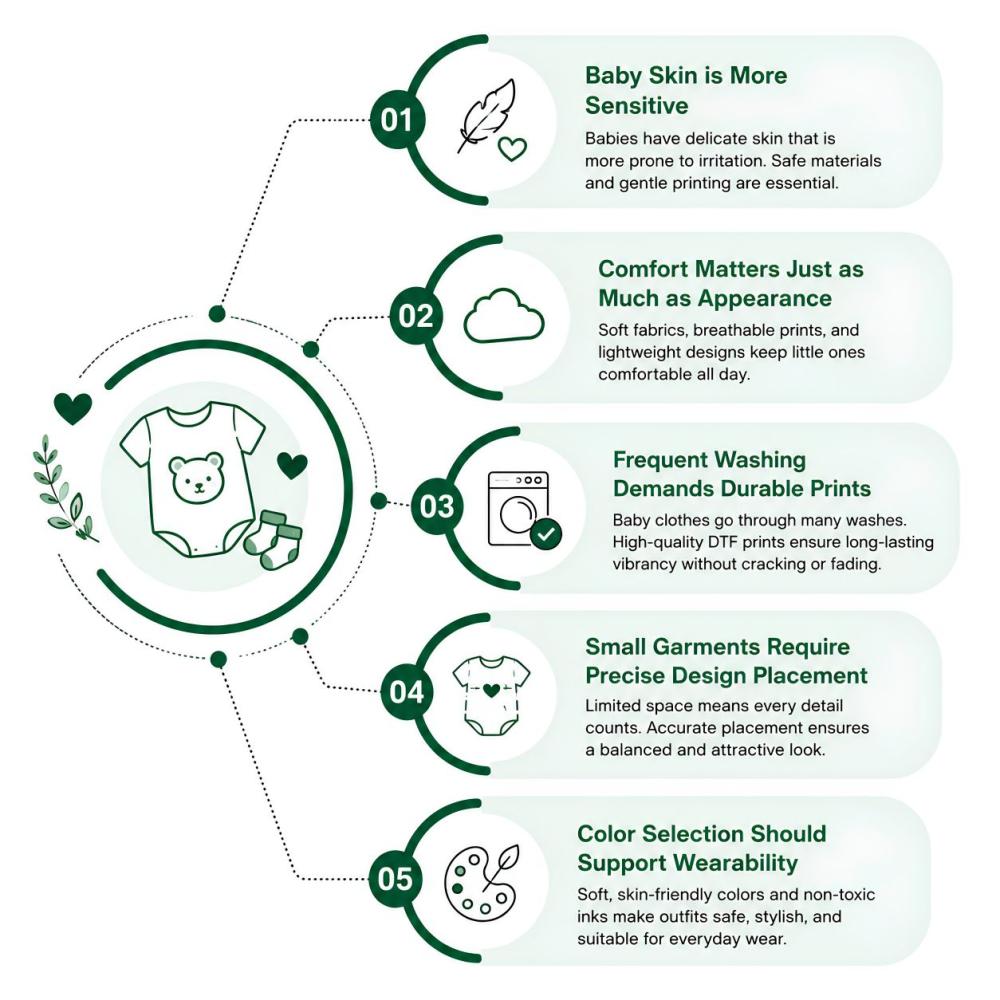
Baby Skin is More Sensitive
Unlike adult apparel, infant garments are worn against extremely delicate skin for extended periods. Thick, stiff, or improperly cured prints can cause discomfort, especially around areas where babies crawl, sleep, or move frequently. Choosing high-quality custom DTF transfers and applying them correctly helps create soft, flexible prints that remain comfortable throughout the day.
Comfort Matters Just as Much as Appearance
Parents expect personalized onesies, bibs, and toddler shirts to feel just as soft after decoration as they did before printing. Large, heavy graphics may look attractive but can reduce the natural flexibility of lightweight baby garments. Using appropriately sized artwork and maintaining a soft-hand finish ensures the clothing remains breathable and comfortable.
This is particularly important when working with small designs. Proper artwork preparation, similar to the techniques discussed in designing small DTF transfers without losing detail, helps maintain both print quality and garment comfort.
Frequent Washing Demands Durable Prints
Baby clothes require constant washing because of spills, food stains, and everyday use. Customized garments must withstand repeated laundering without fading, cracking, or peeling. Proper transfer application, correct curing, and quality materials all contribute to producing prints that remain vibrant even after numerous wash cycles.
Durability becomes even more important for keepsake items such as birth announcement outfits, first birthday shirts, or family matching sets that parents often preserve as memories.
Small Garments Require Precise Design Placement
Infant apparel offers far less printable space than adult garments. Oversized graphics can overwhelm the garment or become uncomfortable when stretched across the fabric. Designers should scale artwork carefully while maintaining readability and visual balance.
Simple, well-positioned graphics often produce a cleaner and more premium appearance than overly complex layouts.
Color Selection Should Support Wearability
Many baby garments use pastel shades, white fabrics, or light-colored cotton. Producing bright, vibrant designs on these garments requires careful print preparation to preserve color accuracy without compromising softness. Techniques similar to those covered in printing white on white fabric using DTF transfers can help achieve clean, professional-looking results on lighter garments.
By prioritizing comfort, durability, thoughtful design placement, and premium materials, businesses can create personalized baby and toddler clothing that parents trust and children enjoy wearing.
Size and Placement: The Challenge in DTF Transfers for Baby Clothing
Creating high-quality DTF transfers for baby clothing isn't just about beautiful artwork; it also requires precise sizing and placement. Infant garments are significantly smaller than adult apparel, leaving very little printable space. A design that looks balanced on an adult t-shirt can easily overwhelm a baby onesie, making the garment uncomfortable and visually cluttered. Careful planning ensures both aesthetics and comfort, which are equally important for infant apparel DTF printing.
Every Garment Size Needs Its Own Layout
One common mistake is using the same transfer size across newborn, 6-month, 12-month, and toddler garments. Baby clothing varies dramatically in chest width and body length, so designs should be resized to maintain proper proportions.
A good DTF sizing guide infant apparel generally recommends:
-
Newborn (NB): Small chest graphics (3–3.5 inches wide)
-
3–6 Months: Around 3.5–4 inches
-
6–12 Months: Approximately 4–4.5 inches
-
Toddler Sizes: 4.5–5.5 inches depending on the garment
Scaling artwork appropriately creates a premium appearance while preventing oversized prints that dominate the garment.
Placement Directly Impacts Comfort
Babies spend much of their day sleeping, crawling, or lying on their stomachs. Large graphics placed too low can become stiff across the abdomen or bunch when the baby moves.
For safe DTF transfers for baby onesies, center chest placement slightly above the midpoint of the garment usually produces the best results.
This location offers:
-
Better visual balance
-
Greater wearing comfort
-
Reduced stretching during movement
-
Improved visibility in photos
Simple placement adjustments often make a noticeable difference in both appearance and functionality.
Leave Room for Garment Features
Baby onesies include snap closures, collars, shoulder overlaps, and seams that should never interfere with the printed design. Positioning transfers too close to these construction elements can create distortion during pressing and reduce overall comfort.
Designs should also avoid wrapping too far toward the side seams since baby garments stretch considerably during dressing.
Plan Multiple Sizes Efficiently
Businesses producing several baby sizes simultaneously can maximize efficiency by arranging multiple transfer sizes on a single gang sheet. This reduces material waste while ensuring every garment receives the appropriately scaled design.
Resources like this guide to DTF gang sheet recommendations provide helpful strategies for organizing multiple infant layouts. Businesses handling larger production runs can further streamline operations through gang sheet printing, while growing brands often benefit from white-label production to maintain consistent quality across every order.
Ultimately, successful DTF transfers for baby clothing rely on thoughtful sizing rather than simply shrinking adult artwork. Proper scaling and placement produce garments that are comfortable, visually balanced, and professional enough to become cherished keepsakes for parents.
How to Apply DTF Transfers on Baby and Toddler Clothing for a Safer and Softer Feel?
Applying DTF transfers for baby clothing requires more precision than standard apparel printing. Since babies have delicate skin and wear lightweight garments, every step of the application process should prioritize softness, durability, and safety. Following the correct technique ensures professional-looking prints that remain comfortable even after repeated washing.
Choose Soft, High-Quality Garments
Start with premium cotton or cotton-poly blend onesies, toddler t-shirts, and bodysuits. Soft fabrics not only improve comfort but also produce better adhesion during baby clothing heat transfer printing. Avoid garments with heavy textures or coatings that may affect transfer performance.
Use Properly Sized Transfers
Baby garments have limited printable space, so oversized graphics should be avoided. Following a DTF sizing guide for infant apparel helps maintain both comfort and appearance. Smaller, well-balanced designs reduce stiffness while allowing the garment to stretch naturally during movement.
Pre-Press Before Application
Before positioning the transfer, pre-press the garment for 5–8 seconds. This removes moisture and wrinkles while creating a smooth surface for the adhesive. A properly prepared garment allows the transfer to bond more evenly and improves long-term durability.
Apply the Correct Heat and Pressure
For most infant garments, moderate heat and medium pressure work best. Excessive heat can damage lightweight fabrics, while insufficient pressure may lead to poor adhesion. Always follow the transfer manufacturer's recommended application settings to achieve consistent results during infant apparel DTF printing.
Ensure the Transfer is Fully Cured
One of the most important steps is using a properly cured DTF transfer for baby safety. Fully cured adhesive creates a flexible, durable print that resists peeling and cracking during frequent washing. Incomplete curing can reduce durability and negatively affect the feel of the finished garment.
Allow the Print to Cool Naturally
After pressing, let the transfer cool according to the recommended peel method before removing the carrier film. Rushing this process may weaken the adhesive bond or distort fine details.
Perform a Final Quality Check
Before packaging, inspect every garment carefully:
-
Confirm the design is centered correctly.
-
Check that all edges are securely bonded.
-
Ensure the print feels smooth and flexible.
-
Verify there are no lifting corners or scorching marks.
By selecting quality garments, using safe DTF transfers for baby onesies, applying correct heat settings, and ensuring proper curing, businesses can produce personalized baby apparel that is comfortable, durable, and suitable for everyday wear while giving parents confidence in the quality of every custom garment.
Safety and Softness Tips When Using DTF Transfers for Baby or Toddler Clothing
When creating custom apparel for infants and toddlers, appearance should never come before comfort. Babies wear their clothing for long hours, making softness, flexibility, and safety essential considerations during the printing process. Following a few best practices helps ensure the finished garment is both parent-approved and comfortable enough for everyday use.
Choose Baby-Friendly Fabrics
Always begin with premium-quality cotton or cotton-rich blends. Soft, breathable fabrics allow babies to move comfortably while helping DTF transfers adhere more effectively. Lightweight garments also reduce irritation and improve overall wearability.
Keep Designs Small and Lightweight
Large prints may look attractive but can make lightweight baby garments feel stiff. Instead, use appropriately sized graphics that complement the garment without covering excessive fabric. Smaller chest prints usually provide the best balance between style and comfort.
Use High-Quality DTF Transfers
Not all transfers perform the same. Premium DTF transfers produce softer, thinner, and more flexible prints than lower-quality alternatives. Investing in quality materials helps minimize cracking, peeling, and rough textures after repeated washing.
Avoid Excessive Heat During Application
Applying more heat than necessary can damage delicate baby fabrics and affect garment softness. Follow recommended pressing temperatures and times carefully to achieve a secure bond without scorching or over-curing the material.
Ensure Proper Curing
Proper curing is one of the most important safety factors. A fully cured transfer bonds completely with the adhesive, creating a smooth, durable print that withstands frequent washing without lifting or flaking. Under-cured transfers may fail prematurely, while over-curing can make prints feel unnecessarily rigid.
Wash Before Selling (If Applicable)
For boutique brands or handmade products, performing a test wash before full production is a smart quality-control step. This helps verify that the transfer remains soft, flexible, and securely attached after laundering.
Inspect Every Finished Garment
Before packaging, check each item for:
-
Smooth print edges without lifting.
-
Soft, flexible print feel.
-
Proper placement and alignment.
-
No scorch marks or pressing defects.
A quick inspection helps eliminate defective products before they reach customers.
Provide Proper Care Instructions
Include simple washing recommendations with every order. Advise customers to wash garments inside out using cold water, mild detergent, and low-temperature drying or air drying. Proper garment care preserves both the softness of the fabric and the longevity of the DTF print.
By combining quality materials, careful application, and thoughtful finishing practices, businesses can produce custom baby and toddler clothing that looks beautiful while meeting the comfort and safety expectations that parents naturally demand.
Best Practices for Pressing and Caring for Baby DTF Transfers
Applying DTF transfers for baby clothing requires more than simply following standard heat press settings. Infant garments are thinner, smaller, and designed for sensitive skin, so both the application process and aftercare should prioritize comfort, durability, and safety. Following these best practices helps produce professional-quality infant apparel DTF printing that parents can trust.
Use Heat Press Settings Designed for Delicate Garments
Most cotton and cotton-blend baby garments perform best with moderate heat rather than excessive temperatures. As a general guideline:
-
Temperature: 300–310°F (149–154°C)
-
Press Time: 12–15 seconds
-
Pressure: Light to medium
Using lighter pressure helps prevent visible press marks and keeps lightweight fabrics from stretching or losing their natural shape. Before applying the transfer, perform a short pre-press to remove moisture and wrinkles for better adhesion.
Create an Even Pressing Surface
Baby onesies often include snap closures and overlapping shoulder flaps that create uneven pressure during pressing. Folding the snap section away from the platen or using a pressing pillow underneath the garment creates a flatter surface, allowing the transfer to bond evenly.
For rib-knit onesies, a quick pre-press also helps flatten the fabric texture, reducing the risk of incomplete adhesion around raised ribs.
Prioritize Baby-Safe Printing Practices
When producing safe DTF transfers for baby onesies, the goal is not only attractive prints but also comfortable everyday wear.
Keep these recommendations in mind:
-
Ensure every transfer is fully cured before packaging.
-
Avoid placing large graphics near collars or areas that frequently contact the baby's face.
-
Select high-quality transfers with flexible, soft finishes rather than thick or rigid prints.
-
Position graphics where they won't restrict movement or create unnecessary bulk.
Proper curing produces a durable print that becomes securely bonded to the garment while maintaining flexibility.
Scale Artwork for Infant Garments
Infant apparel has limited printable space. Oversized graphics can reduce comfort and distort the overall appearance of the garment. Following a DTF sizing guide for infant apparel helps maintain balanced proportions while preserving the softness of lightweight fabrics.
Smaller chest graphics generally provide the cleanest appearance without overwhelming the garment.
Recommend Proper Wash Care
Baby clothes are washed much more frequently than adult garments, making aftercare especially important.
Include care instructions such as:
-
Wash garments inside out.
-
Use cold or warm water instead of hot cycles.
-
Choose mild detergents.
-
Tumble dry on low heat or air dry whenever possible.
-
Avoid bleach and harsh fabric treatments.
These simple practices help preserve print vibrancy, maintain adhesion, and extend the lifespan of customized baby apparel, ensuring both comfort and durability through countless wash cycles.
Final Thought
Custom baby and toddler apparel demands the perfect balance of creativity, comfort, and safety. By using high-quality DTF transfers, proper application techniques, and carefully scaled designs, businesses can produce garments that are soft enough for delicate skin while remaining durable through frequent washing.
Whether you're creating personalized onesies, milestone outfits, or boutique children's collections, quality should always come first. DTFS.co makes this easier by providing premium custom DTF transfers, gang sheet printing, bulk/wholesale DTF transfer production, and reliable fulfillment solutions designed for businesses of every size. With exceptional print quality and fast turnaround, DTFS.co helps you confidently create baby apparel that parents will love and trust.
FAQs
1. Are DTF transfers safe for baby clothing?
Yes, when professionally manufactured and properly heat pressed, DTF transfers are safe for baby clothing. High-quality transfers use non-toxic inks and adhesives that fully cure into the fabric, creating a soft, durable finish suitable for everyday infant wear.
2. What is the best fabric for DTF baby apparel?
Cotton and cotton-poly blends are the most popular choices for DTF printing for infant apparel. These fabrics provide excellent print adhesion, remain breathable, and offer the softness parents expect for babies and toddlers.
3. Can DTF transfers be used on baby onesies?
Absolutely. DTF transfers for baby clothing work exceptionally well on onesies, bodysuits, bibs, and toddler t-shirts. Proper sizing, placement, and heat press settings help ensure the finished garment stays comfortable and durable.
4. How do I make DTF prints feel softer on baby clothes?
Use premium-quality transfers, avoid oversized graphics, apply the correct heat press settings, and ensure the transfer is fully cured. Smaller, lightweight designs naturally produce a softer feel that is ideal for infant apparel.
5. Do DTF prints last after frequent washing of baby clothes?
Yes. Properly applied DTF transfers are designed to withstand repeated washing without cracking or peeling. Washing garments inside out with cold or warm water and drying on low heat helps preserve both print quality and fabric softness.
6. Is DTF printing better than vinyl for baby apparel?
In most cases, yes. DTF produces thinner, more flexible prints with full-color graphics, making it a better option for baby clothing than thick heat transfer vinyl, which can feel stiff on lightweight garments.