


Proper DTF Transfer Washing Instructions are essential if you want your prints to stay vibrant, flexible, and smooth after repeated washes. Even premium prints can fade or peel when garments are not cared for correctly.
If you are searching for how to wash DTF transfers the right way, this complete DTF print care guide explains every step clearly. From water temperature to drying methods, small care decisions make a big difference in long-term durability.
DTF Printing technology creates strong, stretch-resistant designs that adhere well to cotton, polyester, and blends. But just like any decorated apparel, correct washing habits determine how long that print truly lasts.
Why Proper DTF Transfer Care Matters
DTF prints are applied using heat and adhesive powder that bonds the ink layer to fabric fibers. This bond is durable, but it is still sensitive to heat, friction, and harsh chemicals.
Incorrect washing often leads to:
-
Cracking across the design
-
Fading colors
-
Peeling at the edges
-
Reduced garment lifespan
Following proper DTF transfer care instructions protects both the print and the fabric.
High-quality custom uv dtf transfers are designed for durability, but even the best transfers require correct washing to perform at their highest level.
How DTF Prints React to Washing Conditions
To understand the best way to wash DTF shirts, it helps to know what affects them most.
Three main elements impact longevity:
-
Heat – Excessive temperatures soften adhesive bonds.
-
Friction – Aggressive wash cycles cause surface abrasion.
-
Chemicals – Harsh detergents gradually weaken ink layers.
Managing these three factors forms the foundation of a strong DTF garment care guide.
When prints are produced through consistent processes like dtf gang sheet printing, the adhesive layer is evenly distributed. That consistency improves wash performance—but care habits still matter.
Step-by-Step: How to Wash DTF Transfers Properly
Let’s break down exactly how to care for DTF printed shirts to prevent early wear.
1. Wait 24 Hours Before First Wash
After pressing a transfer, allow the garment to rest for at least 24 hours. This curing period strengthens the adhesive bond.
Washing too soon increases the risk of peeling.
2. Turn Garments Inside Out
This is one of the most important DTF shirt washing tips.
Turning garments inside out:
-
Reduces direct friction
-
Protects the printed surface
-
Minimizes surface cracking
-
Prevents early dullness
It is a simple habit that dramatically improves longevity.
3. Use Cold Water
Cold water is the safest option when washing DTF printed apparel.
Hot water can weaken adhesive layers and cause lifting over time. Repeated high-temperature washing accelerates wear.
For best results:
-
Select cold wash settings
-
Avoid hot or heavy-duty cycles
4. Choose a Mild Detergent
Strong chemicals slowly break down print layers.
Avoid:
-
Bleach
-
Fabric softener
-
Industrial-strength detergents
A gentle detergent helps maintain flexibility and vibrancy.
5. Select a Gentle Wash Cycle
High-speed agitation creates unnecessary friction.
Instead:
-
Use delicate or gentle cycle
-
Wash with lightweight garments
-
Avoid overloading the washer
Reducing friction is one of the most effective DTF print maintenance tips.
6. Air Dry Whenever Possible
Heat exposure during drying is one of the most common causes of damage.
The safest drying methods include:
-
Hang drying
-
Flat drying
-
Indoor air circulation
If using a dryer:
-
Choose low heat
-
Remove promptly
-
Avoid extended cycles
Limiting heat exposure significantly reduces the risk of peeling.
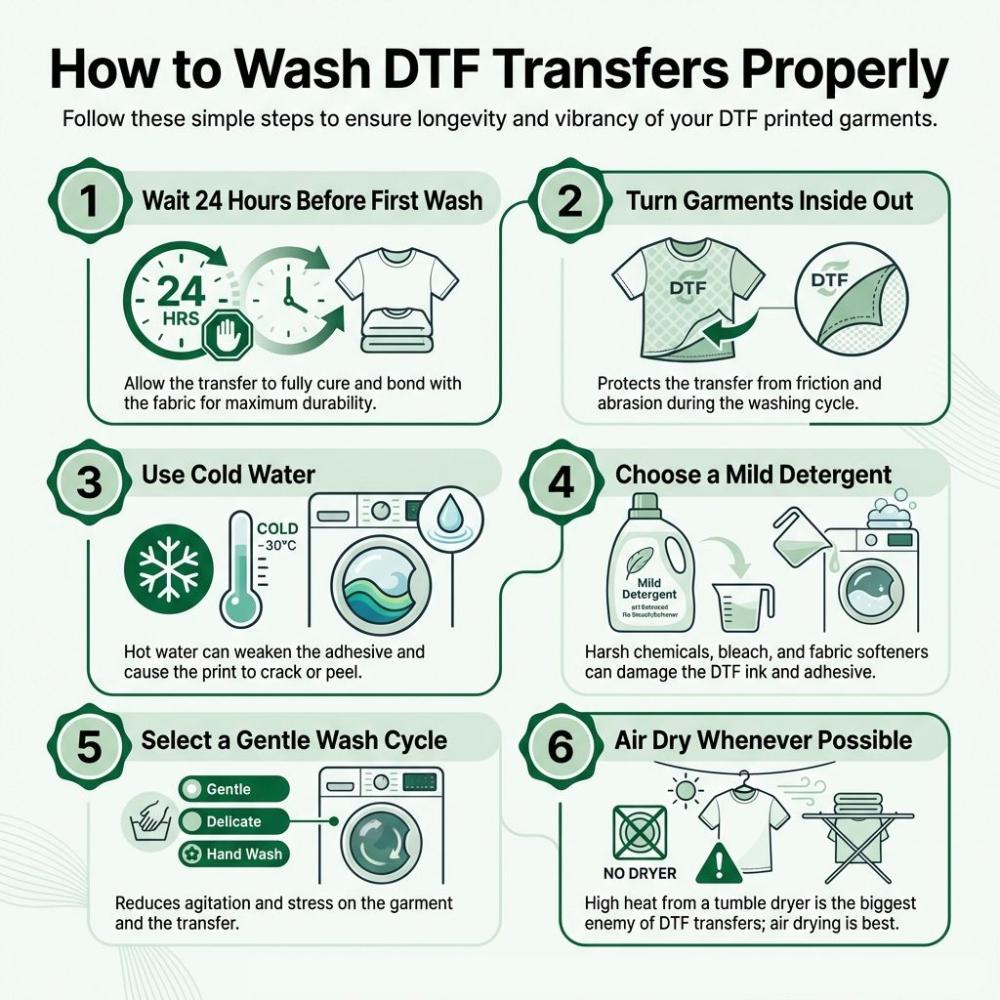
Key Tips for Washing DTF Transfers
Here is a quick-reference checklist:
-
Wash inside out
-
Use cold water
-
Avoid bleach and softeners
-
Choose gentle cycle
-
Air dry whenever possible
-
Do not iron directly on the design
These habits protect both standard prints and specialty options like custom uv dtf transfers, which may require similar low-heat handling.
Common Washing Mistakes That Damage Prints
Even strong prints can fail if these mistakes are repeated:
High-Heat Washing
Heat weakens adhesive over time.
Overloading the Washer
Too many garments increase friction and surface stress.
Mixing With Heavy Fabrics
Denim, towels, and garments with zippers cause abrasion.
Direct Ironing on the Print
If ironing is necessary:
-
Turn garment inside out
-
Use low heat
-
Avoid direct contact with the design
Washing Instructions by Fabric Type
Different fabrics require slight adjustments when washing DTF printed apparel.
|
Fabric Type |
Water Setting |
Drying Recommendation |
Notes |
|
100% Cotton |
Cold |
Air dry preferred |
Most forgiving fabric |
|
Polyester |
Cold |
Low heat only |
Sensitive to overheating |
|
Cotton/Poly Blend |
Cold |
Air dry |
Balanced durability |
|
Hoodies/Fleece |
Cold |
Lay flat dry |
Retains heat longer |
This quick table supports proper DTF Transfer Washing Instructions across common garment types.
Why Print Quality Still Plays a Role
Care instructions matter, but durability begins during production.
Clean, high-resolution dtf transfer designs ensure smooth edges and strong bonding. Well-prepared dtf designs reduce weak points that may lift after washing.
When garments are produced through reliable methods like dtf printing gang sheets, consistency improves across multiple prints.
For larger production needs, dtf wholesale prints, or dtf custom bulk printing help maintain uniform adhesive quality and predictable wash performance.
Streamlined production solutions such as White Label DTF Printing also help ensure consistent application standards before the garment ever reaches the wash cycle.
Additional Tips for Maximizing the Longevity of DTF Transfers
Following proper DTF Transfer Washing Instructions covers the basics. But if you want your prints to maintain a like-new appearance for years, a few extra precautions can make a noticeable difference.
Long-term durability is not about one wash. It is about consistent habits.
Wash Less, Protect More
Frequent washing increases friction and exposure to heat.
If the garment is not heavily soiled:
-
Spot clean small stains
-
Air it out after wear
-
Avoid unnecessary wash cycles
Reducing total wash frequency is one of the simplest DTF print maintenance tips.
Separate Printed Garments
Do not wash DTF apparel with:
-
Towels
-
Heavy denim
-
Zippered jackets
-
Thick workwear
Rough fabrics increase abrasion, which slowly damages the print surface.
Keeping printed garments together reduces friction.
Avoid Extended Dryer Exposure
Even when using low heat, long dryer cycles can weaken adhesive bonds over time.
If you must use a dryer:
-
Choose low heat
-
Use short cycles
-
Remove garments immediately
Air drying remains the safest method for washing DTF printed apparel.
Store Apparel Correctly
Storage conditions matter more than most people realize.
To maintain print vibrancy:
-
Fold garments instead of hanging heavy prints
-
Store in dry areas
-
Avoid prolonged sunlight exposure
Moisture and UV exposure can gradually reduce color intensity.
Address Minor Peeling Early
If you notice slight edge lifting, do not ignore it.
You can often fix small issues by:
-
Placing parchment paper over the design
-
Applying recommended heat and pressure
-
Allowing proper cooling time
Correcting minor lifting early prevents larger peeling problems later.
How to Prevent DTF Peeling Over Time
If you are wondering how to prevent DTF peeling, focus on these core factors:
-
Proper curing before first wash
-
Consistent cold water washing
-
Gentle cycle use
-
Minimal dryer heat
-
High-quality transfers
Peeling is usually the result of repeated high heat or aggressive agitation.
When transfers are produced with precision—such as through dtf gang sheet printing—adhesive distribution is consistent. But even the best production methods rely on proper care to maximize lifespan.
Signs Your Care Routine Needs Adjustment
Monitor your prints regularly.
Early warning signs include:
-
Slight color dullness
-
Micro cracking
-
Edges beginning to lift
-
Stiffness around the print area
If you notice these signs:
-
Switch immediately to air drying
-
Use gentler detergent
-
Reduce wash frequency
Small changes can prevent permanent damage.
Best Way to Wash DTF Shirts: Quick Reference
Here is a simplified reminder for anyone caring for DTF garments:
-
Wait 24 hours before first wash
-
Wash inside out
-
Use cold water only
-
Choose gentle cycle
-
Avoid bleach and fabric softener
-
Air dry whenever possible
-
Avoid direct ironing on the design
These habits form the backbone of proper DTF transfer care instructions.
Durability and Production Go Hand in Hand
Washing plays a major role in longevity. But durability also begins during production.
Strong adhesive bonding, accurate heat pressing, and clean artwork preparation all contribute to wash resistance.
Whether you are printing small runs or scaling up with dtf wholesale prints, maintaining consistent application standards ensures predictable wash results.
If you are managing higher volumes, solutions like dtf custom bulk printing help maintain uniform quality across every garment.
For those handling fulfillment or production workflows, White Label DTF Printing can streamline output while maintaining consistent press quality.
Long-Term Maintenance Strategy
If you want your prints to look new after 50+ washes, follow this long-term strategy:
-
Keep washing temperatures low
-
Avoid repeated high-heat drying
-
Reduce friction during washing
-
Monitor prints regularly
-
Correct small issues early
These simple steps dramatically extend garment life.
Following complete DTF Transfer Washing Instructions is not complicated. It just requires consistency.
Conclusion: Follow DTF Transfer Washing Instructions for Lasting Results
Proper DTF Transfer Washing Instructions protect color vibrancy, flexibility, and adhesion strength. Understanding how to wash DTF transfers correctly prevents cracking, fading, and peeling.
Cold water, gentle cycles, mild detergent, and air drying remain the safest practices. When combined with quality production and consistent care, DTF prints can maintain their appearance through dozens of washes.
If you are ready to produce durable transfers built for longevity, you can:Build Your Own Gang Sheet:
DTF Transfer Washing Instructions:FAQ
1. How do you wash DTF transfers without damaging them?
Wash garments inside out using cold water and a gentle cycle. Avoid bleach and fabric softener. Air drying is recommended to prevent cracking or peeling.
2. Can DTF printed shirts go in the dryer?
Yes, but only on low heat. High heat can weaken adhesive bonds and cause peeling over time. Air drying is safer and extends print life.
3. How long do DTF prints last with proper care?
With correct washing and drying, DTF prints can last 50 or more wash cycles without noticeable fading or cracking.
4. What is the main cause of DTF peeling?
Peeling usually occurs due to excessive heat exposure, aggressive wash cycles, or washing the garment too soon after pressing.