


Direct-to-Film (DTF) printing has rapidly become one of the most popular technologies in the U.S. custom apparel industry. From small print shops to large production facilities, businesses are adopting DTF because it produces vibrant colors, sharp details, and reliable prints across a wide variety of fabrics.
Whether you're printing t-shirts, hoodies, tote bags, or performance apparel, DTF offers a flexible and scalable solution that fits modern production demands.
However, while most print businesses focus heavily on print resolution, ink quality, film type, and the curing process, one critical factor often gets overlooked — proper DTF transfer storage.
Even when you purchase premium custom DTF transfers, incorrect storage can quickly compromise their performance. Adhesive powder can degrade, film can warp, and the transfer may lose its ability to bond properly during heat pressing.
This is the common problem that we, at DTFS, have seen across print shops and production facilities. When transfers are stored improperly,
several common issues begin to appear as follows:
-
Cracking prints after washing
-
Weak adhesion during pressing
-
Failed heat press applications
-
Inconsistent print quality
-
Increased customer complaints and reprints
The good news is that with the right knowledge and a few simple practices, you can significantly extend the life and reliability of your transfers.
In this guide, we’ll break down everything print shops and apparel businesses need to know about storing DTF transfers the right way.
You’ll learn about:
-
Ideal storage conditions for maintaining transfer quality
-
The typical shelf life of DTF transfers
-
Common storage mistakes that ruin transfers
-
Professional storage techniques used by high-volume print shops
Understanding DTF Transfers: Why Storage Impacts Print Quality
To understand why DTF transfer storage is so important, it helps to first understand what a DTF transfer is made of. A DTF transfer is not just a printed design—it is a layered system of materials engineered to bond with fabric when heat and pressure are applied.
Components of a DTF Transfer
A typical DTF transfer consists of three main elements:
1. PET Transfer Film
The base of every DTF transfer is the PET (polyethylene terephthalate) film. This transparent sheet holds the printed design until it is heat pressed onto fabric. PET film is designed to withstand heat and maintain structural stability, but exposure to high humidity, heat, or direct sunlight can cause the film to warp or lose its smooth surface. When this happens, the transfer may not release properly during pressing.
2. Pigment Ink Layer
DTF printers use specialized pigment inks to create vibrant designs on the PET film. These inks provide the color and detail that make direct to film printing so popular. However, pigment inks can react to environmental factors. Excess humidity can soften the ink layer, while UV exposure may cause fading or color degradation over time. Proper DTF transfer storage helps preserve ink integrity and maintain the brightness and sharpness of the printed design.
3. TPU Adhesive Powder
The adhesive powder (usually TPU-based) is what enables the design to bond to the garment. During the curing process, the powder melts and attaches to the ink layer, creating a flexible adhesive surface. However, TPU powder is highly sensitive to moisture and contamination. If exposed to humidity, the adhesive can absorb moisture and lose its bonding strength. Dust contamination can also interfere with adhesion during heat pressing.
Environmental Factors That Affect Transfers
Understanding how environmental conditions affect transfers is key when planning DTF transfer storage ideas for your workspace. The most common factors include:
-
Humidity: High moisture levels can weaken adhesive performance and soften the ink layer.
-
Temperature: Excess heat may prematurely activate or degrade the adhesive.
-
UV Exposure: Direct sunlight can cause ink fading and film degradation.
-
Dust and Contaminants: Dust particles can settle on the adhesive surface and interfere with proper bonding.
What are the Ideal DTF Transfer Storage Conditions?
By controlling temperature, humidity, light exposure, and airflow, businesses can significantly extend the life of their transfers and ensure consistent press results.
Recommended Temperature
The ideal temperature range for storing DTF transfers is 60°F to 75°F (15°C–24°C). Extreme heat can soften the adhesive layer or warp the PET film, while very cold conditions may make the adhesive brittle. Keeping transfers in a stable room-temperature environment helps preserve both the film structure and ink quality.
Recommended Humidity
Humidity should ideally stay between 40% and 60%. Excess moisture can affect adhesive strength and reduce bonding performance during heat pressing. Using sealed storage bins, desiccant packs, or a dehumidifier can help maintain optimal conditions when planning how to store DTF prints in bulk.
Protection From Direct Light
Direct sunlight or strong UV exposure can degrade pigment inks and weaken the adhesive layer over time. For effective DTF transfer storage, keep transfers in drawers, cabinets, or opaque packaging to block light and preserve color vibrancy.
Proper Air Circulation
Good airflow prevents moisture buildup and condensation in storage areas. Avoid stacking transfers in tightly sealed spaces without ventilation.
When businesses maintain these conditions, climate-controlled storage can dramatically increase transfer shelf life and ensure reliable print quality during application.
Also read: Why Should You Look for High-quality DTF Transfers?
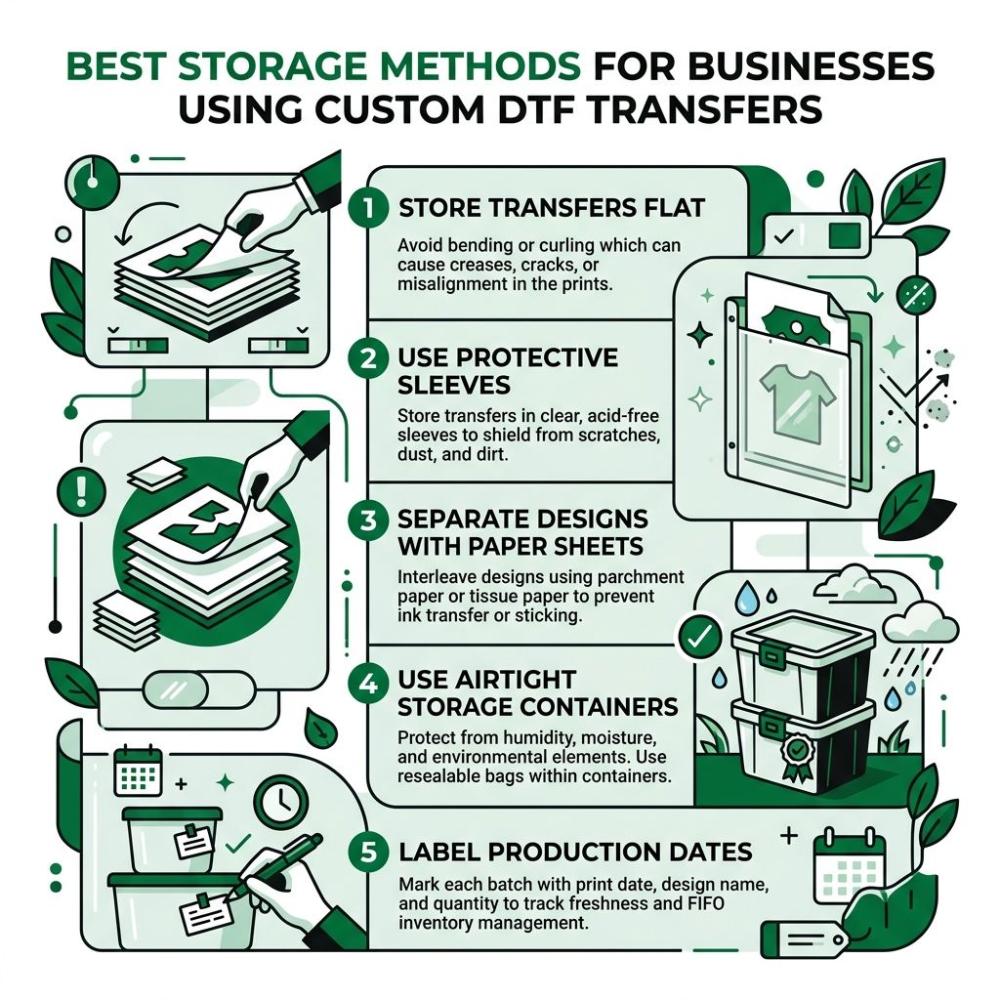
Best Storage Methods for Businesses Using Custom DTF Transfers
Proper DTF transfer storage is essential for maintaining consistent print performance, especially for businesses that regularly order custom DTF transfers, gang sheets, or bulk transfers. Even when transfers are produced with premium materials, poor storage can reduce adhesion strength and shorten their usable life.
Following a few practical storage practices can help maintain print quality and answer a common business concern: how long are DTF transfers good for.
Store Transfers Flat
DTF transfers should always be stored flat on a stable surface. Rolling, folding, or bending the PET film can damage the adhesive layer and distort the printed design. Over time, curved or bent films may not press evenly, resulting in weak adhesion or incomplete bonding during heat application.
Use Protective Sleeves
Dust, lint, and debris can easily stick to the adhesive surface and affect transfer performance. Using clear protective sleeves or plastic covers is a simple but effective DTF transfer storage solution that protects transfers from contaminants while keeping designs organized.
Separate Designs with Paper Sheets
When stacking multiple transfers, place a thin sheet of paper between each design. This prevents the ink surface from sticking to the back of another transfer and reduces friction during storage and handling.
Use Airtight Storage Containers
For businesses located in humid regions of the U.S., airtight containers are highly recommended. These containers help protect transfers from moisture exposure, which can weaken adhesive powder and reduce durability.
Label Production Dates
Adding labels with production dates helps businesses track inventory and determine how long DTF transfers are good for. Most properly stored transfers remain usable for several months, but organized date tracking ensures older transfers are used first.
These simple practices become even more important for operations handling gang sheet printing, where large volumes of transfers must remain consistent and press-ready.
How Improper DTF Transfer Storage Can Ruin Transfers and Print Quality
When transfers are stored incorrectly, several environmental factors can damage the adhesive layer, film structure, and ink quality. Understanding how to store DTF transfers correctly helps businesses avoid costly printing errors and wasted inventory.
Moisture Damage
Humidity is one of the biggest threats to DTF transfers. When exposed to excessive moisture, the adhesive powder can absorb humidity from the air. This weakens its bonding ability and leads to poor adhesion during the heat press process. As a result, prints may peel, crack, or fail after the first wash.
Excess Heat
High temperatures can also damage transfers during storage. Excess heat may prematurely activate the adhesive layer or cause the PET film to warp. When this happens, the transfer may not sit flat on the garment during pressing, resulting in uneven bonding and reduced print durability.
Dust and Surface Contamination
Dust, lint, and small particles can easily settle on the adhesive surface if transfers are left uncovered. These contaminants interfere with the bonding process and create weak spots in the final print. Even small particles can cause visible defects or poor adhesion.
Transfer Aging
Over time, improperly stored transfers may degrade. The ink layer can become brittle, while the adhesive gradually loses its bonding strength.
For print shops and apparel businesses, ruined transfers mean wasted materials, failed orders, and additional production costs. Maintaining proper DTF transfer storage practices protects both product quality and business profitability.
DTF Transfer Storage Strategies for Bulk Orders and Gang Sheets
Businesses handling large volumes of transfers must pay extra attention to DTF transfer storage to maintain consistent print quality and reduce production waste. Organized storage systems help print shops manage inventory efficiently while ensuring transfers remain in optimal condition until they are ready for use.
Managing Bulk DTF Transfers
For businesses ordering bulk quantities, it’s important to organize transfers by production batch. Label each stack with production dates and apply the FIFO (First In, First Out) method so older transfers are used first. This helps answer a common question — how to store DTF prints in a way that prevents aging and adhesive degradation.
Storing Gang Sheets
Gang sheets should always be stored flat to prevent bending or curling. Avoid stacking sheets too tightly, as excessive pressure can affect the adhesive layer and make transfers harder to separate during production.
Storage Systems for Growing Print Shops
As production scales, structured storage becomes essential. Many print shops use drawer-based filing systems or climate-controlled cabinets to maintain consistent temperature and humidity levels.
Proper DTF transfer storage not only protects transfer quality but also improves workflow efficiency, reduces misprints, and ensures smoother production for high-volume operations.
Common DTF Transfer Storage Mistakes to Avoid
Even businesses producing high-quality prints can damage transfers because of poor DTF transfer storage practices. Small storage mistakes can reduce adhesion strength, affect print durability, and lead to wasted materials. Understanding these issues and applying better DTF transfer storage practices helps protect your transfers and maintain consistent print results.
Common mistakes to avoid include:
-
Storing transfers in garages or warehouses: These areas often experience fluctuating temperatures and humidity levels that weaken adhesive powder and affect film stability.
-
Exposing transfers to direct sunlight: UV exposure can degrade the PET film and adhesive layer, reducing the transfer’s ability to bond properly during heat pressing.
-
Folding or rolling transfer film: Bending or rolling films can create creases and distort the design, which may cause uneven application or visible print defects.
-
Storing transfers near heat equipment: Keeping transfers close to heat presses, dryers, or curing ovens can prematurely activate adhesive powder and reduce transfer effectiveness.
-
Ignoring humidity levels: High humidity allows adhesive powder to absorb moisture, which can weaken bonding and lead to poor heat press results.
Avoiding these mistakes and implementing smart DTF transfer storage ideas ensures better print quality, longer shelf life, and reduced waste for growing print businesses.
Also read: 15 Common DTF Transfer Mistakes and How to Avoid
Signs Your DTF Transfers Were Stored Incorrectly
Even high-quality transfers can fail if DTF transfer storage conditions are not maintained properly. Recognizing early warning signs helps print shops prevent production issues and avoid wasting valuable transfers.
Here are some common indicators that your transfers may have been stored incorrectly:
-
Powder residue on the transfer: Excess or loose adhesive powder may indicate moisture exposure or improper sealing during storage.
-
Curling PET film: If the film starts bending or curling at the edges, it often means the transfers were exposed to excessive heat or humidity.
-
Weak adhesion during pressing: Transfers that fail to bond properly to fabric usually point to compromised adhesive caused by poor DTF transfer storage conditions.
-
Cracking after washing: If prints crack quickly, the transfer may have degraded due to long-term exposure to air or light.
-
Transfers feeling sticky: Sticky film surfaces can occur when transfers are stored in warm environments without proper protection.
Using a dedicated DTF organizer or labeled storage system can help businesses maintain order, protect transfers from contamination, and ensure consistent print performance.
Shelf Life of DTF Transfers: How Long Do They Last?
The shelf life of transfers largely depends on proper DTF transfer storage and material quality.
-
In most cases, transfers remain usable for 3–6 months when stored correctly in a cool, dry environment.
-
Factors such as ink quality, adhesive powder quality, film type, and storage conditions directly influence durability.
-
Understanding how to store DTF transfers properly helps maintain adhesive strength and print performance over time.
High-quality suppliers like DTFS produce transfers designed for durability and consistent results, but even premium products require controlled storage conditions to preserve long-term usability and reliable heat-press performance.
Pro Tip: Use humidity control packs, keep transfers away from heat sources, and store them sealed until use. Transfers are usually placed in dark cabinets or drawers to avoid light exposure.
Why Working With a Reliable DTF Provider Still Matters
Even the best storage practices cannot compensate for poor materials, inconsistent production, or low-quality inks. That’s why choosing a reliable DTF provider is essential for businesses that depend on consistent results.
A professional supplier ensures that every transfer is manufactured under controlled conditions and meets industry standards before it ever reaches your shop. When sourcing transfers, businesses should look for providers that deliver:
-
Consistent adhesive application to ensure reliable bonding during heat pressing
-
High-quality pigment inks that maintain vibrant colors and long-term durability
-
Reliable curing standards that prevent undercuring or overcuring issues
-
Accurate color reproduction so designs remain true to brand expectations
Even when you follow the best how to store DTF transfers practices, the initial transfer quality determines how well prints perform. Working with a trusted provider helps print shops protect their reputation and deliver consistent results to their customers.
Also read: What Makes DTFS DTF Transfers More Reliable and Durable
In a Nutshell
Proper DTF transfer storage is essential for maintaining print quality, durability, and consistent production results. Even the highest-quality transfers can fail if they are exposed to heat, humidity, dust, or improper handling.
By understanding how to store DTF transfers correctly—using controlled temperatures, protective storage methods, and organized systems—print shops can significantly extend transfer shelf life and reduce material waste.
When you combine reliable storage practices with a trusted supplier, you ensure your prints remain vibrant, durable, and production-ready whenever you need them.
Frequently Asked Questions
1. Can DTF transfers be refrigerated to extend their shelf life?
No, refrigeration is not recommended because condensation can introduce moisture that weakens the adhesive and affects print performance.
2. Should DTF transfers be resealed after opening a package?
Yes, resealing unused transfers in protective sleeves or airtight bags helps prevent dust, humidity, and contamination.
3. Can stacked DTF transfers stick together over time?
Yes, if stacked without separators, the adhesive layer may stick to other films, so using parchment or protective sheets is recommended.
4. Do seasonal weather changes affect stored DTF transfers?
Yes, extreme summer heat or winter humidity in many U.S. regions can affect adhesive stability, making climate-controlled storage important.
5. Can older DTF transfers still be used if they look normal?
Possibly, but it’s best to test press a sample first because adhesive bonding strength can decline over time even if the film appears intact.