


Imagine this. It’s mid-year. You’re cleaning your workspace. At the bottom of a drawer, you find a stack of DTF transfers left over from last Christmas. The designs still look sharp. Colors still seem bright. But doubt creeps in. Will this transfer press perfectly onto your customer’s t-shirt? Or will it peel, crack, or ruin the garment? That uncertainty is exactly why understanding direct to film transfer shelf life matters.
Many print business owners confuse durability with storage life. They are not the same. Durability refers to how long a design lasts after pressing and washing. DTF transfer shelf life refers to how long unused transfers remain usable before application. The shelf life for direct to film transfers depends heavily on storage conditions, humidity, temperature, and handling.
In this blog, we’ll explain what DTF transfer shelf life actually means, what causes transfers to degrade over time, and practical tips to maximize their longevity—so you never second-guess an old stack again.
What Does DTF Transfer Shelf Life Actually Mean?
DTF transfer shelf life simply means how long a transfer remains usable from the day it is printed until the day it is pressed onto a garment. It’s not about how long the design lasts after washing. It’s about how the transfer performs under heat and pressure months later.
The shelf life of DTF transfers determines whether the adhesive will activate properly, whether the design will bond smoothly, and whether the final result looks professional.
A transfer may look perfect—sharp artwork, smooth film, bright colors—yet still have a short shelf life due to humidity, heat exposure, or poor storage. Think of it like packaged food.
It may look fine, but time and environment affect quality. Unlike food, DTF transfer shelf life depends on adhesive stability and material sensitivity, especially in custom DTF transfers.
What Happens to DTF Transfers in Shelf Over Time?
DTF transfer shelf life depends heavily on proper DTF transfer storage. In the short term, ready-to-print transfers usually remain stable if kept in a cool, dry place. The adhesive stays active. The film remains flat. Pressing results stay consistent.
Over time, however, materials begin to change—especially if exposed to heat, humidity, or pressure. Even if the design looks fine, performance may decline during pressing.
If stored for a long time, you may notice:
-
Adhesive losing activation strength
-
Edges curling or lifting on the film
-
Reduced bonding under heat press
-
Increased cracking after stretching
-
Fading or slight discoloration
Proper direct to film transfer storage directly impacts usability and long-term reliability. You need the right sourcing partner to get high-quality transfers with a longer shelf life to get vibrant and durable prints even after a long time.
Can DTF Transfers Ever Expire or Is It Just a Myth?
You might have wondered, “Do DTF transfers expire?” The answer is not black and white. DTF transfers shelf life does not work like packaged food with a fixed expiration date. There is no single day when a transfer suddenly becomes unusable. Instead, performance declines gradually over time.
The shelf life for DTF transfers depends on how the adhesive layer and film respond to storage conditions. Over months, the adhesive can lose reactivity. Moisture can affect bonding strength. The film may absorb humidity, altering how it behaves under heat. When pressed, this gradual degradation shows up as weak adhesion, dull finish, edge lifting, or cracking—especially in large gang sheet printing runs where consistency matters.
So, how long do DTF transfers last? It varies. Poor storage shortens lifespan. Proper handling extends it. They don’t “expire” overnight—but they absolutely age.
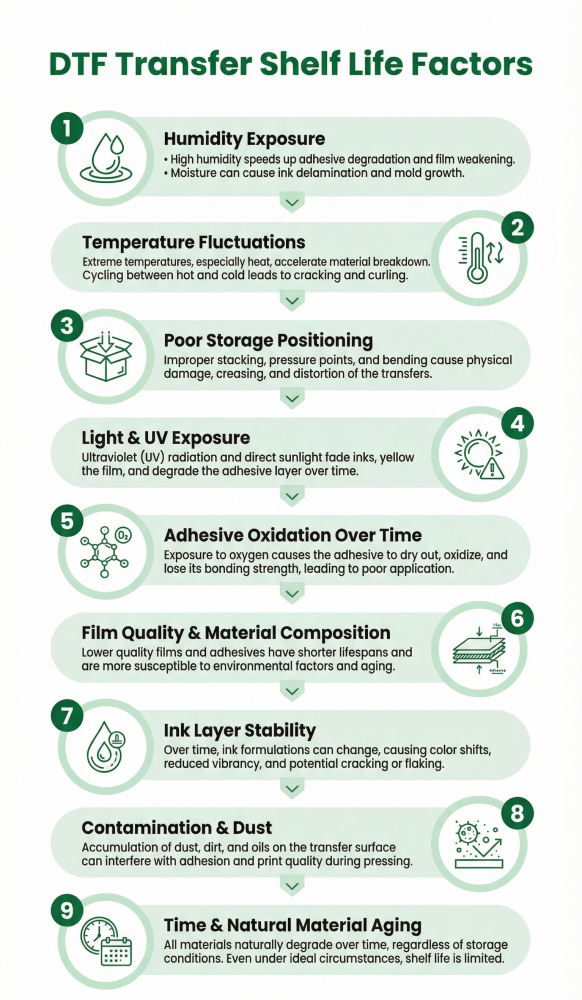
DTF Transfer Shelf Life Factors: What Causes Them to Decline
The DTF transfer shelf life gradually goes through a decline, and the aging process happens because of specific environmental and material factors. Even if a transfer looks perfectly usable, internal changes in adhesive and film can impact performance under heat. If you’ve ever wondered how long do DTF transfers last, the answer depends largely on how well they are stored and protected. Below are the main factors that reduce the shelf life of DTF transfers and affect long-term durability.
• Humidity Exposure
Moisture is one of the biggest threats to DTF transfers shelf life. The adhesive layer can absorb humidity from the surrounding air. When this happens, heat activation becomes inconsistent. You may notice weak bonding, bubbling, or edge lifting during pressing. High humidity significantly shortens the shelf life of DTF transfers.
• Temperature Fluctuations
Excess heat during storage can prematurely alter adhesive chemistry. Extremely cold environments can make the film brittle. Frequent temperature swings cause expansion and contraction in materials, weakening structural integrity and reducing your direct to film transfer shelf life.
• Poor Storage Positioning
Stacking transfers under weight or bending them creates pressure marks and film distortion. Over time, this affects alignment and edge bonding. Warped film often leads to uneven pressing results.
• Light & UV Exposure
Direct sunlight and prolonged artificial light exposure can slowly degrade inks and weaken adhesive layers. UV exposure may reduce color vibrancy and shorten DTF transfers shelf life before they are even pressed.
• Adhesive Oxidation Over Time
Adhesive compounds naturally change as they age. Oxidation reduces heat reactivity. Older transfers may not bond aggressively, leading to premature peeling. This chemical aging directly impacts how long do DTF transfers last in storage.
• Film Quality & Material Composition
Not all PET films are manufactured equally. Lower-quality films degrade faster under environmental stress. Premium films maintain flexibility longer, extending the shelf life of DTF transfers.
• Ink Layer Stability
DTF transfers rely on a layered ink structure, including white and color layers. Over time, these layers can lose flexibility. Aged ink may crack during stretching, reducing performance and durability.
• Contamination & Dust
Improper packaging exposes transfers to dust and airborne particles. Surface contamination interferes with adhesion and reduces DTF transfer shelf life by weakening bonding areas.
• Time & Natural Material Aging
Even under ideal storage conditions, materials slowly age. Adhesive chemistry evolves. Film coatings gradually lose responsiveness. While proper storage extends usability, DTF transfers shelf life is not indefinite.
You may also be interested in: How do Custom DTF transfers improve print quality?
Precautions Before Using Aged DTF Transfers
Should you use old DTF transfers? The answer depends on the condition—not just time. Since, the shelf life of DTF transfers is influenced by storage, humidity, and handling, an old DTF transfer that was stored properly in a cool, dry place may still perform well.
However, aged DTF transfers exposed to heat or moisture are highly likely to give poor results. Since DTF transfer expiration isn’t sudden, it is possible that your transfer may work better than expected if it’s properly preserved.
Avoid using old DTF transfers for premium customer orders without testing. The risk of peeling, weak adhesion, or cracking increases with age. However, the aged DTF transfers can be useful for internal samples or discounted runs, after proper testing.
Before using the older stock, take these precautions:
-
Run a small test press first to check bonding strength.
-
Increase press time slightly (2–3 seconds) if adhesion feels weak.
-
Apply firm, even pressure to compensate for reduced adhesive reactivity.
-
Perform a stretch test immediately after pressing.
-
Wash test one garment before full production.
-
Inspect edges carefully for lifting or uneven peel.
-
Discard transfers with visible curling or discoloration.
If issues appear, minor adjustments may help. Slightly higher pressure or a repress with protective parchment can improve bonding. But if cracking or major peeling occurs, do not proceed. When in doubt, test first. Protect your garments. Protect your reputation.
Telltale Signs to Know If an Old DTF Transfer is Usable
Undoubtedly, DTF transfers shelved for a long time can go bad. But not every DTF transfer is the same, and the way it is handled, stored, and printed mostly determines its longevity. How can you know if your old DTF transfers are fine without heat pressing them to your customers’ t-shirts, hoodies, or other apparel?
That’s definitely an important question you would ask when it comes to DTF transfer shelf life. Luckily, there are many signs and ways to know if your transfers are suitable for a run or if they are no longer useful.
Visual Inspection
-
Film should be flat and smooth, not curled or warped.
-
No yellowing, discoloration, or cloudy patches.
-
No visible powder clumps or residue buildup.
-
Design colors should still appear vibrant, not dull or faded.
Note: If the sheet looks distorted or brittle, DTF transfers shelf life may be compromised.
Flexibility Check
-
Gently bend the transfer sheet.
-
It should flex without cracking sounds.
-
Ink layer should not show micro-fractures.
Note: If it feels stiff or fragile, aging has likely reduced performance.
Test Press Evaluation
-
Press one sample on scrap fabric first.
-
Film should peel cleanly (hot or cold as specified).
-
No lifting or ink separation during peel.
Poor peel behavior often indicates reduced adhesive strength.
Stretch Test
-
Stretch the printed area immediately after pressing.
-
No cracking or splitting should appear.
-
Edges should remain sealed.
Note: Immediate cracking means the shelf life of DTF transfers may be exceeded.
Wash Test
-
Run one cold wash cycle before bulk use.
-
Check for peeling, fading, or edge lifting.
Note: If it survives the first wash, it’s likely still usable.
|
Checkpoint |
What to Look For |
Usable or Risky? |
|
Film Condition |
Flat, smooth, flexible |
Usable |
|
Film Curling |
Edges lifting or warping |
Risky |
|
Adhesive Feel |
Even, no residue clumps |
Usable |
|
Discoloration |
Yellowing or dull areas |
Risky |
|
Peel Test |
Clean release from the film |
Usable |
|
Edge Bonding |
Fully sealed after press |
Usable |
|
Immediate Cracking |
Cracks on the first stretch |
Not recommended |
|
Wash Result |
No peeling after the first wash |
Safe to proceed |
Tips for Maximizing the DTF Transfer Shelf Life
DTF transfer shelf life depends less on luck and more on how you handle DTF transfer storage. Small improvements in storage habits can significantly extend usability and maintain print performance. Besides investing in high-quality DTF transfers also play a crucial role in the extended shelf life of your transfers. Below are practical, proven tips to protect your transfers.
Proper Storage
Before storing transfers, allow them to cool completely after printing. Never stack warm sheets. Trapped heat creates moisture buildup, which weakens adhesive over time.
Store transfers in:
-
Airtight containers to block humidity and dust exposure.
-
Ziplock bags for sealed, small-to-medium batches. Remove excess air before sealing.
-
File folders or document sleeves for organizing small batches without bending or stacking pressure.
-
Flat storage drawers to prevent curling or warping.
Always place parchment or plain paper between sheets to avoid adhesive sticking.
Short-Term Storage (Up to 1–2 Months)
For short-term needs, store transfers in a cool, dry room away from direct sunlight. Keep temperature stable. Avoid placing them near heat presses, windows, or humid areas. Proper short-term DTF transfer storage helps maintain consistent pressing performance.
Long-Term Storage (2+ Months)
For extended storage, control both temperature and humidity. Ideal conditions are around 60–75°F with low humidity. Use desiccant packets inside airtight containers to absorb moisture. Avoid frequent opening of storage boxes. Repeated exposure to air accelerates aging and reduces DTF transfer shelf life.
Common Mistakes to Avoid
-
Storing transfers in humid basements or garages
-
Leaving them exposed on worktables
-
Stacking heavy items on top
-
Bending or rolling sheets
-
Ignoring temperature fluctuations
Proper DTF transfer storage preserves adhesive strength, color stability, and flexibility. Good storage habits directly extend DTF transfer shelf life and protect your inventory investment.
In a Nutshell
There is no fixed expiration date for DTF transfers, and their shelf life does not end overnight. Instead, transfers gradually lose performance as they age. The older they become, the higher the risk of weak adhesion, cracking, peeling, or dull colors. The shelf life of DTF transfers depends on storage conditions, handling, and time. That’s why inspection and testing matter. The visual checks, stretch tests, peel evaluations, and wash trials discussed in this blog help you decide with confidence. Age alone doesn’t determine usability—condition does. Test first. Then press with certainty.
FAQs
1. How many times can DTF transfers be used?
DTF transfers are single-use only; once pressed, they cannot be reused.
2. How long is the shelf life of DTF transfers?
DTF transfer shelf life typically ranges from 6–12 months with proper storage in a cool, dry place.
3. Do DTF transfers go bad if not used?
Yes, over time adhesive strength and flexibility can decline, reducing performance during pressing.
4. Can old DTF transfers still work properly?
Yes, if stored correctly—but always test before using for customer orders.
5. What happens if I use expired DTF transfers?
You may experience weak adhesion, peeling edges, dull colors, or cracking after washing.
6. How should I store DTF transfers to extend shelf life?
Store them flat in airtight packaging, away from humidity, heat, and direct sunlight.