


There are too many printing methods in the world of apparel decoration today. DTF, DTG, Screen Printing, Vinyl Printing, sublimation printing, and so on. This leaves many new apparel businesses perplexed about which method to choose.
So instead of overwhelming you, let’s keep it simple. We’ll focus on the two that matter most right now—DTG (Direct-to-Garment) and DTF (Direct to Film) printing in this blog. While both DTF and DTG are solid options for custom printing, each has its own strengths and limitations.
In the printing business, choosing the right method can make or break your business. It’s not just about quality; it’s about time, cost, and brand reputation. The printing method that aligns with your business goals, material type, and order requirements gives you the best results.
So, let’s find out more about DTF vs DTG, how they differ from each other, and which one you should choose.
DTF vs DTG: Quick Takeaway
For a quick answer to your “DTG vs DTF” query: both are solid options for a wide range of printing needs. However, DTF is best suited for heavyweight or outdoor garments and products that require frequent washing.
Owing to its adhesive layer beneath the design, DTF offers better wash resistance and overall durability. On the other hand, direct-to-garment (DTG) printing works best on cotton fabrics and delivers a softer, more breathable feel since the ink is absorbed into the fabric rather than sitting on top.
In simple terms, choose DTF for versatility and durability across multiple fabrics, and go with DTG when you want a premium, soft finish on cotton apparel with high detail.
What is Direct to Film (DTF) Printing?
DTF printing is a modern, flexible printing technology that allows you to create vibrant, full-color designs on a wide range of fabrics like cotton, polyester, blends, nylon, and fleece. It’s quickly gaining traction across the apparel industry due to its versatility and ease of use. In fact, the global DTF printing market is expected to reach USD 3,920 million and continue to grow rapidly.
The process is straightforward. First, the design is printed onto a special film. Then, an adhesive powder is applied and cured. Finally, the design is heat-pressed onto the fabric, where it bonds to the surface for a clean, durable finish.
Key Benefits:
-
Works on multiple fabric types
-
Vibrant, high-detail prints
-
Strong durability and wash resistance
-
No pre-treatment required
What is Direct to Garment (DTG) Printing?
DTG printing is a digital printing method where designs are printed directly onto fabric using specialized inkjet technology. It’s best known for producing soft, high-detail prints, especially on cotton garments.
The process works by first pre-treating the fabric to help the ink bond properly. Then, the design is printed directly onto the garment using water-based inks. Finally, the print is cured with heat to lock in the design and ensure durability.
The market size for DTG printing stood at US$2.2 billion in 2025 and is expected to cross US$5 billion by 2030.
Key Benefits:
-
Soft, breathable prints with no heavy feel
-
Excellent for detailed and complex designs
-
Ideal for cotton and natural fabrics
-
Great for small runs and on-demand printing
DTF vs DTG: Understanding the Key Differences
Both printing methods are amazing on their own. But there are many differences that make them stand apart. Understanding these differences helps you decide which better aligns with your requirements. So, let’s check out the DTG vs DTF difference to understand where each printing method stands.
Quality and Durability
DTF printing delivers high-quality prints with a slightly plastic-like feel, but the finish is smooth and flexible rather than stiff. The design sits on top of the fabric, allowing it to stretch without cracking under normal use.
Initially, the print may feel slightly raised, but it softens over time with wear. One of its biggest advantages is durability—it holds up well through multiple washes in cold or lukewarm water. However, frequent washing in very hot water can weaken the adhesive layer, eventually leading to minor cracking or reduced lifespan.
DTF is Best For: The DTF printing technique is best for multi-fabric use, including polyester, blends, and performance wear. It’s also ideal for designs that require durability and frequent washing.
Related: What Should You Look for in High-Quality DTF Transfers?
DTG printing is known for its soft, natural feel since the ink is absorbed directly into the fabric rather than sitting on top. This gives the print a smooth, breathable finish that feels almost like part of the garment, especially on cotton.
The detail and color blending are excellent, making it ideal for complex designs. But prints may lack vibrancy compared to DTF because the ink is soaked in fabric. Like on black or colorful garments, the print may feel less vibrant.
In daily use, the direct-to-garment technique performs well when properly cared for. The DTG prints hold up through regular washing, particularly in cold water and gentle cycles. However, compared to DTF, they may show signs of fading over time, especially with frequent washing or harsh conditions. Proper care—like avoiding high heat—can significantly extend the life of DTG prints.
DTG is Best For: DTG printing is best for cotton garments where a soft, premium feel is important. It’s ideal for detailed artwork and smaller, on-demand production runs.
Compatibility with Fabrics
When comparing DTF vs DTG, fabric compatibility is one of the biggest differences. The DTF printing process is highly versatile—it works well on a wide range of materials, including cotton, polyester, blends, nylon, and even fleece. This makes direct to film printing a go-to option for businesses handling mixed garment types or performance wear.
DTG, on the other hand, is more limited. It performs best on 100% cotton or high-cotton blends because the ink needs to absorb into the fabric for optimal results. On synthetic fabrics, DTG may struggle with adhesion and color vibrancy.
In simple terms, if you need flexibility across different fabrics, DTF is the better choice, while DTG is ideal for cotton-focused applications.
Color Output and Quality
The primary difference between DTG and DTF is that the print sits on top in the latter, and it absorbs into the fabric in the former. So, the color output varies significantly in each case.
The difference starts at the ink level. DTF uses a layered CMYK + white ink system printed onto film, then transferred with adhesive—creating a solid, opaque layer on top of the fabric. DTG, by contrast, sprays water-based CMYK inks directly into the fibers, relying on fabric absorption for color development.
Visually, DTF delivers higher vibrancy and contrast—especially on dark garments—like a decal sitting sharply on the surface. DTG offers a softer, more muted look, with colors blending naturally into the fabric.
In terms of hand-feel, DTF feels slightly raised and smooth, while DTG feels almost invisible. However, DTG’s reliance on fabric absorbency limits performance on synthetics, whereas DTF maintains consistency across materials.
Design Transfer Method
When comparing DTF vs DTG, the core difference lies in how the design is transferred onto the fabric. DTG uses an ink-based process where the design is printed directly onto the garment, allowing the ink to absorb into the fibers for a soft, seamless finish.
In contrast, the DTG vs DTF difference becomes clear with the DTF process. Here, designs are first printed onto a film to create custom DTF transfers, followed by an adhesive layer. The final step involves heat pressing the transfer onto the fabric. This extra step adds versatility but also introduces a slightly layered feel to the print.
Printing at Scale
When it comes to printing at scale, the difference between DTG and DTF printing is clear. DTG technology is best suited for print-on-demand and small orders, as it uses water-based ink to print directly onto garments with minimal setup. This makes it efficient for single pieces or short runs, but less cost-effective as volume increases.
DTF printing, on the other hand, is more adaptable across order sizes. It works well for both small batches and large-scale production. With techniques like gang sheet printing, multiple designs can be combined into a single run, improving efficiency and lowering production costs. This makes DTF technology ideal for businesses handling bulk orders or varied designs.
In simple terms, the DTG method fits on-demand workflows, while DTF offers greater flexibility and efficiency when scaling production. DTG is suitable for dropshipping businesses.
Environmental Impact
When comparing DTF vs DTG, sustainability is an important factor for modern print businesses. In direct-to-film vs direct-to-garment printing, DTG generally has a lower environmental footprint because it uses water-based inks and produces minimal waste, especially in print-on-demand setups. However, pre-treatment chemicals and water usage should still be managed carefully.
DTF, while versatile, involves film, adhesive powder, and transfer sheets, which can generate more material waste. In a comparison of DTG vs DTF, the direct-to-garment technique gets a slight edge in eco-friendliness.
That said, both methods can be optimized. Using eco-friendly inks, recycling unused films, minimizing misprints, and adopting energy-efficient curing processes can significantly reduce impact. Businesses that focus on controlled production and waste reduction can make both DTF and DTG more sustainable fulfillment methods in the long run.
|
Factor |
DTF (Direct to Film) |
DTG (Direct to Garment) |
|
Print Feel (Hand Feel) |
Slightly raised, smooth, flexible |
Soft, natural, almost part of fabric |
|
Durability |
Highly durable, resists cracking with proper care |
Good durability, may fade over time with frequent washing |
|
Wash Performance |
Holds well in cold/lukewarm washes |
Best with gentle cycles and cold water |
|
Best Use Case |
Multi-fabric, high durability, frequent wash items |
Cotton apparel, premium soft feel, detailed prints |
|
Fabric Compatibility |
Works on cotton, polyester, blends, nylon, fleece |
Best on 100% cotton or high-cotton blends |
|
Color Vibrancy |
High vibrancy, strong contrast (especially on dark fabrics) |
Softer, more muted tones due to absorption |
|
Design Detail |
Excellent detail, slightly layered look |
Excellent detail with natural blending |
|
Print Method |
Printed on film → heat pressed onto fabric |
Printed directly onto fabric using ink |
|
Production Process |
Requires transfer + heat press step |
Direct printing, fewer steps |
|
Scaling Production |
Ideal for bulk orders & gang sheet printing |
Best for print-on-demand & small runs |
|
Cost Efficiency |
More efficient for large volumes |
Cost-effective for single or low quantities |
|
Setup Complexity |
Flexible, can outsource via custom transfers |
Requires full in-house setup |
|
Environmental Impact |
More waste (film, adhesive powder) |
Lower waste, uses water-based inks |
|
Consistency Across Fabrics |
High consistency across different materials |
Limited consistency on non-cotton fabrics |
Choosing Between DTF vs DTG for Your Apparel Business
Let’s make this real. This isn’t just about printing methods—it’s about how you run your business.
The choice between DTF and DTG will directly affect your costs, the type of customers you can serve, how fast you can fulfill orders, and how easily you can scale. Pick the wrong one, and you’ll constantly feel friction in your operations. Pick the right one, and everything flows smoother—orders, production, growth.
DTF is built for flexibility and scale. DTG is built for quality and control. The right choice depends on what kind of business you’re actually running—not what looks better on paper.
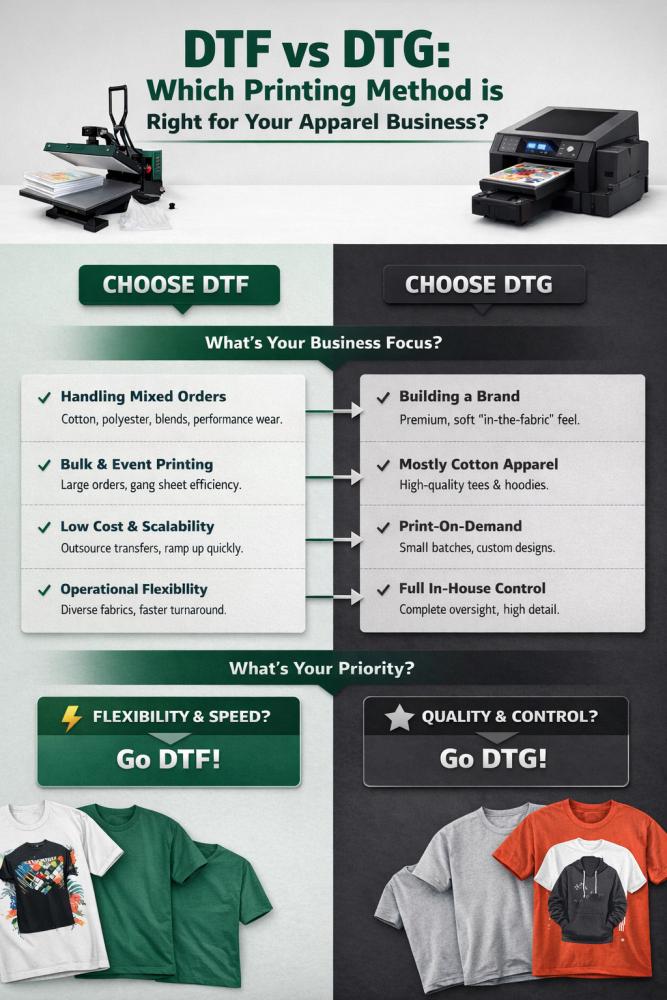
When You Should Choose DTF Printing
DTF is the practical choice when your business deals with variety, volume, and speed.
-
You serve different customer needs daily
One day it’s polyester gym wear. Next day it’s cotton tees. Then hoodies. With DTF, you don’t have to limit your offerings or turn customers away. -
You’re handling bulk or time-sensitive orders
Events, schools, corporate merch—these clients care about delivery and consistency more than anything. DTF allows faster production, especially with gang sheet workflows. -
You want to start or scale without heavy investment
You don’t need to buy printers, hire experts, or manage maintenance. You can outsource transfers and focus on pressing and fulfillment. -
You prioritize operational simplicity
Fewer moving parts. Less setup. More predictable output across different fabrics.
Real-world scenario:
A print shop in the U.S. handling local businesses, sports teams, and events needs speed and flexibility. DTF fits perfectly because every order is different—and margins depend on efficiency.
When You Should Choose DTG Printing
DTG is ideal when your business is focused on brand experience, premium feel, and controlled production.
-
You’re building a fashion or lifestyle brand
Customers care about how the print feels, not just how it looks. DTG delivers that soft, “part of the fabric” finish. -
Your catalog is mostly cotton-based
If 80–90% of your products are cotton tees or hoodies, DTG becomes more viable and consistent. -
You run print-on-demand or low-volume orders
Single-piece orders. Custom drops. DTG shines here because there’s minimal setup per design. -
You want full in-house control
From printing to curing, everything happens under your roof. That gives you control—but also adds responsibility.
Real-world scenario:
A Shopify brand selling premium graphic tees or minimalist apparel benefits from DTG. The softer feel aligns with brand positioning, even if production is slower.
Final Decision Framework
This isn’t about which method is “better.” It’s about which one removes friction from your business.
-
Want speed, flexibility, and easier scaling? → Choose DTF
-
Want premium feel and brand-focused quality? → Choose DTG
Think about your customers. Your order types. Your growth goals. Then invest accordingly.
When to Choose (and Avoid) DTF vs DTG Printing
In the DTF vs DTG printing decision, it’s not just about what works—it’s also about what doesn’t fit your business model. Knowing when to use or avoid each method saves time, money, and frustration.
Choose DTF when you need flexibility across fabrics and order types. It’s ideal for businesses handling mixed materials, bulk orders, or fast turnaround requirements. If you’re scaling quickly or want to avoid heavy equipment investment, DTF is a strong choice.
Avoid DTF when your brand prioritizes ultra-soft, premium feel—especially for high-end cotton apparel where print texture matters.
Choose DTG when your focus is on quality, detail, and soft hand-feel. It works best for cotton-based products and print-on-demand models where small batches are common.
Avoid DTG when you need to print on polyester or scale bulk production efficiently—it becomes costly and limiting.
In DTG vs DTF printing, the right choice depends on your workflow, not just print output.
Common Challenges in DTF vs DTG Printing
Every printing method has its strengths—but also its challenges. In the DTF vs DTG printing comparison, understanding these limitations helps you avoid costly mistakes and set realistic expectations.
DTF Printing Challenges
-
Plastic-like feel:
Prints sit on top of the fabric, which can feel slightly raised—less ideal for premium apparel brands -
Heat sensitivity issues:
Incorrect temperature can cause scorching (especially on polyester) or weak adhesion -
Peeling or cracking (if misapplied):
Poor pressure, incorrect timing, or skipping the second press can reduce durability -
Material waste:
Film sheets and adhesive powder can increase waste if not managed properly -
Learning curve in pressing:
Even with ready transfers, mastering pressure, time, and peel technique takes practice
DTG Printing Challenges
-
Limited fabric compatibility:
Works best on cotton—struggles with polyester and synthetic blends -
Higher upfront investment:
Requires printers, pre-treatment machines, and curing equipment -
Maintenance-heavy setup:
Regular cleaning and ink management are essential to avoid clogging and downtime -
Slower for bulk production:
Not ideal for large orders due to per-piece printing time -
Color limitations on dark fabrics:
Prints may appear less vibrant compared to DTF, especially without proper pre-treatment
In DTG vs DTF, these challenges aren’t deal-breakers—but they define how each method fits into your workflow.
DTF vs DTG: Which One is Better for Small Apparel Businesses?
For small apparel businesses, the choice between DTF and DTG isn’t about which is better overall—it’s about which fits your current stage, budget, and order flow. The difference between DTG and DTF becomes very clear when you look at real-world constraints like cost, flexibility, and scalability.
If you’re just starting out or working with limited capital, DTF is often the smarter entry point. You can order ready-to-use transfers, avoid expensive equipment, and still handle a wide range of fabrics. This flexibility allows you to take on more types of orders—from custom t-shirts to performance wear—without turning customers away.
On the other hand, DTG is ideal if your focus is on building a premium, cotton-based brand. It offers a softer feel and better integration with the fabric, which matters for customer experience. However, the difference between DTF and DTG here is cost and complexity—DTG requires higher upfront investment and ongoing maintenance.
In simple terms, small businesses looking for speed and flexibility should lean toward DTF, while those focused on brand quality and control may benefit more from DTG.
Related: Is Direct to Film Transfer Right for Small Apparel Businesses?
How to Choose the Right Printing Method?
Choosing between methods in the DTF vs DTG printing debate comes down to how your business operates. Start by asking a simple question: what matters more—flexibility or finish?
If you’re wondering “is DTF printing good quality?”—yes, it delivers vibrant, durable prints across multiple fabrics. It’s ideal if you handle varied orders, need scalability, or want to avoid heavy upfront investment.
DTG, on the other hand, is better when your focus is on premium cotton apparel and soft hand-feel. It’s a strong fit for brand-driven businesses where customer experience matters.
Think about your order size, fabric types, and growth plans.
-
Need versatility and bulk efficiency → DTF
-
Need premium feel and brand quality → DTG
The right choice aligns with your business goals—not just the print result.
Conclusion
In the DTG vs DTF debate, there isn’t a one-size-fits-all answer. Both methods are powerful—but they serve different goals. DTF vs DTG printing really comes down to what your business needs most.
If you value versatility, faster scaling, and compatibility with multiple fabrics, DTF is a strong choice. If you prioritize soft hand-feel, premium cotton apparel, and detailed prints, DTG fits better.
The best decision isn’t about which method is superior—it’s about which aligns with your products, customers, and growth plans. When your printing method supports your workflow, everything else becomes easier.
FAQs – DTF vs DTG Printing
Is DTF printing good quality?
Yes. DTF produces sharp, vibrant prints with strong durability. The print sits on top of the fabric, making colors pop and helping the design resist cracking and peeling when applied correctly.
Which is better: DTG or DTF?
It depends on your needs. DTF is better for versatility, bulk orders, and mixed fabrics. DTG is ideal for cotton garments and when a soft, premium hand-feel is important.
What is the main difference between DTG and DTF?
The core difference is how the design is applied. DTG prints directly onto fabric using water-based inks, while DTF prints on film and is then heat-pressed onto the garment.
Does DTF last longer than DTG?
DTF typically lasts longer on mixed fabrics and high-wear garments. DTG holds up well on cotton, but frequent washing may lead to gradual fading over time.
Is DTG good for bulk orders?
Not usually. DTG is better for print-on-demand or small batches. DTF scales more efficiently for large or mixed orders.
Which printing method is more cost-effective for small businesses?
DTF is generally more affordable to start with because it requires less equipment and supports outsourcing through custom transfers. DTG requires more investment in printers and maintenance.