

Whether you have laid the foundations of your custom apparel business or are planning to start one, you have likely heard of DTF and vinyl printing. While they both are awesome printing technologies per se, they serve very different purposes and deliver completely different results.
From print feel and durability to production speed and overall cost, each method has its own strengths and limitations. Vinyl printing vs DTF is an essential dilemma you need to solve before making a decision. It directly affects your margins, turnaround time, and even customer satisfaction.
For a quick answer, direct to film (DTF) gives you an edge with vibrant color output, superior durability, and versatility across fabrics, especially when using custom DTF transfers. While vinyl printing is an old-school technology, DTF is a modern, innovative tech that has transformed the landscape of custom apparel design.
But vinyl has its own advantages that make it a suitable technology for a wide range of purposes. That’s why understanding how DTF and vinyl truly compare isn’t just helpful — it’s essential for building a profitable and scalable apparel brand.
DTF vs Vinyl Printing: A Quick Comparison
When comparing DTF transfer vs vinyl, the biggest differences lie in application method, material compatibility, and production workflow. In vinyl printing vs DTF, vinyl uses solid-colored sheets that are cut into shapes and heat pressed onto garments, while DTF prints full-color designs onto PET film before transferring them with adhesive powder and heat.
The heat transfer vinyl process involves designing artwork, cutting vinyl with a plotter, weeding excess material, and pressing it onto fabric. DTF, on the other hand, prints the design digitally, applies powder, cures it, and then heat presses it. Vinyl works best for simple, bold graphics, while DTF handles complex, multi-color artwork across various fabrics.
Core Differences: DTF vs Vinyl Printing
|
Factor |
DTF Printing |
Vinyl Printing |
|
Process |
Print → Powder → Cure → Heat Press |
Design → Cut → Weed → Heat Press |
|
Best For |
Full-color, detailed, photo-quality designs |
Simple text, numbers, and bold logos |
|
Material Compatibility |
Cotton, polyester, blends, nylon, leather |
Best on cotton and cotton blends |
|
Color Capability |
Unlimited colors, gradients, photo detail |
Limited to pre-colored vinyl sheets |
|
Setup Time |
Moderate setup, efficient for complex art |
Fast for simple single-color designs |
|
Texture / Thickness |
Thin, flexible layer bonded to surface |
Slightly thicker, especially when layered |
|
Hand Feel |
Smooth, soft, slightly stretchy |
Slightly raised, can feel heavier in layers |
|
Durability |
Very durable when cured properly; may crack if poorly pressed |
Highly durable; thick vinyl resists wear but may peel over time |
|
Stretch Performance |
Good stretch with quality adhesive |
Good, but heavy layering reduces flexibility |
|
Special Effects |
Metallic, glitter, glow, puff (via specialty films) |
Wide range: glitter, holographic, flock, reflective |
|
Cost (Small Orders) |
Cost-effective for multi-color designs |
Very affordable for single-color designs |
|
Cost (Large Orders) |
Moderate; better for complex bulk designs |
Labor increases with complexity and layers |
|
Waste Factor |
Lower waste for complex designs |
More waste during weeding process |
|
Design Complexity |
Excellent for intricate artwork |
Not ideal for small details or gradients |
DTF vs Vinyl Printing: Key Advantages and Disadvantages
When comparing vinyl vs DTF transfers, it’s important to understand both the strengths and limitations of Direct-to-Film printing and vinyl printing. While DTF has gained massive popularity in recent years, especially in the debate of DTF vs HTV printing, it’s not a one-size-fits-all solution. Below is a clear breakdown of the pros and cons to help you understand the real difference between vinyl transfers and DTF transfers.
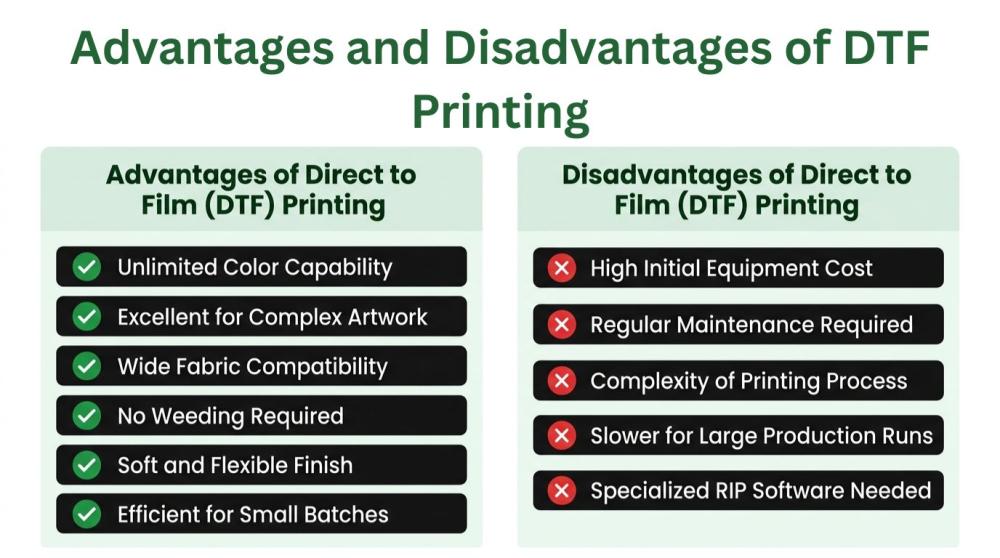
Advantages of Direct to Film (DTF) Printing
-
Unlimited Color Capability – DTF supports full-color designs, gradients, and photo-quality prints without layering.
-
Excellent for Complex Artwork – Fine lines, shadows, and detailed graphics print cleanly and consistently.
-
Wide Fabric Compatibility – Works well on cotton, polyester, blends, nylon, and more.
-
No Weeding Required – Unlike vinyl, DTF eliminates the time-consuming weeding process.
-
Soft and Flexible Finish – Produces a smooth hand feel with good stretch when applied properly.
-
Efficient for Small Batches – Ideal for short runs and print-on-demand businesses.
Disadvantages of Direct to Film (DTF) Printing
-
Higher Initial Equipment Cost – In-house DTF setup can be expensive.
-
White Ink Maintenance – Requires regular cleaning to prevent clogs.
-
Can Crack if Improperly Cured – Pressing errors may reduce durability.
-
Material Sensitivity – Quality depends heavily on film, ink, and powder grade.
-
Not Always Cheapest for Simple Designs – For single-color text, vinyl may be more cost-effective.
Understanding these pros and cons helps businesses decide whether DTF fits their production goals better than traditional vinyl methods.
Vinyl printing remains a popular choice in the custom apparel industry, especially when comparing vinyl vs DTF transfers. While DTF dominates complex, full-color artwork, vinyl continues to perform strongly for simple, bold designs.
Let’s check the pros and cons of vinyl printing.
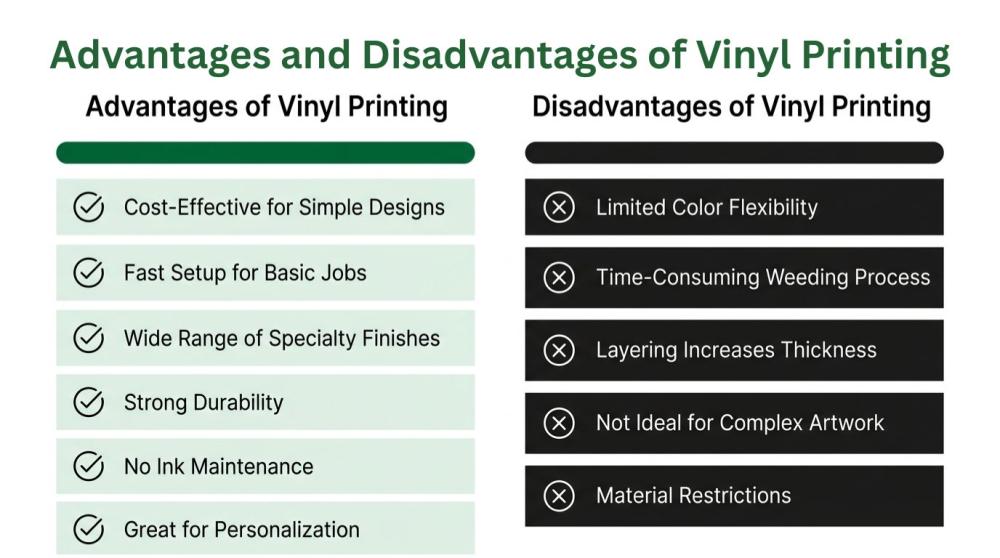
Advantages of Vinyl Printing
-
Cost-Effective for Simple Designs – Ideal for single-color text, numbers, and basic logos with low material cost.
-
Fast Setup for Basic Jobs – The heat transfer vinyl process is quick for straightforward artwork.
-
Wide Range of Specialty Finishes – Available in glitter, holographic, reflective, puff, metallic, and flock options.
-
Strong Durability – Thick vinyl resists fading and performs well on uniforms and sportswear.
-
No Ink Maintenance – Unlike DTF, vinyl does not require ink systems or printhead cleaning.
-
Great for Personalization – Perfect for custom names and numbers on jerseys.
Disadvantages of Vinyl Printing
-
Limited Color Flexibility – Cannot produce gradients or photo-realistic designs easily.
-
Time-Consuming Weeding Process – Removing excess vinyl adds labor time, especially for intricate designs.
-
Layering Increases Thickness – Multi-color designs require layering, making prints heavier and less flexible.
-
Not Ideal for Complex Artwork – Fine details can be difficult to cut and weed cleanly.
-
Material Restrictions – Works best on cotton and blends; may require specialty vinyl for other fabrics.
Vinyl remains powerful for specific use cases, but its limitations become more noticeable when design complexity increases.
A Full-Blown Comparison of DTF and Vinyl Printing
When it comes to vinyl printing vs DTF, the debate often centers around flexibility, cost, durability, and production efficiency. Both methods are widely used in the custom apparel industry, but they serve very different business models and design needs. Understanding the technical and practical differences between vinyl vs DTF transfers can help you choose the right method for your products and customers.
1. Printing Process
The biggest distinction lies in how the designs are created and applied.
DTF (Direct-to-Film) printing involves printing a full-color design onto PET film using pigment inks, applying adhesive powder, curing it, and then heat pressing it onto the garment. It is a digital process that does not require cutting or layering.
Vinyl printing, on the other hand, uses pre-colored sheets of heat transfer vinyl (HTV). The design is cut using a plotter, excess vinyl is weeded out manually, and the final design is heat pressed onto the fabric.
DTF is print-based. Vinyl is cut-based.
2. Design Complexity
In the discussion of vinyl printing vs DTF, design capability is a major differentiator.
DTF supports unlimited colors, gradients, shadows, fine details, and photo-quality prints without increasing setup complexity. Whether the design has 2 colors or 20, the workflow remains the same.
Vinyl works best for simple graphics, bold logos, and text-based designs. Multi-color artwork requires layering multiple vinyl sheets, which increases thickness and labor time. Fine details can also be difficult to cut and weed cleanly.
For complex, creative designs, DTF clearly has the edge.
3. Material Compatibility
DTF transfers are highly versatile. They adhere well to cotton, polyester, blends, nylon, and even some specialty fabrics. This makes DTF attractive for brands working with varied apparel types.
Vinyl works extremely well on cotton and cotton blends. However, certain fabrics require specialty vinyl types, which can increase cost.
When comparing vinyl vs DTF transfers, DTF generally offers broader fabric compatibility with fewer adjustments.
4. Hand Feel and Appearance
DTF prints typically have a smooth, slightly flexible finish. When properly applied, they feel soft and integrated into the fabric surface.
Vinyl prints feel slightly thicker and more raised, especially if multiple layers are used. While some customers prefer the bold, structured look of vinyl, heavy layering can reduce comfort and flexibility.
5. Durability
Both methods are durable when applied correctly.
DTF transfers can withstand repeated washing if cured and pressed properly. However, poor-quality materials or incorrect pressing may cause cracking over time.
Vinyl is known for strong durability, especially for sports uniforms and lettering. That said, thick vinyl may peel if not properly pressed or if exposed to high heat during washing.
6. Cost & Production Efficiency
In terms of cost, the choice depends on order type.
For simple, single-color designs, vinyl can be more affordable and faster to produce.
For multi-color or detailed designs, DTF is often more cost-effective because it avoids layering and excessive labor.
This advantage becomes even stronger when using gang sheet printing, where multiple designs are arranged on a single sheet to reduce material waste and improve cost efficiency.
From a business standpoint, vinyl printing vs DTF becomes a question of efficiency. DTF reduces manual labor (no weeding), while vinyl requires more hands-on time but less technical maintenance.
DTF vs Vinyl Printing: What You Require for Each Printing Type?
When comparing vinyl printing vs DTF, one major difference lies in the equipment, materials, and setup required for each method. Understanding what you need for both helps you evaluate startup costs, workflow complexity, and long-term scalability.
What You Need for DTF Printing
DTF (Direct-to-Film) printing requires a more technical setup. Essential equipment includes:
-
DTF printer (with CMYK + white ink system)
-
PET transfer film
-
DTF inks
-
Adhesive powder (TPU)
-
Powder shaker or manual powder application setup
-
Curing oven or heat press for curing
-
Heat press for garment application
-
RIP software for color management
DTF requires regular maintenance, especially for white ink circulation. While the setup cost is higher, it enables full-color, high-detail printing with minimal manual intervention during production.
What You Need for Vinyl Printing
Vinyl printing requires a simpler and more mechanical setup:
-
Vinyl cutter/plotter
-
Heat transfer vinyl (HTV) sheets
-
Weeding tools
-
Heat press
-
Design software (e.g., vector-based programs)
Unlike DTF, vinyl does not require ink systems or curing equipment. However, it involves manual weeding, especially for detailed designs.
In short, vinyl printing vs DTF comes down to automation versus manual workflow. DTF demands higher initial investment but offers more design flexibility, while vinyl is simpler to start with but more labor-intensive for complex projects.
What’s the Best for Your Business?
Choosing between vinyl printing vs DTF ultimately depends on your business model, order volume, and design style. There is no universal winner — only the right fit for your workflow and target customers.
When to Choose DTF
-
You print full-color, detailed, or photo-quality designs regularly.
-
Your artwork includes gradients, shadows, or complex illustrations.
-
You run a print-on-demand or small-batch custom apparel business.
-
You need compatibility with multiple fabrics like polyester, blends, nylon, or performance wear.
-
You want to avoid manual weeding and reduce labor time.
-
You plan to scale production and handle higher order volumes efficiently.
-
You frequently order bulk DTF transfers to reduce per-unit costs and streamline high-volume production.
-
You prioritize creative flexibility over lower startup costs.
When to Choose Vinyl Printing
-
You mainly produce simple text, names, numbers, or bold single-color logos.
-
You create sports uniforms, team jerseys, or school apparel.
-
You want a lower initial investment and simpler setup.
-
You handle small custom orders with minimal design complexity.
-
You prefer a straightforward workflow without ink maintenance.
-
You focus on specialty finishes like glitter, reflective, or flock vinyl.
-
You are just starting and want an easier entry into custom printing.
The Future of Printing is DTF
The custom apparel industry is rapidly evolving, and DTF is leading that transformation. With its ability to produce vibrant, full-color designs on multiple fabrics without complex setup, Direct-to-Film printing offers unmatched flexibility and scalability. As businesses demand faster turnaround times, lower waste, and higher creative freedom, DTF continues to outperform traditional methods in adaptability.
Its compatibility with print-on-demand models and small-batch production makes it ideal for modern apparel brands. As technology improves and equipment becomes more accessible, DTF is not just a trend — it’s shaping the future of garment printing.
To Wrap Up
In the debate of vinyl printing vs DTF, the right choice ultimately depends on your business goals, design complexity, and production scale. While vinyl remains a strong option for simple, bold graphics and personalization, DTF stands out for full-color flexibility, fabric versatility, and scalability. When comparing vinyl vs DTF transfers, it’s clear that each method serves a different purpose in the custom apparel industry. Understanding their strengths and limitations allows you to invest wisely, protect your margins, and deliver the print quality your customers expect. Choose the method that aligns with your growth strategy and creative direction.
Frequently Asked Questions
1. Which is better for beginners: vinyl printing or DTF?
Vinyl printing is easier and cheaper to start, while DTF requires more equipment but offers greater flexibility.
2. Does DTF last longer than vinyl?
Both are durable when applied correctly, but vinyl is often slightly more resistant to heavy wear.
3. Can DTF print more colors than vinyl?
Yes, DTF supports unlimited colors and gradients, while vinyl is limited to solid sheet colors.
4. Is vinyl cheaper than DTF?
Vinyl is cheaper for simple single-color designs, but DTF is more cost-effective for complex artwork.
5. Which method is better for scaling a business?
DTF is generally better for scaling due to faster production and full-color capabilities.