


DTF printing delivers vibrant, durable prints only when every step of the process is executed correctly. Adhesive powder plays a much bigger role than many people realize in the process. If the powder clumps together, spreads unevenly, or fails to coat the printed design properly, it can lead to weak adhesion, rough textures, peeling edges, and inconsistent transfer quality.
These DTF transfer adhesive powder issues are among the most common production problems faced by both beginners and commercial print shops. Fortunately, most of them can be prevented with the right techniques and equipment.
In this guide, you'll learn why DTF adhesive powder clumping and uneven application happen, how to diagnose the root cause, and the best solutions to achieve smooth, consistent, and long-lasting DTF transfers every time.
What are the Causes of Adhesive Powder Issues?
Achieving a flawless DTF transfer depends on more than just quality film and ink. Adhesive powder is what creates the bond between the printed design and the fabric, making it one of the most critical components in the process. When DTF adhesive powder problems occur, they can trigger a chain reaction of production defects—from DTF transfer not sticking properly to rough textures, peeling edges, and poor wash durability. Understanding the root causes helps eliminate these issues before they affect your final prints.
Moisture and Humidity Cause Powder Clumping
One of the biggest reasons for DTF adhesive powder clumping is excessive moisture in the printing environment. DTF adhesive powder is hygroscopic, meaning it naturally absorbs moisture from the air. When humidity levels become too high, the powder particles stick together before they even reach the printed film.
Instead of flowing freely, the adhesive forms lumps that create uneven coating across the artwork. These clumps melt inconsistently during curing, often resulting in weak adhesion and noticeable print defects.
Maintaining a controlled workspace with humidity levels around 45–60% and storing powder in sealed containers helps minimize moisture-related DTF transfer powder issues.
Incorrect Ink Wetness Prevents Proper Powder Adhesion
Another common reason for DTF powder not sticking is improper ink deposition.
Adhesive powder only sticks to wet ink. If the printer lays down insufficient ink, the printed areas begin drying before powder application, leaving bare spots where no adhesive attaches. On the other hand, excessive ink creates pooling, causing powder to accumulate unevenly and produce thick, inconsistent adhesive layers.
Balancing printer settings, ink flow, and production speed is essential for consistent powder coverage. Shops producing large runs often rely on premium films. Like we at DTFS.co offers high-quality custom DTF transfers to maintain reliable adhesion across every print.
Uneven Powder Application
Many beginners struggle with DTF powder uneven spread, especially when applying powder manually.
If too little powder is used, portions of the design remain exposed, leading to DTF transfer not sticking during heat pressing. Excessive powder creates thick adhesive deposits that produce stiff transfers and rough surface textures.
Learning how to apply DTF powder evenly requires consistent shaking, proper excess removal, and ensuring the powder fully covers every printed area without forming heavy accumulations.
For higher production efficiency, many businesses printing multiple designs simultaneously use gang sheet printing to streamline powder application while maintaining uniform coverage across larger print batches.
Poor Powder Storage Conditions
Storage conditions significantly influence DTF transfer quality issues. Leaving adhesive powder exposed to open air allows moisture, dust, and contaminants to enter the material. Over time, the powder becomes difficult to spread evenly and may lose its ability to melt consistently during curing.
Always store adhesive powder:
-
In airtight containers
-
Away from direct sunlight
-
At stable room temperatures
-
In low-humidity environments
Proper storage extends shelf life and ensures predictable application every time.
Inadequate Powder Removal
Applying powder is only half the process. Failing to remove excess adhesive creates another common source of DTF printing mistakes. Thick deposits outside the printed image melt during curing and leave unwanted residue around the transfer. These excess particles also reduce flexibility and create visible adhesive outlines after pressing.
After coating the film, gently shake or tap away loose powder until only the inked portions remain covered.
Incorrect Curing Temperatures
Even perfectly applied adhesive powder can fail if it isn't cured correctly. Under-curing prevents the adhesive from reaching its proper melting point, leaving powdery surfaces that don't bond effectively to fabric. Over-curing can burn the adhesive, reducing elasticity and increasing the likelihood of cracking or peeling after washing.
Understanding the correct curing process is one of the most important DTF powder application tips for improving durability. If you're unsure about curing temperatures and timing, this guide on how to cure DTF powder with a heat press explains the process in detail.
Using Low-Quality Adhesive Powder
Not all adhesive powders are manufactured to the same standard. Low-quality products often contain inconsistent particle sizes, contaminants, or poor resin formulations that increase DTF adhesive powder problems even when the application process is correct.
Inferior powder commonly causes:
-
Inconsistent melting
-
Weak bonding
-
Rough transfer texture
-
Reduced wash durability
-
Increased peeling and cracking
Choosing high-quality adhesive powder from trusted suppliers minimizes production variability and significantly improves long-term transfer performance.
Rushing the Production Process
Many DTF transfer quality issues stem from trying to increase production speed. Skipping proper powder distribution, shortening curing time, or immediately stacking freshly powdered films can introduce defects that aren't visible until after pressing. While faster production may seem efficient, rushing often results in costly reprints and dissatisfied customers.
Following consistent operating procedures and regularly inspecting powder coverage ensures every transfer receives the same level of quality before moving to the next production stage.
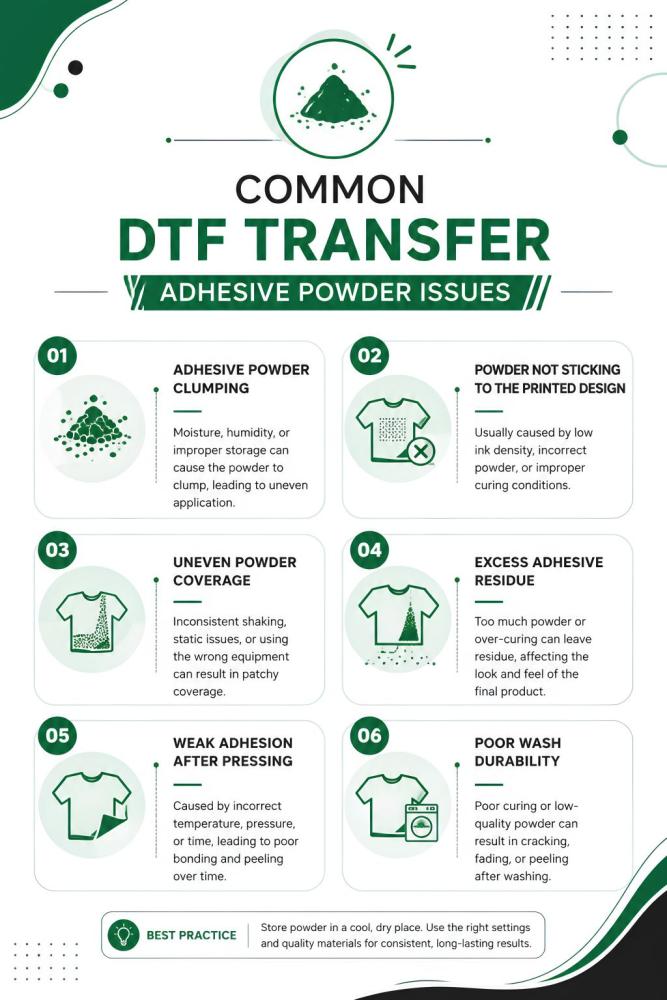
Common DTF Transfer Adhesive Powder Issues
Even when using a high-quality printer and premium film, adhesive powder can become the weakest link in the DTF process if it's not applied or cured correctly. Most DTF adhesive powder problems are easy to identify once you know what to look for. Addressing them early prevents wasted transfers, production delays, and dissatisfied customers.
Adhesive Powder Clumping
One of the most common DTF adhesive powder clumping issues occurs when the powder absorbs moisture from the surrounding environment. Instead of flowing freely across the wet ink, it forms small lumps that stick unevenly to the design.
These clumps melt inconsistently during curing, creating rough textures and weak bonding points. The finished transfer may appear patchy, and some areas may peel after pressing or washing. Proper storage in airtight containers and maintaining a controlled humidity level significantly reduces this problem.
Powder Not Sticking to the Printed Design
Another frequent complaint is DTF powder not sticking to certain sections of the artwork. This usually happens because the printed ink has already started drying before powder application or because insufficient ink was deposited during printing.
As a result, exposed areas receive little or no adhesive, causing DTF transfer not sticking properly when heat pressed. The affected portions often lift from the garment immediately after pressing or begin peeling after only a few washes.
Uneven Powder Coverage
DTF powder uneven spread is another issue that directly affects transfer durability. When some areas receive excessive adhesive while others receive very little, the transfer develops inconsistent bonding strength.
Heavy powder deposits create stiff, thick sections that feel rough on the garment, while under-coated areas remain vulnerable to peeling. Consistent shaking, even distribution, and proper removal of excess powder are essential for producing balanced, high-quality transfers.
Excess Adhesive Residue
Applying too much powder without thoroughly removing the excess leads to another common category of DTF transfer powder issues.
After curing, leftover adhesive melts around the edges of the design, leaving unwanted residue that affects both appearance and comfort. The finished transfer may feel overly thick, lose flexibility, and develop visible glue outlines that reduce its professional finish.
Weak Adhesion After Pressing
Sometimes the transfer appears normal immediately after curing but fails during application. In these cases, DTF transfer not sticking is often caused by under-cured adhesive powder, incorrect pressing temperature, insufficient pressure, or inadequate pressing time. The adhesive never fully activates, preventing it from creating a durable bond with the fabric.
Poor Wash Durability
Many long-term DTF adhesive powder problems only become visible after laundering. If the powder was applied unevenly, cured incorrectly, or contaminated with moisture, the transfer may begin cracking, peeling, or fading after several wash cycles.
Because adhesive powder directly determines bond strength, resolving these DTF transfer powder issues early is one of the most effective ways to improve transfer durability, appearance, and overall customer satisfaction.
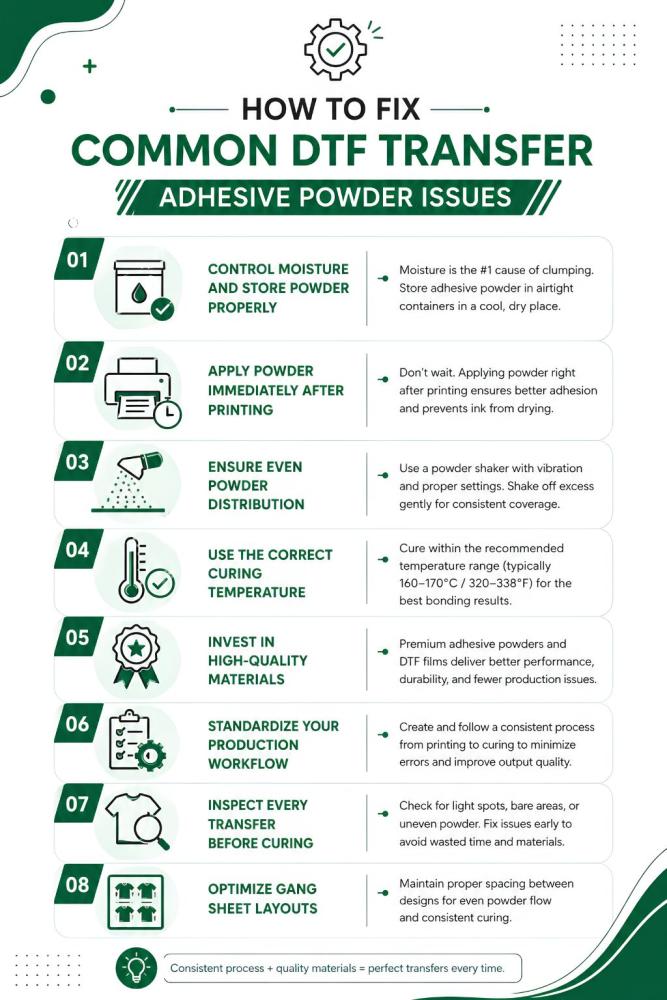
How to Fix Common DTF Transfer Adhesive Powder Issues
Fortunately, most DTF adhesive powder problems can be resolved by improving a few critical steps in your production workflow. Instead of treating symptoms after transfers fail, focus on eliminating the root causes. A consistent environment, proper powder handling, and controlled curing process dramatically improve print quality and long-term durability.
Control Moisture and Store Powder Properly
Humidity is one of the biggest contributors to DTF adhesive powder clumping. Always store adhesive powder in airtight containers and keep it away from direct sunlight or damp environments. Ideally, maintain your print room between 45–60% relative humidity. If you operate in humid climates, using a dehumidifier helps prevent powder from absorbing moisture before application.
Apply Powder Immediately After Printing
Timing matters. Adhesive powder should be applied while the printed ink is still wet. Waiting too long allows the ink surface to dry, resulting in DTF powder not sticking evenly across the design. Establish a workflow where powder application follows printing immediately, especially when producing multiple transfers in succession.
Ensure Even Powder Distribution
One of the simplest ways to reduce DTF powder uneven spread is by developing a consistent powdering technique. Gently shake the powder over the entire printed surface until every inked area is fully coated, then carefully remove the excess with light tapping or controlled shaking. The goal is a thin, uniform adhesive layer rather than heavy buildup that creates rough textures and inconsistent bonding.
Use the Correct Curing Temperature
Improper curing is responsible for many DTF transfer not sticking complaints. Under-curing leaves the adhesive partially melted, while over-curing reduces flexibility and weakens adhesion. Following the correct curing temperature and dwell time is essential for activating the adhesive without damaging it. If you're unsure about proper curing procedures, this guide on how to cure DTF powder with a heat press explains the recommended settings and common mistakes to avoid.
Invest in High-Quality Materials
Low-grade adhesive powder often contains inconsistent particle sizes and impurities that increase production defects. Premium powder delivers smoother coverage, stronger adhesion, and better wash durability. Likewise, quality PET film and reliable inks contribute to more consistent transfer performance. Businesses producing larger order volumes often source materials through bulk wholesale printing to maintain uniform quality across every production run.
Standardize Your Production Workflow
Many DTF adhesive powder problems occur because operators follow different application techniques from one batch to another. Creating standardized operating procedures for printing, powder application, curing, and pressing reduces variation and improves repeatability. This consistency becomes especially important for companies offering white-label DTF production, where maintaining identical quality across customer orders is essential.
Inspect Every Transfer Before Curing
A quick visual inspection before curing can prevent expensive reprints later. Look for uncovered ink, excessive powder buildup, clumps, or contamination. Catching these defects early saves time, reduces waste, and prevents poor-quality transfers from reaching customers.
Optimize Gang Sheet Layouts
Poor layout planning can also contribute to uneven powder application. Transfers placed too closely together may trap excess adhesive or make powder removal inconsistent. If you're printing multiple designs on one sheet, following best practices for gang sheet preparation helps improve production efficiency while minimizing defects. This article on common DTF gang sheet mistakes highlights several avoidable errors that directly impact transfer quality.
By combining proper storage, controlled application, accurate curing, and consistent production standards, you can eliminate most adhesive-related issues before they ever reach the heat press, resulting in cleaner transfers, stronger adhesion, and significantly better long-term durability.
To Wrap Up
Adhesive powder is the foundation of every durable DTF transfer, and even small application errors can lead to major quality issues. From DTF adhesive powder clumping and uneven coverage to weak adhesion and poor wash durability, most problems can be prevented with proper storage, consistent powder application, accurate curing, and high-quality materials.
By identifying the root causes early and following proven production practices, you can significantly improve transfer performance while reducing waste and costly reprints. Whether you're producing custom apparel for personal projects or commercial orders, mastering adhesive powder application is essential for creating vibrant, long-lasting DTF transfers that consistently meet professional quality standards.
Frequently Asked Questions
Why is my DTF adhesive powder clumping?
DTF adhesive powder clumping is usually caused by excess humidity, improper storage, or moisture contamination. Since the powder absorbs moisture from the air, storing it in airtight containers and maintaining a controlled production environment helps keep the particles free-flowing and ensures even application.
Why is my DTF transfer not sticking to the fabric?
If your DTF transfer is not sticking, the most common causes are insufficient adhesive powder, incorrect curing, low heat press pressure, or improper pressing temperature. Verify that the printed design is fully coated with adhesive and that the powder is cured correctly before pressing.
How do I apply DTF powder evenly?
To apply DTF powder evenly, coat the printed film immediately while the ink is still wet, gently shake the powder across the design, and remove all excess powder before curing. Uniform coverage prevents weak adhesion, stiff transfers, and inconsistent print quality.
What causes uneven DTF powder spread?
DTF powder uneven spread often results from uneven ink coverage, poor powder distribution, excessive moisture, or inconsistent shaking techniques. Keeping the ink wet, using fresh adhesive powder, and ensuring complete but thin coverage helps eliminate this problem.
Can low-quality adhesive powder affect DTF transfer quality?
Yes. Inferior adhesive powder is one of the leading causes of DTF transfer quality issues. Low-quality powder may contain inconsistent particle sizes or impurities that lead to poor adhesion, rough textures, cracking, peeling, and reduced wash durability.
What temperature should DTF adhesive powder be cured at?
The ideal curing temperature depends on the adhesive powder and equipment being used, but most manufacturers recommend curing between 110°C and 130°C (230°F–266°F) until the powder fully melts into a smooth, glossy finish without overheating or burning.
Why does my DTF transfer peel after washing?
Peeling after washing is usually caused by under-cured adhesive powder, uneven powder application, insufficient heat press pressure, or poor-quality adhesive. Proper curing, accurate pressing, and premium materials significantly improve transfer durability.
How can I prevent DTF printing mistakes caused by adhesive powder?
To avoid common DTF printing mistakes, store adhesive powder properly, control humidity, apply powder immediately after printing, remove excess powder evenly, follow recommended curing settings, and inspect every transfer before heat pressing. Consistent production practices lead to stronger, longer-lasting DTF transfers.