


The apparel printing industry is currently witnessing a tectonic shift. Not long ago, if you wanted to start a t-shirt brand, you were forced to choose between the messy, high-entry cost of screen printing or the restrictive fabric requirements of sublimation. But the landscape has changed. Enter the era of Direct-to-Film (DTF) printing—specifically, the "Ready-to-Press" movement.
There is a growing demand for fast, hassle-free apparel printing that doesn't require a $15,000 investment in machinery or a chemistry degree to execute. Ready-to-press DTF transfers have emerged as the ultimate game-changer, allowing creators to skip the printing, powdering, and curing stages entirely. However, as the market floods with suppliers, many buyers are falling into expensive traps—receiving low-quality films that crack after one wash or designs that look "muddy" on dark fabrics.
In this comprehensive guide, we are going to pull back the curtain on ready-to-press DTF transfers. From understanding exactly what they are to avoiding the common pitfalls that sink small businesses, this is your expert roadmap to mastering the DTF trend.
What Are Ready-to-Press DTF Transfers?
If you are new to the custom apparel world, the terminology can feel like alphabet soup. To put it simply: ready-to-press DTF transfers are professional-grade designs printed onto a special PET film using high-quality pigment inks and a hot-melt adhesive powder.
Unlike a traditional DTF setup where you own the printer, manage the software, and handle the messy powdering process, "ready-to-press" means the heavy lifting is already done. You receive a finished sheet in the mail that is already printed, powdered, and cured. All that is left for you to do is align it on your garment and apply heat.
How They Differ From the Traditional DTF Workflow
In a standard DTF workflow, you would need a specialized printer, a constant supply of CMYK and White ink, a powder shaker, and a curing oven. It’s a technical process that requires daily maintenance to prevent printhead clogging. Ready-to-press transfers remove these barriers. You are essentially outsourcing the manufacturing of the print and focusing solely on the application.
How Ready-to-Press DTF Transfers Work (Step-by-Step)
One of the reasons for the explosion in popularity of this method is the simplicity of the application. However, "simple" doesn't mean "careless." Precision is the difference between a shirt that looks retail-ready and one that looks like a DIY project gone wrong.
Step 1: Receive and Inspect Your Transfer
When your package arrives from your dtf company, inspect the film. The white ink layer on the back should be thick and opaque, and the powder should be evenly melted into a "sugar-like" texture.
Step 2: Placement
Position your transfer on the garment. For a standard chest print, the "three-finger rule" down from the collar is a classic starting point. Use heat-resistant tape if you’re worried about the design shifting.
Step 3: The Heat Press
This is where the magic happens. While settings vary by supplier, the standard dtf pressing instructions usually call for:
-
Temperature: 285°F – 320°F (140°C – 160°C).
-
Pressure: Medium to Firm (this is crucial for the adhesive to bite into the fabric fibers).
-
Time: 10–15 seconds.
Step 4: Peel & Cure
Most modern DTF films are "Cold Peel," meaning you should wait until the film is completely cool to the touch before removing it. Once peeled, do a "finishing press" for 5 seconds with a Teflon sheet or parchment paper to "seal" the design and give it a soft-hand feel.
Pro Tip: Investing in a high-quality heat press is non-negotiable. "Easy presses" or handheld irons often struggle to provide the consistent, heavy pressure required for a long-lasting DTF bond.
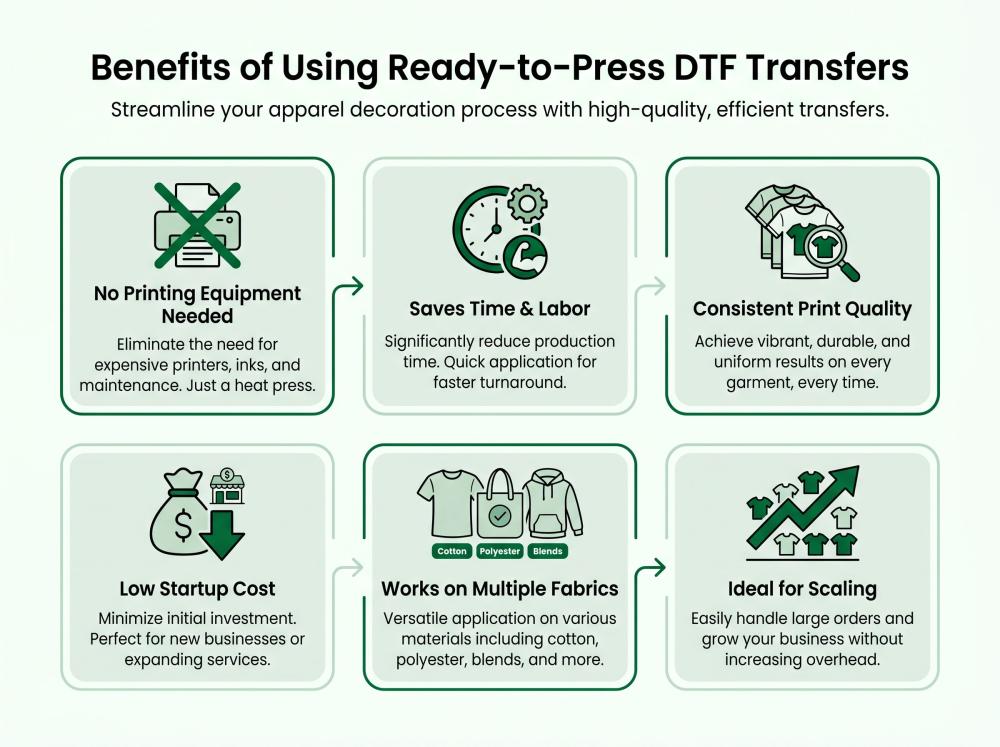
Benefits of Using Ready-to-Press DTF Transfers
Why are so many businesses ditching their vinyl cutters and sublimation setups for custom dtf transfers? The benefits are hard to ignore.
1. No Printing Equipment Needed
The biggest barrier to entry in professional printing is the cost of the printer. A reliable DTF printer can cost thousands. By using ready-to-press transfers, your only major equipment investment is a heat press.
2. Saves Time & Labor
Weeding vinyl is a soul-crushing task for intricate designs. With DTF, there is zero weeding. Even the most complex, high-detail designs come off the film perfectly, saving you hours of labor.
3. Consistent Print Quality
When you work with a reputable supplier, you benefit from their industrial-grade equipment. You get crisp lines, vibrant colors, and smooth gradients that are difficult to achieve on a home-office conversion printer.
4. Low Startup Cost
You can start a clothing brand for under $500 if you use ready-to-press transfers. You buy only what you need, reducing the risk of "dead stock."
5. Works on Multiple Fabrics
Sublimation only works on high-polyester, light-colored fabrics. DTF works on everything: 100% cotton, 100% polyester, 50/50 blends, nylon, and even leather.
6. Ideal for Scaling
As your business grows, you can order dtf gang sheets (multiple designs on one long roll) to lower your per-print cost significantly. It bridges the gap between a hobbyist and a high-volume print shop.
Ready-to-Press DTF Transfers vs. Other Printing Methods
To truly appreciate DTF, you have to see how it stacks up against the "old guard" of the industry.
|
Feature |
DTF Transfers |
Sublimation |
Screen Printing |
HTV (Vinyl) |
|
Fabric Type |
Any (Cotton/Poly/Blends) |
High-Poly Only |
Any |
Any |
|
Color Complexity |
Full Color / Gradients |
Full Color |
Limited (per screen) |
Limited (Layers) |
|
Feel (Hand) |
Soft / Thin |
Zero Feel |
Soft to Heavy |
Plastic/Thick |
|
Setup Cost |
Low |
Low to Medium |
Very High |
Low |
|
Durability |
High (50+ Washes) |
Permanent |
Very High |
Medium |
DTF vs. Sublimation
Sublimation is great because the ink becomes part of the fabric, but you are trapped in a world of white polyester. If you want a black cotton shirt, sublimation is out. DTF vs sublimation is an easy win for DTF when it comes to versatility and color pop on dark garments.
DTF vs. Screen Printing
Screen printing is the king of bulk, but the setup costs for a 6-color design are astronomical for a small order. DTF allows you to print a single full-color shirt with the same ease as printing a hundred, making it the superior choice for small to mid-sized orders.
Common Buying Mistakes to Avoid
This is the most critical part of this guide. Not all DTF transfers are created equal. Because the technology is accessible, many "basement operations" are selling subpar transfers that will ruin your reputation.
1. Ignoring Print Quality (Low DPI)
A common mistake is sending a low-resolution screenshot to a supplier. DTF is capable of incredible detail, but only if the source file is at least 300 DPI. If you provide a blurry image, you will get a blurry transfer.
2. Choosing the Cheapest Option Only
In the DTF world, you get what you pay for. Cheap suppliers often use low-grade inks that lack "stretch" or use inferior adhesive powder that causes the design to crack after the first wash.
3. Not Checking Film & Powder Quality
If the film is "oily" or the powder hasn't been cured correctly by the supplier, the transfer won't adhere properly. High-quality transfers should have a slightly textured, matte finish on the back.
4. Wrong Size or Scaling Issues
Don't assume "Large" means the same thing to everyone. Always provide your design dimensions in inches. A design that looks great on an XL hoodie will look overwhelming on a Small t-shirt.
5. Not Asking for Pressing Instructions
Every film/ink/powder combination has a "sweet spot." Never guess the temperature. If a supplier doesn't provide a clear buying dtf transfers guide or instruction sheet, look elsewhere.
6. Buying Without Testing Samples
Before committing to a large order for a client, always order a sample pack. Check for color accuracy, washability, and "stretchability." If the print cracks when you pull the fabric, the ink quality is poor.
7. Not Verifying Supplier Reliability
The "pop-up" DTF shop is a real problem. Ensure your supplier has a track record of consistency. If their colors change every time you order, your brand's consistency will suffer.
How to Choose the Best Ready-to-Press DTF Transfers
When looking for a dtf company, use this checklist to ensure you are getting a professional-grade product.
-
Check Print Resolution: Ensure they accept (and prefer) vector files or 300 DPI transparent PNGs.
-
Vibrant Colors & White Ink Quality: The "white underbase" is what makes DTF pop on dark shirts. Ask if they use high-opacity white ink.
-
Ask About Powder & Film Type: Premium suppliers use "hot peel" or "universal peel" films that save time and offer better finishes.
-
Verify Press Settings: They should provide specific time, temp, and pressure recommendations tailored to their specific materials.
-
Look for Gang Sheet Options: A pro-level supplier will offer dtf gang sheet printing, allowing you to maximize space and save money.
Pro Tips for Getting the Best Results
Want your shirts to look like they came from a high-end retail store? Follow these "trade secrets":
-
Pre-Press Your Garment: Press your shirt for 5-8 seconds before adding the transfer. This removes moisture and wrinkles, ensuring a better bond.
-
The Lint Roller is Your Friend: Even tiny specs of dust or lint can create "dimples" in a DTF print. Roll the area before pressing.
-
Pressure is King: Most DTF failures are due to low pressure, not low heat. If the design isn't sticking, increase your pressure before you increase the temperature.
-
The Post-Press (Finish Press): After peeling the film, press the design again for 5 seconds with a heavy-textured parchment paper. This "drives" the ink into the fabric and removes the "plastic-y" shine.
-
Storage: Keep your unused transfers in a cool, dry place. Humidity is the enemy of DTF powder. Use a resealable bag with a silica packet.
Conclusion
Ready-to-press DTF transfers have effectively democratized the world of custom apparel. By removing the need for expensive machinery and technical maintenance, they allow the "creator" to focus on what matters most: design and marketing.
However, the ease of use should not be mistaken for a "set it and forget it" process. Success in this industry relies on the quality of your transfers and the precision of your application. Avoid the temptation of the "cheapest possible" supplier, invest in a decent heat press, and always follow the specific pressing instructions provided.
If you are ready to scale your business, save hours of labor, and produce garments that your customers will love, it’s time to embrace the DTF revolution. Start small, test your samples, and choose a reliable partner to help you grow.
FAQ (Frequently Asked Questions)
What does ready-to-press DTF transfers mean?
It means the design has already been printed onto a carrier film, coated with adhesive powder, and cured. It is ready to be applied directly to a garment using a heat press without any further preparation.
Do I need a printer for DTF transfers?
No! That is the beauty of "ready-to-press." You buy the finished transfers from a supplier, so you only need a heat press to apply them to your clothing.
What temperature is needed for DTF pressing?
While it varies by supplier, most DTF transfers require a temperature between 285°F and 320°F. Always check with your specific provider for their recommended settings.
Are DTF transfers durable?
Yes. When applied correctly with the right pressure and temperature, DTF transfers are incredibly durable, often lasting 50 to 70+ washes without significant fading or cracking.
Can I use DTF transfers on cotton?
Absolutely. Unlike sublimation, which requires polyester, DTF works beautifully on 100% cotton, as well as blends, polyester, and even tougher materials like canvas.