


Employee uniforms do more than identify staff—they communicate professionalism, reinforce company culture, and strengthen brand recognition in every customer interaction.
Choosing the right decoration method is essential to ensure uniforms remain durable, comfortable, and visually consistent across different garment types. This is why custom DTF transfers for employee uniforms have become an increasingly popular solution for businesses seeking high-quality branding without the limitations of traditional printing methods.
Whether you're creating branded employee apparel for retail teams, hospitality staff, healthcare professionals, or corporate offices, DTF printing for uniforms delivers vibrant, long-lasting results on a variety of fabrics.
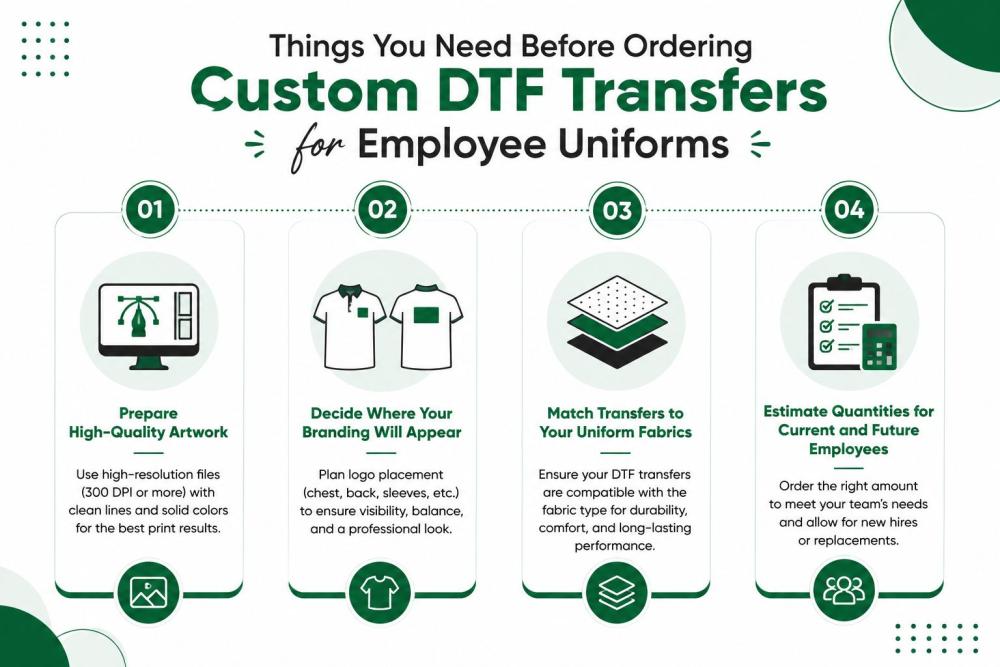
Things You Need Before Ordering Custom DTF Transfers for Employee Uniforms
Ordering custom DTF transfers for employee uniforms isn't simply about uploading a logo and waiting for delivery. A little preparation before placing your order can save time, reduce production errors, and ensure your finished uniforms look polished and professional. Whether you're outfitting a small team or planning large-scale employee uniform printing, having the right information ready helps create consistent branding across every garment.
Prepare High-Quality Artwork
Your artwork is the foundation of every successful transfer. Even the most advanced DTF printer cannot compensate for a poor-quality design file. Whenever possible, use vector formats such as AI, EPS, SVG, or PDF because they maintain sharp edges regardless of print size. If vector artwork isn't available, upload a high-resolution PNG with a transparent background.
Avoid screenshots, low-resolution logos downloaded from websites, or images copied from social media platforms. These files often become blurry or pixelated when printed on uniforms. It's also important to check that text remains readable at the intended print size, especially for company names, employee titles, or safety messaging.
Taking time to prepare clean artwork ensures your uniforms accurately represent your business and maintain a professional appearance.
Decide Where Your Branding Will Appear
Before ordering transfers, determine exactly where each design will be placed on the uniform. Different industries require different branding layouts. A hospitality business may only need a small left-chest logo, while warehouse uniforms might require front logos, large back graphics, and sleeve branding for easier identification.
Planning placement early also helps determine the appropriate transfer size. A logo that works perfectly on a polo shirt may appear too small on a jacket or oversized on a lightweight work shirt. Establishing consistent placement standards across your custom corporate apparel creates a more unified brand image and simplifies future reorders.
Match Transfers to Your Uniform Fabrics
Employee uniforms are manufactured from a wide range of materials, including cotton, polyester, performance blends, moisture-wicking fabrics, and stretch workwear. Understanding your garment composition before ordering helps ensure the transfers perform as expected after application.
If your uniforms include multiple fabric types, discuss this with your supplier before production begins. Selecting the appropriate transfer specifications for each garment helps maximize durability, wash resistance, and long-term appearance while maintaining the comfort employees expect from their workwear.
Estimate Quantities for Current and Future Employees
Many businesses focus only on immediate staffing needs when placing an order. However, hiring new employees, replacing damaged garments, or expanding departments often requires additional transfers shortly afterward.
Planning slightly ahead allows companies to maintain branding consistency while reducing production costs through larger print runs. Businesses preparing uniforms for multiple locations or ongoing recruitment can also benefit from scalable ordering options like bulk wholesale printing, which supports efficient production for growing organizations.
Having artwork, placement guidelines, fabric information, and accurate quantities ready before ordering creates a smoother production process and results in employee uniforms that consistently reflect your company's professional image.
Factors to Consider Choosing the Right Custom DTF Transfers
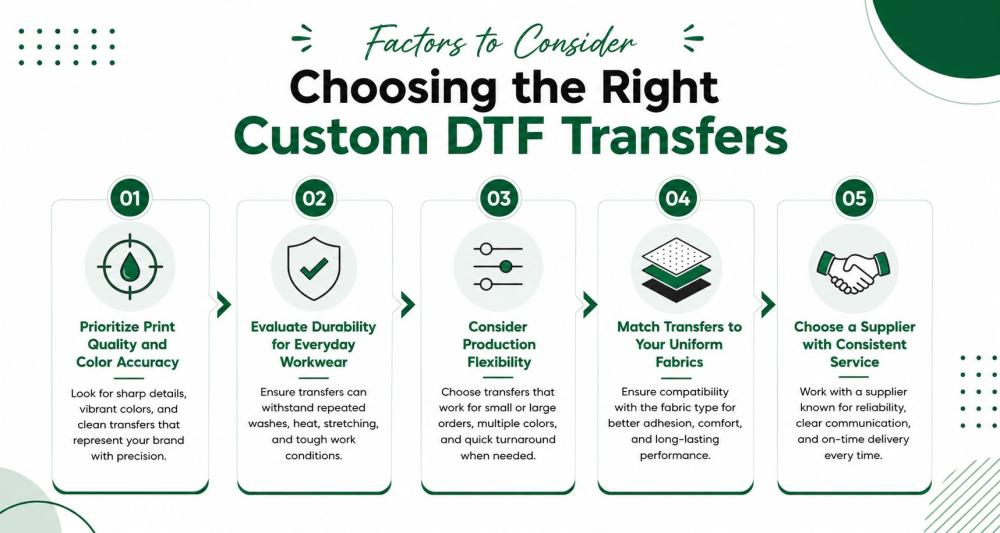
Selecting the right DTF transfers is just as important as choosing the right garment. High-quality transfers not only improve the appearance of employee uniforms but also influence their durability, comfort, and long-term performance. Businesses investing in custom DTF transfers for employee uniforms should evaluate more than price alone. A well-informed decision ensures that uniforms continue representing the company professionally, even after repeated use and washing.
Prioritize Print Quality and Color Accuracy
The first thing employees and customers notice is the quality of the printed logo. Crisp edges, vibrant colors, and smooth gradients immediately create a professional impression, while blurry graphics or faded colors can weaken your brand image.
When comparing suppliers, request sample prints whenever possible. Examine how accurately company colors are reproduced and whether fine details remain sharp at the intended print size. Consistent print quality becomes even more important for businesses operating multiple locations, where every uniform should present the same visual identity regardless of when it was produced.
Evaluate Durability for Everyday Workwear
Employee uniforms are exposed to far more wear than promotional apparel. They are washed frequently, stretched during movement, and often worn for long working hours.
Reliable DTF transfers for uniforms should withstand repeated laundering without cracking, peeling, or fading. Ask suppliers about wash performance, adhesion strength, and recommended application settings. Investing in durable transfers reduces replacement costs while helping uniforms maintain a clean, professional appearance throughout their lifespan.
Consider Production Flexibility
Every business has different ordering requirements. Some organizations need hundreds of identical uniforms, while others hire employees gradually and place smaller recurring orders.
A supplier that supports flexible production options allows businesses to scale without unnecessary inventory. For example, gang sheet printing enables multiple logos, sleeve graphics, name labels, and small branding elements to be printed together on one sheet, improving material efficiency and lowering production costs.
Match Transfers to Your Uniform Fabrics
Not all employee uniforms are made from the same material. Cotton polos, polyester work shirts, performance jackets, fleece hoodies, and blended fabrics each respond differently during heat application.
Before placing an order, verify that the transfers you're purchasing are compatible with your specific garment types. A knowledgeable supplier should be able to recommend appropriate application temperatures and pressing techniques based on the fabric composition. This helps prevent issues such as scorching, gloss marks, or poor adhesion that could shorten the life of the uniform.
Choose a Supplier with Consistent Service
The quality of the supplier matters just as much as the quality of the transfer itself. Businesses often reorder uniforms throughout the year as new employees join or existing garments need replacing. Consistent production ensures every reorder matches previous batches in color, size, and print quality.
Choosing DTF Transfer Size for Employee Uniforms and Other Business Apparel
Selecting the correct transfer size is just as important as choosing the artwork itself. A logo that's too small may go unnoticed, while an oversized graphic can make professional uniforms look unbalanced. The ideal transfer size depends on the garment type, the intended placement, and the industry's branding standards. Maintaining consistent sizing across every employee uniform also helps reinforce a polished, recognizable company image.
Polo Shirts and Corporate Uniforms
Polo shirts are among the most common garments used for employee uniforms because they balance professionalism and comfort. Most businesses prefer subtle branding that is easily visible without overwhelming the garment.
Recommended logo sizes include:
-
Left chest logo: 3–4 inches wide
-
Full front logo: 8–10 inches wide (when appropriate)
-
Upper back branding: 10–11 inches wide
This sizing works well for hospitality, retail, office staff, and customer-facing service businesses where clean, professional branding is the priority.
Work Shirts and Industrial Uniforms
Construction companies, logistics providers, manufacturing facilities, and maintenance teams often require uniforms that improve visibility while clearly displaying company information.
For these garments, larger branding is commonly used on the back while maintaining a smaller logo on the front.
Recommended sizes include:
-
Left chest logo: 3.5–4 inches
-
Large back logo: 10–12 inches
-
Sleeve logo or department icon: 2–3 inches
This combination makes employee identification easier while maintaining a consistent corporate appearance.
Hoodies, Jackets, and Outerwear
Outerwear provides additional printable space because of its heavier construction and larger surface area. These garments are frequently used by delivery teams, event staff, field technicians, and outdoor employees.
Typical transfer sizes include:
-
Left chest: 4 inches
-
Center front: 10–11 inches
-
Full back branding: 11–12 inches
Because jackets are often worn over other uniforms, slightly larger graphics help maintain brand visibility from a distance.
Aprons, Tote Bags, and Employee Accessories
Many businesses extend their branding beyond apparel by decorating accessories used daily by employees. Restaurants, cafés, retail stores, and wellness businesses frequently customize aprons, tote bags, and reusable carry bags.
Suggested transfer sizes are:
|
Item |
Recommended Logo Size |
|
Aprons |
4–6 inches |
|
Tote Bags |
8–10 inches |
|
Drawstring Bags |
8–10 inches |
|
Laptop Sleeves |
5–7 inches |
Using consistent artwork proportions across these products creates a cohesive brand identity while allowing each item to remain visually balanced.
Keep Branding Consistent Across Every Garment
Regardless of the garment type, consistency should always take priority over size alone. Every logo should maintain the same proportions, spacing, and placement across the entire uniform collection. Creating standardized sizing guidelines before production makes future reorders much easier and ensures every employee represents the business with the same professional appearance, whether they're wearing a polo shirt, hoodie, apron, or carrying branded accessories.
How to Order the Right Custom DTF Transfers for Employee Uniforms
Ordering custom DTF transfers for employee uniforms is more than selecting a logo and clicking "buy." A structured ordering process helps ensure consistent branding, accurate sizing, and high-quality results across every garment. Whether you're ordering for a small business or outfitting hundreds of employees, following these steps can help you avoid costly production mistakes.
Step 1: Finalize Your Artwork
Before placing an order, make sure your logo is production-ready. Use vector files such as AI, EPS, SVG, or PDF whenever possible to ensure sharp printing. If you're using PNG files, they should have a transparent background and be high resolution.
Double-check that:
-
Colors match your brand guidelines.
-
Small text remains readable.
-
Logos are properly aligned.
-
There are no unwanted backgrounds or low-quality elements.
Starting with clean artwork minimizes revisions and improves print accuracy.
Step 2: Decide Logo Placement and Transfer Size
Different employee uniforms require different logo placements depending on the industry and garment style.
Determine whether you'll need:
-
Left chest logos
-
Full front branding
-
Large back graphics
-
Sleeve logos
-
Name labels
At this stage, create a consistent sizing guide for every garment type so future uniform orders remain visually identical.
Step 3: Identify Garment Types
DTF transfers perform well on many fabrics, but it's still important to know what you'll be decorating.
Prepare a list of:
-
Polo shirts
-
T-shirts
-
Hoodies
-
Jackets
-
Aprons
-
Safety vests
-
Tote bags or other accessories
Knowing the fabric composition allows the supplier to recommend the most suitable transfer application settings.
Step 4: Estimate Quantities Carefully
Calculate how many uniforms you'll need immediately while also considering future hiring. Many businesses benefit from ordering additional transfers rather than decorating every garment at once.
Planning ahead reduces shipping costs and makes it easier to maintain branding consistency when new employees join the company.
Step 5: Review Application Requirements
If you're applying transfers yourself, confirm your heat press specifications before ordering.
Verify:
-
Heat press size
-
Temperature capability
-
Pressure consistency
-
Production workflow
Matching transfer dimensions to your available equipment helps avoid unnecessary production issues later.
Step 6: Choose a Reliable DTF Supplier
Finally, select a supplier that offers consistent print quality, durable transfers, and dependable turnaround times.
Instead of comparing suppliers only by price, evaluate:
-
Print quality
-
Wash durability
-
Color consistency
-
Customer support
-
Bulk ordering options
A reliable supplier helps ensure every reorder matches previous batches, allowing your employee uniforms to maintain a consistent professional appearance as your business continues to grow.
To Wrap Up
Choosing the right custom DTF transfers for employee uniforms is about more than achieving a great-looking print. From selecting high-quality artwork and determining proper logo placement to choosing durable transfers that match your uniform fabrics, every decision contributes to a stronger brand image.
A well-planned ordering process helps businesses reduce costs, simplify future reorders, and maintain consistency across every employee. Whether you're outfitting a small team or managing uniforms across multiple locations, investing in premium DTF transfers ensures your branded apparel remains professional, comfortable, and built to withstand everyday wear while reinforcing your company's identity.
Frequently Asked Questions
1. What are custom DTF transfers for employee uniforms?
Custom DTF transfers are printed heat transfers that allow businesses to decorate employee uniforms with company logos, names, departments, and branding. They provide durable, vibrant prints that work on cotton, polyester, blended fabrics, and many types of workwear.
2. Are DTF transfers suitable for work uniforms that are washed frequently?
Yes. Premium DTF transfers are designed to withstand repeated washing, everyday wear, and regular workplace use. When applied correctly using recommended heat press settings, they resist cracking, peeling, and fading over time.
3. Which file format is best for ordering DTF transfers?
Vector artwork (AI, EPS, SVG, or PDF) is recommended because it produces the sharpest results. High-resolution PNG files with transparent backgrounds are also commonly accepted if vector files are unavailable.
4. Can DTF transfers be used on different types of employee uniforms?
Absolutely. DTF transfers can be applied to polo shirts, t-shirts, hoodies, jackets, aprons, tote bags, safety apparel, and many other textile products, making them ideal for businesses with diverse uniform requirements.
5. How do I choose the right transfer size for employee uniforms?
Transfer size depends on the garment type and placement. Left chest logos are typically 3–4 inches wide, while large back graphics range from 10–12 inches. Maintaining consistent sizing across all uniforms helps strengthen brand recognition and creates a professional appearance.