


The explosive growth of the athleisure market has forced creators to rethink how they decorate performance sportswear. Traditional screen printing requires massive upfront costs, while vinyl fails to handle the intense mechanical stress of a workout. For emerging fitness brands and gym owners, the challenge is producing retail-quality merchandise that stretches without cracking.
This is where wholesale DTF transfers for gym apparel completely revolutionize the manufacturing process. By utilizing advanced thermoplastic adhesives, these prints fuse seamlessly into synthetic fibers to provide incredible flexibility.
If you are looking to scale an activewear line without stocking expensive, pre-printed inventory, investing in premium custom DTF transfers for athletic wear provides the ultimate low-overhead solution for high-performance branding.
Decoding the Anatomy of Premium Gym Apparel
To build a high-performance activewear line that commands retail-ready prices, you must first master the intricate material matrix of modern fitness garments. Unlike standard lifestyle streetwear, sportswear relies on specialized technical fabrics engineered for moisture management, temperature regulation, and high-intensity movement.
The Material Matrix of Performance Substrates
Modern athletic lines utilize a diverse range of fabric bases, each with its own physical behaviors under a heat press:
-
100% Polyester Interlock: The gold standard for moisture-wicking training shirts. It is incredibly lightweight but highly prone to dye migration without proper barrier protection.
-
Nylon-Spandex Blends: Found in premium compression gear, yoga pants, and high-stretch sports bras. This material offers maximum elongation but is highly sensitive to extreme heat.
-
Performance Triblends: A ultra-soft mixture of cotton, polyester, and rayon that offers a casual look with athletic breathability.
-
Heavy Cotton-Poly Hoodies: Dense, brushed-fleece outerwear engineered to retain warmth during outdoor warmups while resisting shrinkage.
The "Hand-Feel" Factor
Athletes demand apparel that moves like a second skin. Traditional screen printing inks or thick vinyl transfers create heavy, non-porous plastic patches on the chest or back that trap sweat and cause uncomfortable chafing during workouts. Premium gym wear requires lightweight, zero-friction graphics that preserve the natural breathability of the fabric. Sourcing advanced custom dtf transfers solves this issue completely. The ultra-thin ink layer bonds directly into the yarn cross-sections, keeping the print soft, flexible, and completely unobtrusive during explosive movements.
Wash & Sweat Durability
Fitness garments face a punishing lifecycle. They are regularly subjected to highly corrosive sweat, intense friction from barbell knurling, and high-frequency laundering in heavy-duty cycles. Inferior prints quickly crack, peel, or fade under these conditions, destroying your brand's reputation.
Utilizing commercial-grade bulk wholesale printing channels ensures your activewear achieves industrial-grade durability. When applied correctly, these industrial transfers lock into the fabric structure—easily surviving 40+ to 100+ regular wash cycles without losing color vibrance or structural bond. This exceptional lifespan ensures your fitness gear performs flawlessly under pressure, keeping your community looking sharp from their first drop set to their hundredth wash.
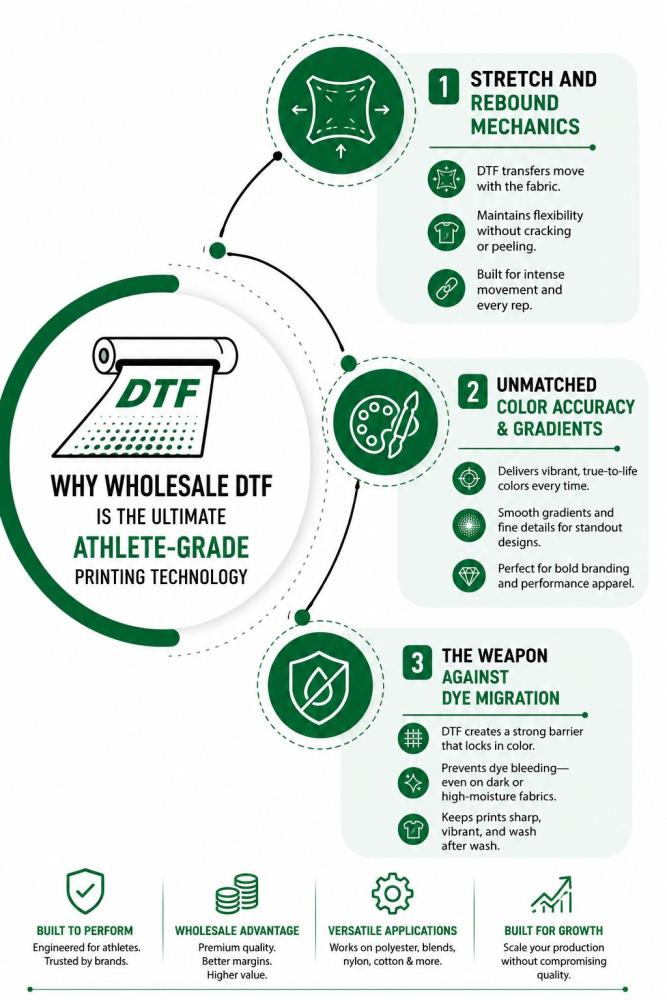
Why Wholesale DTF is the Ultimate Athlete-Grade Printing Technology
The technical demands of high-intensity training gear eliminate most traditional apparel decoration methods. Screen printing struggles with multi-colored complexity on short runs, while standard vinyl cracks under tension. Direct-to-Film (DTF) technology stands out as the ultimate athlete-grade option because it chemically adapts to the physics of high-performance sportswear.
Stretch and Rebound Mechanics
The core secret behind the flexibility of this process lies in the chemistry of Thermoplastic Polyurethane (TPU) adhesive powder. When heated, this specialized powder melts into an incredibly durable, rubber-like backing layer that anchors itself deep inside synthetic fibers.
Unlike traditional plastic inks that sit rigidly on top of the fabric, TPU creates an elastic bond that mirrors the natural elongation of nylon and spandex. When an athlete moves through a deep squat or an explosive overhead press, the graphic expands alongside the fabric filaments and snaps cleanly back into its original shape without cracking, splitting, or peeling.
Unmatched Color Accuracy & Gradients
Modern fitness branding has evolved far beyond simple, single-color text blocks. Today’s creators rely on hyper-detailed gym logos, photorealistic graphics, complex gym slogans, and subtle drop-shadow gradients to build a distinct premium identity.
Because DTF operates on a continuous, high-definition CMYK+White digital ink process, it reproduces intricate artwork with extreme accuracy. You can print millions of distinct colors and sharp photographic transitions in a single pass, completely eliminating the expensive setup plates, high minimums, and tedious color separation steps required by older production methods.
The Weapon Against Dye Migration
The single greatest headache when printing on dark synthetic garments is dye migration—a chemical phenomenon where the unstable polyester dyes in a gym shirt heat up, liquefy, and bleed upward into your white design inks, turning crisp white text into an ugly, muddy gray or pink.
To combat this issue, premium commercial transfers incorporate advanced carbon-infused black or gray dye-blocker layers directly into the white ink backing. This barrier locks the synthetic fabric dyes firmly underneath the transfer, ensuring your gym apparel keeps its bright colors and sharp edges through heavy use.
For growing fitness brands aiming to maintain this level of consistent, retail-quality manufacturing without running an in-house print shop, outsourcing fulfillment to a specialized white label production facility ensures that every garment delivered to your customers meets industrial activewear standards.
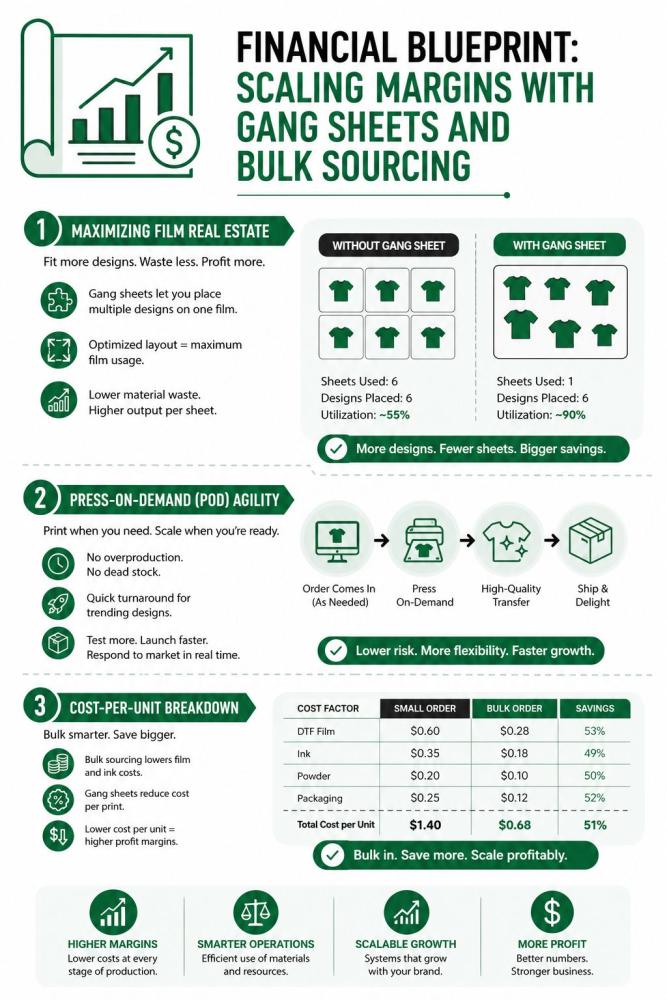
Financial Blueprint: Scaling Margins with Gang Sheets and Bulk Sourcing
Launching and scaling a successful fitness apparel brand requires strict attention to manufacturing economics. In an industry where garment production can quickly drain capital, mastering your supply chain configuration is the difference between an unprofitably tight margin and a highly scalable e-commerce business.
Maximizing Film Real Estate
The most effective way to lower your unit manufacturing costs is by learning to maximize your printable film real estate. Instead of printing individual graphics one by one, smart brands pack multiple design assets tightly onto a single continuous roll.
An optimized gym apparel rollout layout should bundle diverse brand components together on a single workspace. You can group large, high-impact back graphics alongside smaller chest logos, leg emblems for compression tights, sleeve branding hits, and custom inner neck labels containing fabric care instructions and sizing info. Squeezing every square inch of space out of your sheets allows you to slash your material overhead and secure a radically reduced cost per graphic.
Press-on-Demand (POD) Agility
Maintaining pre-printed boxes of finished inventory is an operational trap that ties up vital working capital in unsold sizes and dead styles. Building a compact, local physical archive of un-applied film transfers allows you to pivot instantly to a highly agile, press-on-demand fulfillment model.
Because transfers take up very little space, a fitness brand or commercial gym can easily store thousands of ready-to-press prints in a single desk cabinet. When a specific colorway catches fire on social media, or a trending workout style suddenly spikes in popularity, you can press that design onto blank stock in under thirty seconds. This eliminates the risk of excess inventory while letting you capture real-time market trends without delay.
Cost-per-Unit Breakdown
When comparing the financial curves of short-to-medium activewear production runs, the profitability benefits of modern film transfers become clear:
-
Low-MOQ Screen Printing: Traditional screen methods demand extensive labor setups, separate screen exposure fees, and physical color separation plates. This structure creates massive upfront expenses that make small or medium apparel runs completely cost-prohibitive.
-
Gang Sheet Film Printing: Film production features zero plate-making setup barriers. Whether you are running fifty mixed-size t-shirts for a local CrossFit affiliate or a few hundred performance tanks for a seasonal drop, your cost per print stays consistently low, allowing you to maximize your initial gross margins.
Transitioning away from heavy bulk production runs to flexible film transfers allows your fitness business to remain nimble, protect your upfront cash flow, and deliver premium retail-quality apparel at a highly competitive operational cost.
Production Mastery: The Precise Pressing Protocol for Athletic Synthetics
Working with high-performance synthetic fabrics like nylon, spandex, and polyester requires a shift away from standard cotton printing methods. Because performance textiles are highly engineered for temperature regulation and elasticity, they respond differently to heat and pressure. Achieving a flawless, retail-grade bond requires an exact application workflow tailored directly to the physics of synthetic fibers.
The Moisture Factor
The biggest mistake made during production is skipping the pre-press cycle. Synthetic activewear fabrics inherently hold onto deep-seated moisture, manufacturing oils, and chemical sizing treatments within their tight weaves.
If you apply a design directly over an un-prepped garment, that trapped moisture instantly turns into superheated steam when the heat press clamps down. This steam creates tiny gas bubbles beneath the film, weakening the chemical bond of the adhesive powder and leading to premature peeling, cracking, or lifting along the edges after a few washes. Running a brief 3 to 5-second pre-press completely drives out these hidden vapors and flattens the fabric fibers, creating a clean surface for a permanent thermo-plastic bond.
Calibrating the Variables
Synthetic activewear demands precise heat and time management. While heavy cotton garments easily handle temperatures up to 320°F (160°C) for 15 seconds, exposing delicate polyester, nylon, or spandex to those settings will ruin the fabric. Excessive heat melts synthetic filaments, causing permanent fabric scorching or leaving an ugly, shiny "heat halo" ring around the design area.
When working with performance synthetics, drop your temperature down to a lower range of 275°F to 290°F (135°C to 143°C) and cut your pressing time to just 8 to 10 seconds under firm, even pressure. This precise calibration delivers enough energy to melt the adhesive powder into the weave without pushing the delicate synthetic base fibers past their thermal limits.
The Second Post-Press (The Matte Finish)
After letting the garment cool completely and carefully peeling away the clear carrier film, the decoration process is not quite done. A freshly peeled print often carries a slightly slick, reflective plastic sheen that looks out of place on premium sportswear.
To elevate the quality of your finish, perform a second, short 5-second finishing press. Cover the graphic with a protective sheet of textured Teflon or matte parchment paper and clamp the press back down. This final step forces the softened ink layer deep into the textured valleys of the athletic weave, locking down the print borders and leaving a smooth, zero-glare, retail-ready matte finish that naturally stretches and flows with the garment.
Final Thought
Building a premium fitness clothing line no longer requires a massive capital investment or access to international textile factories. By pairing high-grade performance blanks with commercial-grade film transfers, independent creators, gym owners, and emerging sportswear brands can easily match the print quality, stretch resistance, and wash durability delivered by global athleisure giants. The flexibility of advanced thermoplastic adhesives removes the creative and financial limits of the past, allowing you to run a highly profitable, demand-driven apparel business.
Taking your brand to the next level comes down to execution and proper testing. Before launching your next seasonal collection, take these three practical steps:
-
Audit Your Art Files: Review your logos and design files to ensure all lines, drop shadows, and gradients are exported at a crisp, high-resolution minimum of 300 DPI for perfect clarity.
-
Order a Sample Sheet: Test the durability and stretch limits of the transfer adhesive on your specific fabric blends to find the perfect heat and time settings for your heat press.
-
Build Your First Gang Sheet: Optimize your printable space by grouping your main front graphics, leg prints, sleeve hits, and custom inner neck labels onto a single workflow layout.
Embracing this flexible printing method helps you slash excess inventory risk, protect your operational cash flow, and deliver exceptional, high-performance athletic apparel directly to your community.
Frequently Asked Questions
Will DTF transfers crack when stretched on compression gear or yoga pants?
No. Unlike traditional rigid screen printing inks or thick vinyl patches, premium DTF transfers use a specialized Thermoplastic Polyurethane (TPU) adhesive powder. When heat-activated, this powder creates an elastic, rubber-like bond that sinks deep into synthetic fibers. The print expands smoothly alongside high-stretch materials like nylon-spandex blends and snaps cleanly back into its original shape without cracking, splitting, or peeling.
How do DTF transfers perform against heavy sweat and frequent washing?
They hold up incredibly well under intense gym conditions. Commercial-grade wholesale transfers are engineered to withstand highly corrosive sweat, heavy friction from barbell knurling, and aggressive laundering cycles. When properly applied, these transfers achieve industrial-grade durability and can easily survive 40 to over 100 regular wash cycles without losing color vibrancy or structural bond.
What is dye migration, and how do these transfers prevent it on dark sportswear?
Dye migration is a chemical reaction where the unstable polyester dyes in dark garments heat up during pressing, liquefy, and bleed upward into your design inks. This can turn a clean white logo into a muddy gray or pink patch. To stop this, premium commercial transfers include a built-in carbon-infused dye-blocker barrier layer behind the white ink backing, locking the synthetic dyes beneath the print.
What are the exact heat press settings for synthetic athletic fabrics?
Synthetic activewear is highly heat-sensitive and requires lower temperatures and shorter press times than standard cotton. Use these calibrated variables to protect your garments:
-
Temperature: 275°F to 290°F (135°C to 143°C)
-
Time: 8 to 10 seconds
-
Pressure: Firm, even pressure
Why is a "pre-press" cycle necessary for performance wear?
Skipping the pre-press is the most common cause of print failure on activewear. Synthetic weaves inherently trap deep-seated moisture, manufacturing oils, and sizing treatments. Clamping down without a pre-press turns that moisture into superheated steam, creating tiny gas bubbles beneath the film that weaken the adhesive. A quick 3 to 5-second pre-press drives out these hidden vapors for a permanent bond.
How do I get rid of the shiny, plastic look on a freshly peeled print?
To achieve a premium, zero-glare, retail-ready finish, you need to perform a second 5-second post-press. After peeling away the clear carrier film, cover the graphic with a sheet of textured Teflon or matte parchment paper and press again for 5 seconds. This final step forces the ink deep into the textured valleys of the athletic weave, locking down the borders and leaving a clean matte finish.
How do gang sheets help lower my brand's manufacturing costs?
A gang sheet allows you to pack multiple design assets tightly onto a single continuous print roll instead of ordering individual graphics one by one. You can maximize your printable film space by grouping large back graphics alongside smaller chest logos, sleeve branding, leg hits, and custom inner neck labels on a single layout, significantly slashing your cost per graphic.
What are the benefits of a Press-on-Demand (POD) model for a gym or fitness brand?
Instead of tying up your capital in pre-printed inventory that might sit unsold in boxes, a press-on-demand model lets you store thousands of lightweight film transfers in a single cabinet. You buy blank apparel and only press the designs as customer orders come in. This lets you react instantly to social media trends or sudden spikes in popular styles in under thirty seconds without taking on excess inventory risk.