


DTF printing for clothing brands has transformed how entrepreneurs launch and scale apparel businesses. A few years ago, starting a clothing brand often required large inventory investments, expensive printing equipment, and high minimum order quantities. Today, DTF technology removes many of those barriers. Brands can create vibrant designs, decorate different fabric types, and produce apparel only when needed. Whether you're launching a streetwear label, building an online merchandise store, or expanding an existing apparel business, DTF offers the flexibility to test designs, control costs, and grow at your own pace. This guide explains how to use DTF printing strategically to build a profitable custom apparel brand.
Key Takeaways
-
DTF printing allows clothing brands to launch without investing in expensive printing equipment.
-
Brands can print full-color designs on cotton, polyester, blends, and other fabrics.
-
Outsourcing production reduces operational costs while improving scalability.
-
Wholesale transfers simplify repeat orders and inventory management.
-
Gang sheets help maximize material usage and improve profit margins.
-
Choosing the right production partner is just as important as creating great designs.
Why DTF Printing for Clothing Brands Is Changing the Industry
The apparel industry has become far more competitive, but it has also become more accessible. DTF printing for clothing brands has played a major role in this shift by giving entrepreneurs the ability to launch products without building a manufacturing facility.
Lower Barrier to Entry
Traditional apparel production often required large minimum order quantities and significant upfront investment. DTF allows brands to start small, validate ideas, and expand only after products begin selling. This makes it much easier for creators and small businesses to enter the market with less financial risk.
No Large Inventory Requirements
Instead of stocking hundreds of pre-printed garments, brands can keep blank apparel on hand and decorate items only after receiving customer orders. This reduces unsold inventory while giving businesses greater flexibility to introduce new collections throughout the year.
Unlimited Design Freedom
Unlike many traditional decoration methods, DTF produces detailed full-color artwork without charging extra for multiple colors. Whether you're creating minimalist logos or complex illustrations, every design maintains excellent detail and vibrant color reproduction.
Excellent Cotton Compatibility
Many premium clothing brands prefer cotton because of its comfort and quality. DTF performs exceptionally well on cotton while also working across polyester and blended fabrics. This flexibility allows brands to expand their product catalog without changing printing methods.
If you're new to the technology, this comprehensive DTF printing guide explains the production process in greater detail.
Brands that want professional-quality prints without operating expensive equipment often rely on custom DTF transfers to launch collections quickly while maintaining consistent decoration quality.
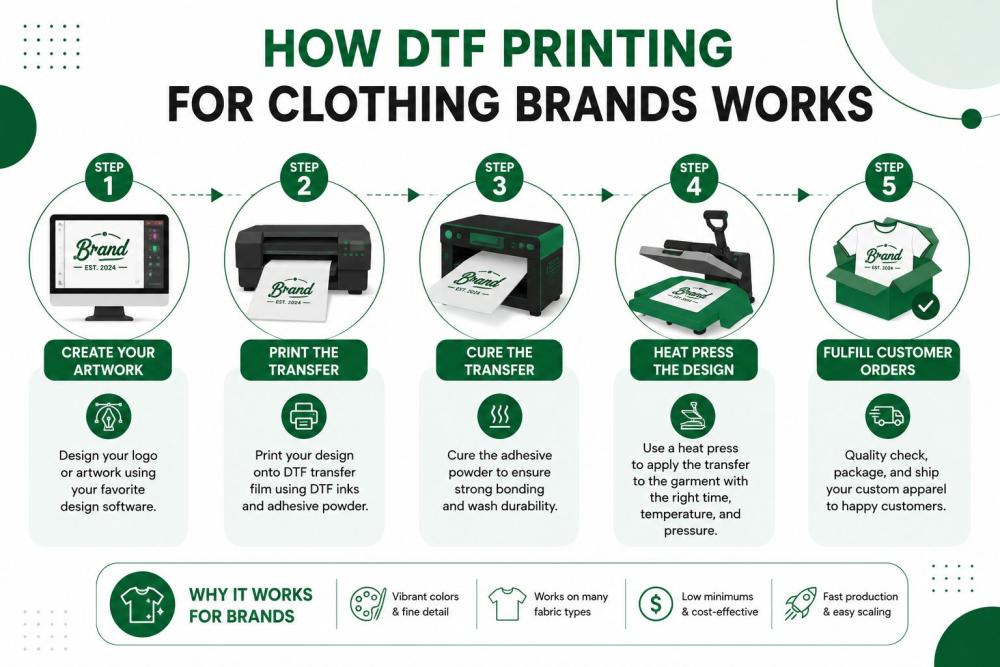
How DTF Printing for Clothing Brands Works
One reason DTF has become so popular is its straightforward production workflow. Whether production happens internally or through a supplier, the overall process remains simple.
Step 1: Create Your Artwork
Every garment begins with digital artwork. High-resolution designs ensure sharp details, accurate colors, and professional print quality.
Step 2: Print the Transfer
The artwork is printed onto a special PET film using DTF printers. White ink is applied beneath the design to maintain vibrant colors on dark and light garments alike.
Step 3: Cure the Transfer
Adhesive powder is added to the printed film and cured, creating a ready-to-press transfer that bonds securely with fabric.
Step 4: Heat Press the Design
The finished transfer is positioned on the garment and applied using a heat press. Once pressed and peeled, the design becomes durable, flexible, and ready for wear.
Step 5: Fulfill Customer Orders
After pressing, garments are inspected, packed, and shipped directly to customers. Businesses outsourcing production eliminate the printing stage entirely, receiving transfers that are already prepared for application.
How to Start a Clothing Brand with DTF Printing
Starting a clothing brand requires more than creating attractive graphics. Successful brands combine thoughtful product planning with reliable production.
Choose a Niche
Focus on a clearly defined audience rather than trying to appeal to everyone. Fitness enthusiasts, automotive fans, local communities, gaming audiences, or corporate merchandise all represent strong niche opportunities.
Build Original Designs
Create artwork that reflects your brand identity rather than following temporary trends. Consistent visual style helps customers recognize and remember your brand.
Validate Your Audience
Before producing dozens of designs, test customer interest through social media, email campaigns, or limited product releases. Early feedback helps reduce costly mistakes.
Select Quality Garments
Premium garments improve customer satisfaction and encourage repeat purchases. Consider comfort, durability, and fit alongside print quality.
Choose the Right Printing Method
DTF provides flexibility across multiple fabric types while supporting both small and large production runs. This makes it an excellent solution for new clothing brands that expect product variety.
Launch and Improve
Once products are live, analyze customer feedback, identify best-selling designs, and gradually expand your collection based on real purchasing behavior instead of assumptions.
Choosing the Right Products
A successful clothing brand usually begins with a focused product range before gradually expanding into complementary merchandise.
T-shirts
T-shirts remain the foundation of most apparel brands because they appeal to almost every customer segment. DTF produces vibrant designs that work equally well on premium cotton and blended fabrics.
Hoodies
Hoodies provide higher perceived value and stronger profit margins. They also offer larger printable areas for bold graphics and seasonal collections.
Sweatshirts
Crewneck sweatshirts remain popular for casual wear, corporate merchandise, and lifestyle brands. Their durable construction pairs well with high-quality DTF decoration.
Hats
Many clothing brands eventually expand into headwear to strengthen brand recognition. Smaller DTF graphics can complement embroidered collections while offering additional product variety.
Tote Bags
Reusable tote bags provide affordable branded merchandise while expanding your product lineup beyond apparel. They work particularly well for retail stores, events, and promotional campaigns.
Offering several complementary products allows customers to purchase coordinated merchandise while strengthening your overall brand identity.
Why Outsourcing Makes More Sense Than Buying Equipment
For many businesses, purchasing commercial DTF equipment too early creates unnecessary financial pressure. Outsourcing often provides a faster path toward profitability.
Better for Startups
New brands usually benefit more from investing in product development, marketing, and customer acquisition than purchasing expensive production equipment.
Ideal for Content Creators
Influencers, artists, musicians, and online creators frequently release limited collections. Outsourcing allows them to focus on audience growth while avoiding manufacturing responsibilities.
Supports Ecommerce Growth
Online apparel stores experience unpredictable sales patterns. Outsourced production allows businesses to scale smoothly without worrying about idle equipment during slower periods.
Many growing apparel companies have already adopted this approach, as explained in why apparel brands are switching to outsourced DTF printing.
Businesses planning long-term growth can also benefit from white-label production, which enables them to deliver professionally manufactured products under their own brand without operating a production facility.
Wholesale DTF Transfers for Growing Clothing Brands
As order volumes increase, production efficiency becomes increasingly important. Purchasing wholesale DTF transfers allows growing brands to maintain consistent print quality while reducing operational complexity.
Wholesale ordering works particularly well for brands with recurring designs because transfers can be produced in larger quantities and applied whenever garments are needed. This simplifies inventory management while improving fulfillment speed during busy periods.
Consistency also becomes easier to maintain. Professional wholesale production ensures repeat orders match previous collections, helping brands deliver a reliable customer experience across every launch.
Businesses preparing for larger retail collections or expanding wholesale distribution often use bulk wholesale printing to support higher production volumes without investing in commercial printing infrastructure.
Gang Sheets Help Increase Profit Margins
Profitability isn't determined only by how many garments you sell—it also depends on how efficiently you use your printing materials. One of the easiest ways to reduce production costs is by using gang sheets.
A gang sheet combines multiple designs onto a single PET film sheet, allowing brands to maximize printable space instead of producing individual transfers for every graphic. This approach is especially useful for businesses printing left chest logos, sleeve graphics, neck labels, care labels, and multiple customer designs at the same time.
For growing brands, gang sheets reduce material waste, lower the cost per design, and simplify production planning. Whether you're producing several products from one collection or fulfilling different customer orders, efficient layouts help improve overall margins without compromising print quality.
Businesses looking to optimize production often use gang sheet printing to increase efficiency while maintaining consistent quality.
If you're producing larger quantities, this guide on bulk gang sheet orders explains how gang sheets help reduce costs even further.
Common Mistakes New Clothing Brands Make
Many apparel businesses fail because of avoidable operational decisions rather than poor products. Learning from these mistakes early helps protect your investment and improves long-term profitability.
Buying Equipment Too Early
Investing in commercial printing equipment before validating demand often ties up capital that could be used for marketing, product development, or customer acquisition.
Using Low-quality Artwork
Even the best printing process cannot fix blurry graphics or poorly prepared files. Always use high-resolution artwork with transparent backgrounds when required.
Choosing the Wrong Garments
A great design on poor-quality apparel rarely creates repeat customers. Select garments that match your target audience's expectations for comfort and durability.
Incorrect Pricing
Many new brands calculate product costs but forget to include packaging, shipping, marketing, transaction fees, and customer support. Sustainable pricing protects long-term profitability.
Launching Too Many Products
Offering dozens of designs immediately creates unnecessary inventory complexity. Start with a focused collection, identify best sellers, and expand gradually.
Inconsistent Branding
Successful brands maintain consistent colors, typography, messaging, and design style across every product. Strong branding builds customer recognition and encourages repeat purchases.
How to Choose a DTF Partner
Your printing partner directly influences customer satisfaction, product quality, and business growth. Instead of choosing purely on price, evaluate suppliers using practical business criteria.
Consistent Print Quality
Every order should match previous production runs. Look for suppliers that produce vibrant colors, sharp details, and durable transfers with excellent wash performance.
Reliable Turnaround
Fast production matters only when it's consistent. A dependable supplier helps you meet launch dates, seasonal demand, and customer expectations without unnecessary delays.
Accurate Color Reproduction
Consistent color accuracy strengthens brand identity. Professional suppliers calibrate production to maintain reliable results across repeat orders.
Responsive Support
Questions about artwork, production, or urgent projects should be resolved quickly. Strong customer support minimizes disruptions and improves workflow.
Ability to Scale
As your apparel business grows, your supplier should be capable of handling higher production volumes without sacrificing quality or turnaround times.
The right partner becomes an extension of your business, helping you focus on selling products instead of managing production challenges.
Final Thought
Building a successful apparel brand requires more than great designs—it requires smart production decisions. DTF printing for clothing brands provides the flexibility to launch products with minimal investment, expand collections quickly, and scale without unnecessary operational complexity.
Whether you choose outsourced production or eventually move in-house, understanding your costs, selecting quality garments, and partnering with a reliable supplier will have the biggest impact on long-term success. By focusing on efficient production, consistent branding, and customer experience, your clothing brand can grow sustainably while delivering products that customers are proud to wear.
Frequently Asked Questions
1. Is DTF printing good for starting a clothing brand?
Yes. DTF printing allows entrepreneurs to launch a clothing brand with low upfront investment, print full-color designs on multiple fabrics, and avoid large inventory commitments by producing apparel only when needed.
2. Why do clothing brands use custom DTF transfers?
Custom DTF transfers provide consistent print quality, vibrant colors, excellent durability, and compatibility with cotton, polyester, and blended fabrics. They also simplify production by eliminating the need for in-house printing equipment.
3. Are wholesale DTF transfers better for growing apparel brands?
Wholesale DTF transfers help growing brands reduce production costs, improve consistency, fulfill repeat orders faster, and scale without purchasing expensive commercial printing equipment.
4. What products can be decorated using DTF printing?
DTF printing works well on T-shirts, hoodies, sweatshirts, tote bags, workwear, sportswear, and many other apparel products, making it highly versatile for clothing brands.
5. What should I look for in a DTF printing partner?
Choose a supplier that offers consistent print quality, fast turnaround, accurate colors, gang sheet options, responsive customer support, and the ability to scale production as your business grows.